


More news on this day
George Bush Intercontinental Airport in Houston is grappling with more than 120 delayed departures and arrivals, creating a chain reaction that is unsettling transatlantic schedules at the height of the spring travel rush.
Get the latest news straight to your inbox!
Heavy Delays Converge on a Busy Spring Weekend
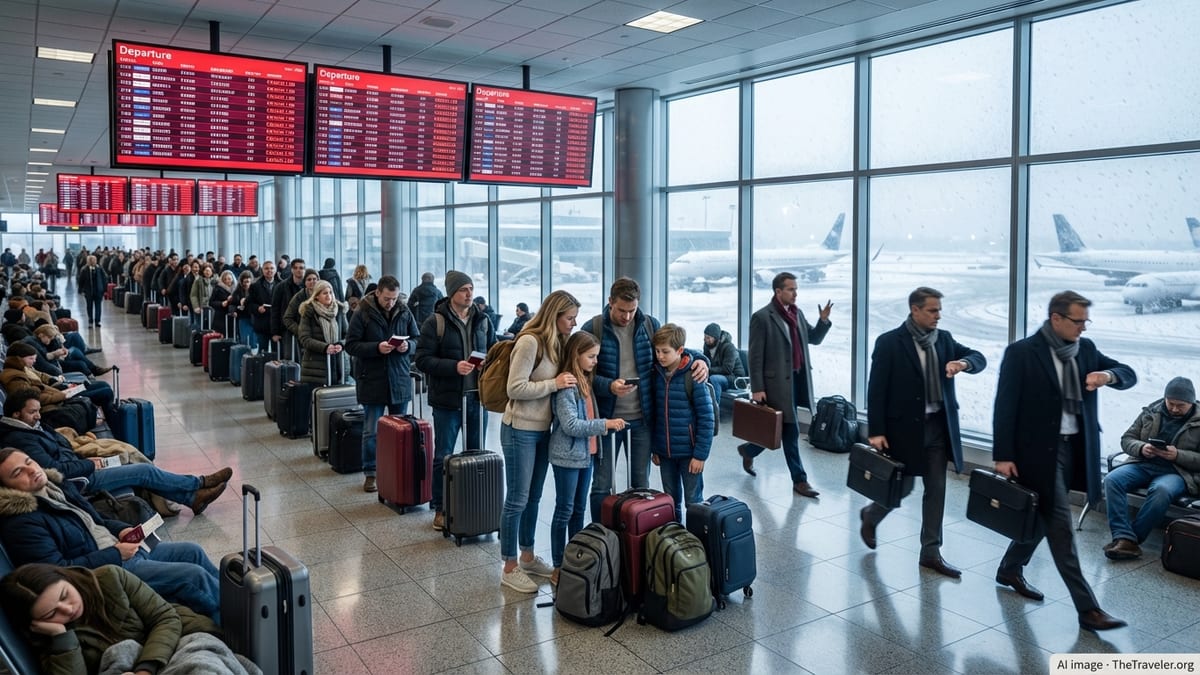
Publicly available tracking data on Saturday indicates that Houston’s George Bush Intercontinental Airport is facing in excess of 120 flight delays, with a significant share affecting long-haul services that connect through major European hubs. The disruption comes during one of the busiest spring travel periods, amplifying the impact for business and leisure passengers alike.
Operational pressure at Bush Intercontinental has been building for weeks, as travelers have reported long security lines and periodic ground congestion across several terminals. Recent social media posts and traveler forums describe multi-hour waits at federal checkpoints and crowded gate areas during peak morning and late afternoon banks, suggesting a system already operating close to its limits.
Industry-focused reporting points to a mix of local and network factors underpinning the current spike in delays, including thunderstorms that have periodically swept across southeast Texas and recurrent congestion in United Airlines’ domestic and international banks at Houston. When weather or gate availability constrains departures at Bush Intercontinental, aircraft and crews scheduled to operate onward transatlantic services can quickly fall out of position.
Data compiled by aviation performance analysts and referenced in recent coverage shows that Houston has consistently ranked among the more delay-prone large hubs in the United States this spring. That backdrop has made the airport particularly vulnerable to any additional strain in early May, when seasonal demand traditionally climbs for routes linking North America, Europe and beyond.
Transatlantic Connections Feel the Strain
The wave of delays at Bush Intercontinental is sending visible ripples through transatlantic schedules, particularly on itineraries that rely on Houston as a feeder into European hubs such as London, Frankfurt and Amsterdam. Published timetables show multiple daily departures from Houston connecting via these gateways to destinations across the continent, from major capitals to Mediterranean leisure markets.
When Houston departures push back late or are held in departure queues, passengers on through-tickets to Europe frequently misconnect, forcing rebooking on later services that may already be heavily booked. Travel advisory pages and airline waiver notices issued in recent weeks around Houston highlight how quickly a localized delay pattern can cascade into missed onward flights, overnight stays and baggage backlogs on multi-leg journeys.
Reports from European aviation outlets in recent days describe an already stretched transatlantic network coping with separate headwinds, including industrial actions, airspace constraints and lingering aircraft availability issues. Those pressures reduce the flexibility carriers have to absorb late arrivals from North America by swapping aircraft or adding extra sections, meaning disruption originating in Houston is more likely to echo across multiple routes.
Travel industry analysts note that the timing of the current Houston disruption is particularly challenging for transatlantic operations. May is the ramp-up period for expanded summer schedules between the United States and Europe, including new seasonal links and increased frequencies from Texas to Southern Europe. With many key flights operating near capacity, even a modest spike in misconnected passengers from a single hub can strain rebooking options for several days.
Infrastructure Constraints and Ongoing Airport Projects
The Federal Aviation Administration’s most recent construction impact assessments identify ongoing taxiway rehabilitation projects at Bush Intercontinental that are expected to produce periods of reduced capacity and increased ground delay. While such works are planned in advance and coordinated with airlines, they can interact with adverse weather or peak-period congestion to lengthen taxi times and complicate gate assignments.
Longer taxi routes and temporary closures of airfield segments limit how quickly arrivals can vacate runways and reach their gates. In practice, that can keep incoming aircraft waiting on the tarmac and slow the turnaround of outbound flights, particularly at a hub where multiple international departures are scheduled within narrow time windows. Aviation forums focused on Houston operations have recently highlighted gate space as a recurring pinch point at the airport.
City of Houston planning documents for aviation facilities outline an ongoing capital improvement program for Bush Intercontinental that includes terminal modernization, security checkpoint upgrades and airfield enhancements over the 2026 to 2030 period. These investments are intended to expand capacity and improve passenger flow, but in the near term they can introduce temporary bottlenecks as construction zones and phased closures shift traffic patterns.
Analysts observe that many large hub airports face similar growing pains as they retrofit legacy terminals while coping with strong demand. In Houston’s case, the combination of large-scale infrastructure work and a dense banked hub structure for connecting flights appears to be magnifying the effect of day-to-day operational disruptions on both domestic and international services.
Passengers Face Missed Connections and Longer Journeys
For travelers, the immediate consequence of the latest delays at Bush Intercontinental is a rise in missed connections, extended travel times and schedule uncertainty. Passenger rights advisory sites and compensation services report increased interest from travelers seeking guidance on whether their delay qualifies for reimbursement or rebooking assistance, particularly when itineraries involve European carriers or transit through European Union airports.
Travelers with connections beyond Europe, such as those continuing on to the Middle East, Africa or South Asia, can be especially vulnerable when primary transatlantic legs are disrupted. If a Houston-originating flight arrives late into a European hub and the onward departure operates only a few times per week, rebooking options may be limited to the following day or even later, potentially triggering additional costs for accommodation and missed plans.
Recent travel waiver notices issued around bouts of severe weather in Houston illustrate how airlines attempt to mitigate passenger disruption by allowing date changes or routing adjustments at no additional fare. However, these measures depend on the availability of seats on alternate flights and do not always cover downstream expenses such as hotels, meals or ground transport, which can add significantly to the burden on affected passengers.
Consumer advocates recommend that passengers transiting Houston build in additional buffer time when connecting to transatlantic flights, particularly during periods flagged for storms or heavy peak traffic. They also emphasize the value of monitoring flight status through airline apps and airport information displays, as same-day schedule changes and aircraft swaps have become more common in a tightly scheduled global network.
Outlook for Houston’s Role in Transatlantic Travel
Despite the current disruption, Houston remains an important gateway between the United States and Europe, with airlines planning to increase capacity on several routes through the summer season. Airline schedule filings and tourism board announcements highlight new and expanded services linking Houston to major European capitals and key leisure destinations, underscoring confidence in long-term demand.
Aviation planners suggest that, as additional security lanes, modernized terminals and upgraded airfield infrastructure come online in the coming years, Bush Intercontinental should be better positioned to handle peaks in passenger volume without the same level of knock-on delays seen this spring. The success of these efforts will depend on close coordination among airport operators, airlines and federal agencies responsible for security and air traffic management.
For now, the episode of more than 120 delays serves as a reminder of how quickly disruption at a single hub can reverberate across the transatlantic network. With aircraft and crews scheduled across continents, a backlog that begins with weather and gate constraints in Houston can, within hours, be felt in departure boards from London to Rome.
As the busy summer travel period approaches, travelers and industry watchers alike will be watching Houston’s performance carefully. The airport’s ability to stabilize operations and reduce the frequency of large-scale delay events will be a key factor in the reliability of many transatlantic journeys in the months ahead.