


More news on this day
Kuwait International Airport is facing renewed operational strain in 2026, with publicly available flight tracking data indicating 51 delays and four cancellations in a recent disruption that has rippled across Gulf and Asia routes.
Get the latest news straight to your inbox!
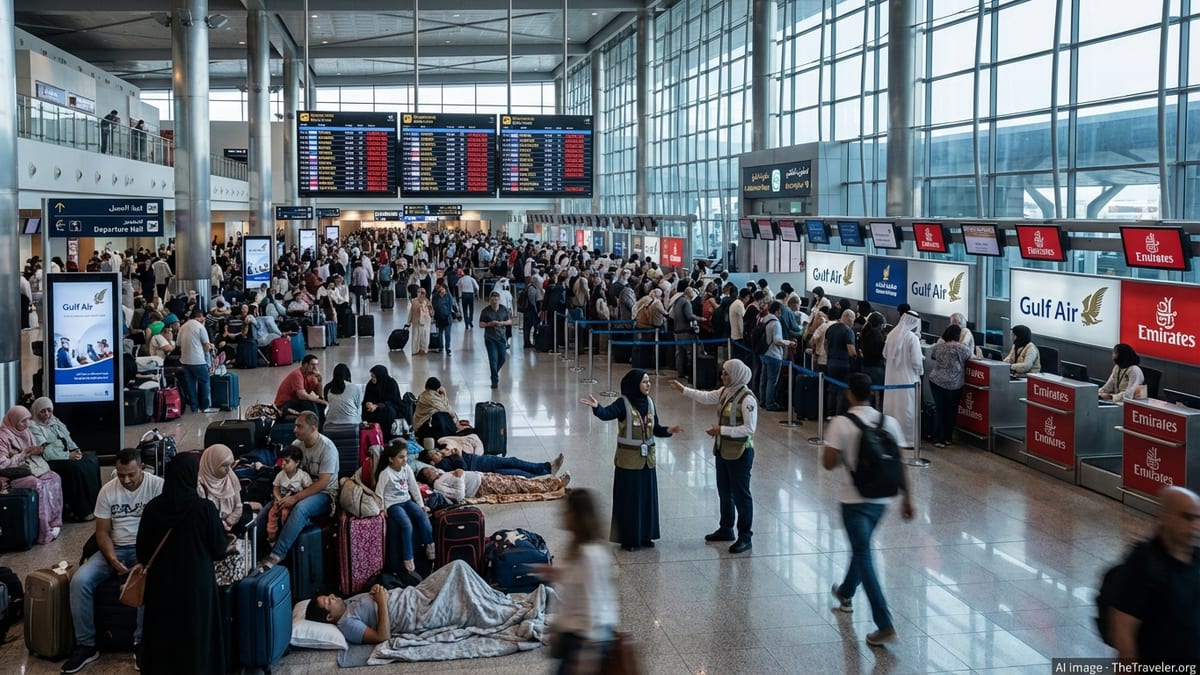
Fresh Disruptions at a Key Gulf Hub
The latest wave of delays and cancellations at Kuwait International Airport comes as the wider Gulf aviation network continues to adjust to a volatile operating environment in 2026. Regional travel advisories and airline updates describe Kuwait City as a particularly sensitive node, where relatively small timetable slippages quickly cascade across interconnected routes to the Gulf, South Asia and Southeast Asia.
Recent tallies from independent aviation trackers and specialist travel outlets point to 51 delayed departures and arrivals and four outright cancellations at Kuwait over a single disruption window. While daily figures have fluctuated through June and July, the pattern mirrors earlier episodes this year in which Kuwait recorded dozens of late departures and multiple cancellations within 24 hours, affecting services to Dubai, Riyadh, Doha, Istanbul, Mumbai and other major transit points.
Travel industry bulletins note that these operational issues are unfolding even as some airlines restore capacity to Kuwait and the wider region. Indian and Gulf carriers have been rebuilding networks to West Asia and beyond, but the stop‑start nature of the recovery means schedules remain vulnerable to infrastructure constraints, airspace adjustments and tight crew availability.
Legacy of Drone Strikes and Phased Reopening
The current instability at Kuwait International Airport cannot be separated from the events earlier in 2026, when a series of missile and drone attacks targeted airport facilities and prompted repeated closures of Kuwaiti airspace. Publicly available government updates and regional media coverage describe how damage at Terminal 1 and safety concerns for ground operations forced authorities to divert or suspend flights for extended periods.
In the months that followed, officials outlined a phased reopening plan, with operations concentrated through specific terminals and a gradual return of foreign airlines. Guidance published for travelers highlighted that only certain terminals were handling Kuwait Airways and Jazeera Airways flights initially, while broader international traffic was reintroduced in stages as infrastructure assessments and repairs progressed.
Although airspace has since reopened, travel advisories issued as recently as July indicate that Kuwait International Airport continues to experience intermittent disruption linked to earlier damage, ongoing repair work and heightened security procedures. These measures can lead to longer turnaround times, congestion at active terminals and sudden gate or timing changes, all of which contribute to the spike in delays and occasional cancellations now being reported.
Gulf and Asia Routes Bear the Brunt
The immediate impact of Kuwait’s latest disruption has been most visible on busy short‑ and medium‑haul corridors to Gulf neighbors and major Asian hubs. Flight data summaries and regional aviation reporting show that services linking Kuwait with Riyadh, Dubai, Doha, Bahrain and Istanbul are especially exposed, given their high frequencies and reliance on tight connection windows.
Beyond the Gulf, passenger flows to South Asian and Southeast Asian cities are also affected. Routes to Mumbai, Kochi, Islamabad and other destinations in India and Pakistan typically carry large numbers of migrant workers and family travelers who rely on Kuwait as either a point of origin or a convenient transfer hub. When departures from Kuwait are delayed by an hour or more, onward connections from regional hubs can be missed, triggering rebookings and overnight stays that add to costs and uncertainty for travelers.
Industry analysts note that the current pattern at Kuwait echoes a broader regional dynamic in 2026, where flight suspensions or schedule changes at one Gulf gateway can quickly affect capacity and punctuality elsewhere. Recent disruptions at airports in Saudi Arabia and Bahrain, for example, have led to knock‑on effects for services into and out of Kuwait, as airlines juggle aircraft rotations and crew rosters across multiple bases.
Airline Responses and Passenger Options
Airlines operating through Kuwait have been updating schedules and passenger options in response to the ongoing irregular operations. Published statements and booking advisories from regional and international carriers show a mix of strategies, including route suspensions, terminal changes, retimed departures and phased frequency increases as conditions allow.
Some low‑cost and full‑service airlines serving Kuwait from India and the wider West Asia region have recently announced the restoration of flights that were previously curtailed, while cautioning that all operations remain subject to short‑notice adjustments. In several cases, carriers have shifted Kuwait flights to specific terminals deemed less affected by repair works, an attempt to isolate passengers from the most acute infrastructure bottlenecks.
Travel agencies and online booking platforms advising passengers on Kuwait transit highlight flexible policies introduced earlier in the year for itineraries disrupted by airspace closures and security incidents. While many of these waivers were designed for the peak of the crisis, some carriers continue to offer rebooking or credit options when flights are significantly delayed or cancelled, particularly on high‑demand Gulf and Asia routes.
What Travelers Through Kuwait Should Expect
For passengers planning to travel via Kuwait International Airport in the coming weeks, publicly available guidance from airlines, airports and travel specialists suggests a cautious approach. Given the recent count of 51 delays and four cancellations tied to a single disturbance period, travelers are being encouraged to build in additional time for connections and to monitor their flight status frequently on the day of departure.
Analysts tracking on‑time performance in the region say that while outright cancellations at Kuwait have become less frequent than during the height of the airspace closures, the airport’s punctuality record remains fragile. Short‑haul Gulf flights are often used to reposition aircraft and crew, so even modest delays on these segments can ripple outward to longer‑haul services connecting to Asia and Europe.
For now, Kuwait International Airport continues to function as a critical but stressed node in global aviation. The combination of post‑attack infrastructure recovery, regional security sensitivities and a rapid rebuild of demand on Gulf and Asia routes has created a narrow operating margin, in which spikes of 51 delayed flights and four cancellations can rapidly reshape travel plans for passengers across several continents.