


More news on this day
Heightened travel advisories for the Gulf and wider Middle East from governments in North America, Europe, Asia and Africa are converging just as millions of passengers prepare for peak summer travel from London, Manchester, Birmingham and Edinburgh, raising the risk of rerouting, insurance disputes and widespread flight disruption.
Get the latest news straight to your inbox!
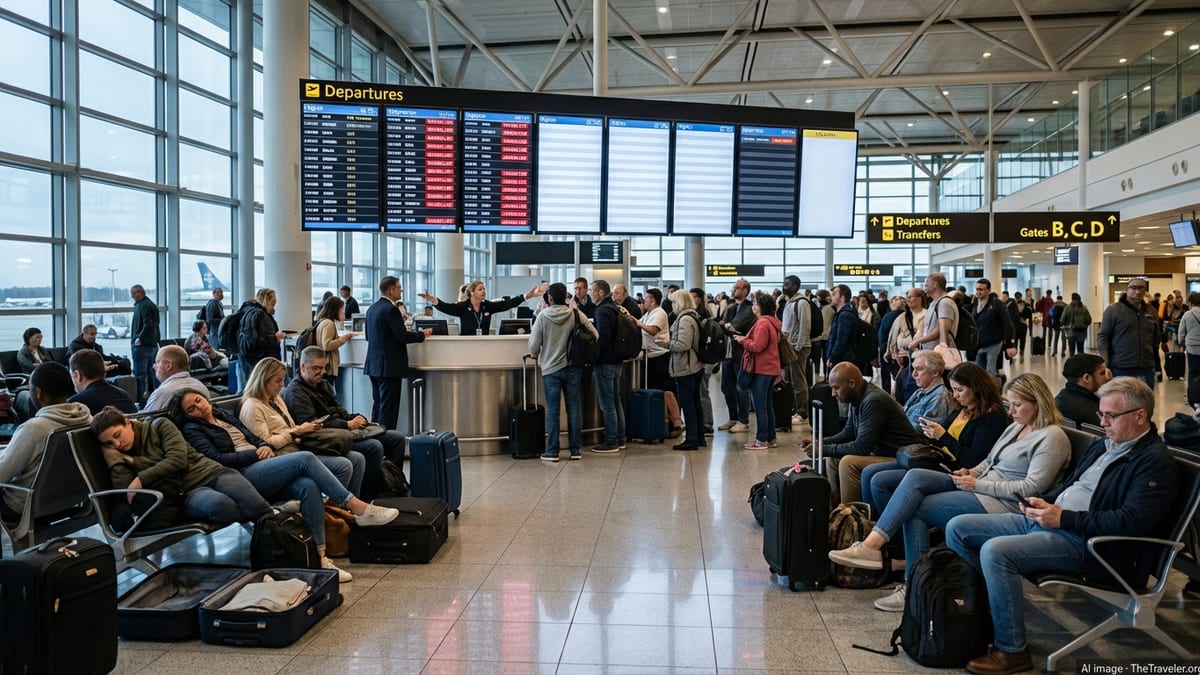
Gulf Advisories Tighten As Summer Demand Builds
Publicly available government advisories show that the United Kingdom, United States, Canada, Australia and several other countries continue to flag elevated security and aviation risks across parts of the Gulf and Middle East, even as some restrictions are adjusted in response to shifting conditions. The guidance follows months of regional tension and intermittent airspace closures that have disrupted major hubs in the United Arab Emirates, Qatar, Saudi Arabia, Bahrain and Kuwait.
Recent updates from foreign ministries and consular services highlight potential for further short-notice airspace restrictions and airport disruption affecting both direct services to the Gulf and long-haul connections that usually transit the region. Some destinations remain under “avoid non-essential travel” or similar classifications, while others have seen advice eased but with explicit warnings about the possibility of renewed instability and operational challenges for airlines.
For UK travelers, this means that London Heathrow and Gatwick, together with Manchester, Birmingham and Edinburgh, are now central pressure points in a global rerouting puzzle. Carriers are adjusting schedules and routings on a rolling basis, often within hours of new aviation notices being issued, leaving passengers dependent on real-time information from airlines and airports.
Reports from airline industry trackers indicate that airspace changes linked to Gulf tensions have already caused thousands of cancellations and diversions worldwide in recent months, removing a significant share of capacity that normally funnels passengers through Doha, Dubai, Abu Dhabi and other regional hubs. The knock-on effect is being felt across European, North American, African and Asian networks.
London, Manchester, Birmingham and Edinburgh Face Network Strain
London’s airports are among the most heavily exposed to Gulf disruption, given the density of services historically operating between the UK and hubs such as Dubai, Abu Dhabi and Doha. When those routes are curtailed or forced to detour, demand is pushed onto alternative corridors via Europe, Turkey, South Asia and Africa, with Manchester, Birmingham and Edinburgh also absorbing redirected flows.
Data compiled by aviation analytics firms and published in recent weeks suggest that rerouted services are flying longer, more southerly or northerly tracks to avoid affected Gulf corridors. This typically adds time and fuel burn, reduces available aircraft hours and narrows the buffer in already tight summer schedules. Airlines then face difficult choices on which frequencies to preserve, which to consolidate and which to cancel entirely.
Travel agents and tour operators serving major UK cities report a surge in customers seeking to switch away from Gulf transits for itineraries to India, Southeast Asia, Australia and parts of Africa. Seats on non-Gulf carriers are being snapped up quickly on peak dates, with pricing reflecting the combination of constrained capacity and robust seasonal demand.
Rail and ferry alternatives from the UK into mainland Europe are also experiencing higher interest from travelers who wish to position themselves to continental hubs that are less directly reliant on Gulf overflight. However, these options do not resolve long-haul connectivity issues for travelers bound for South Asia, Australasia and East Africa, where Gulf carriers have historically dominated.
US, Canada, Australia, India and African States Update Risk Guidance
North American and Asia-Pacific advisories have added another layer of complexity for travelers bound for or transiting the Gulf from UK departure points. Recent guidance from Canada focuses on global travel disruption risks linked to Middle East instability, explicitly warning that airspace closures and fuel constraints can lead to long delays, reroutings and cancellations even when a traveler’s final destination lies far from the region.
Australia’s Smartraveller service continues to highlight an unpredictable security environment in parts of the Middle East, urging travelers to consider the implications of any itinerary reliant on Gulf hubs or overflight. Advice for countries such as Qatar and Saudi Arabia references both terrorism and conflict-related concerns, alongside the prospect of sudden operational changes in the aviation sector.
In India, which has millions of nationals working in or traveling through the Gulf, advisories and airport notices emphasize the need for contingency planning, with particular attention to flights between Indian metros and Gulf hubs that then connect onward to Europe and North America. African governments with large diaspora communities in the Gulf, including Nigeria and Kenya, have also published travel notices urging passengers to check airline communications closely and to be aware of potential onward disruption.
The overlapping effect of these advisories is that travelers departing from London, Manchester, Birmingham and Edinburgh may have their plans constrained not only by UK risk assessments but also by the stricter positions of their destination or transit countries. A routing that is technically operating may still run counter to home-country guidance, with implications for both personal risk calculations and insurance coverage.
Travel Insurance Exclusions Move Into the Spotlight
The tightening web of Gulf advisories is drawing attention to a sensitive issue for many travelers: the limits of standard travel insurance when government guidance escalates. Financial services regulators and consumer watchdogs have previously highlighted that many policies contain exclusions for travel to areas subject to “do not travel” or “avoid non-essential travel” warnings, as well as for disruption caused by war or armed conflict.
Insurance comparison services and consumer media in the UK and other markets are reporting a rise in inquiries from travelers unsure whether they remain covered for medical, cancellation or interruption costs if they maintain itineraries involving the Gulf. Some published guidance stresses that travelers who depart in direct contradiction of official advisories may find their claims rejected, even if airlines continue to operate the flights.
Specialist travel law commentators note that a grey area can arise when transit through a higher-risk zone is involved. Certain policies distinguish between staying in a destination under warning and merely connecting through an airport there, while others apply exclusions more broadly. The recent advisories linked to Gulf airspace have therefore intensified calls for travelers to read policy wording carefully or seek clarification before departure.
At the same time, some insurers are launching or promoting upgraded policies that explicitly cover disruption related to civil unrest, airspace closure or forced rerouting. These products tend to command higher premiums and may still carry caps or sub-limits, but they are being marketed as a way for frequent or essential travelers to manage heightened geopolitical volatility.
Millions Brace for Prolonged Rerouting and Operational Risk
Current demand projections from airport operators and airline trade bodies suggest that millions of passengers with bookings over the next several months will be exposed to some level of Gulf-related travel risk, whether through direct flights, code shares or itineraries that rely on Gulf airspace as a bridge between continents. Even if full-scale airspace shutdowns are avoided, intermittent restrictions and airport congestion remain likely.
Operational bulletins circulated within the aviation industry indicate that carriers are preparing contingency flight plans on a rolling basis, with alternates mapped out across Central Asia, North Africa and Southern Europe. This planning aims to keep long-haul networks functioning, but it also introduces more frequent last-minute changes to routings, departure times and connection windows.
For travelers starting their journey in London or other major UK cities, this environment translates into a greater emphasis on flexibility. Industry guidance consistently encourages allowing longer connection times, avoiding tightly timed self-connected itineraries across different tickets, and keeping contact details up to date with airlines to ensure that notifications about schedule changes or cancellations are received promptly.
While there is cautious optimism in some quarters that a sustained easing of regional tensions could eventually restore more stable Gulf operations, the pattern of recent months points to a longer period in which geopolitics and aviation risk remain closely intertwined. For now, passengers and the travel industry alike are adapting to a new reality in which the traditional Gulf super-connector model cannot be taken for granted from any UK departure point.