


More news on this day
A sudden shutdown of Kuwaiti airspace following new missile and drone threats has unleashed widespread disruption across Gulf aviation, forcing emergency diversions, last-minute cancellations, and a scramble for alternative routes at the start of the busy summer travel period.
Get the latest news straight to your inbox!
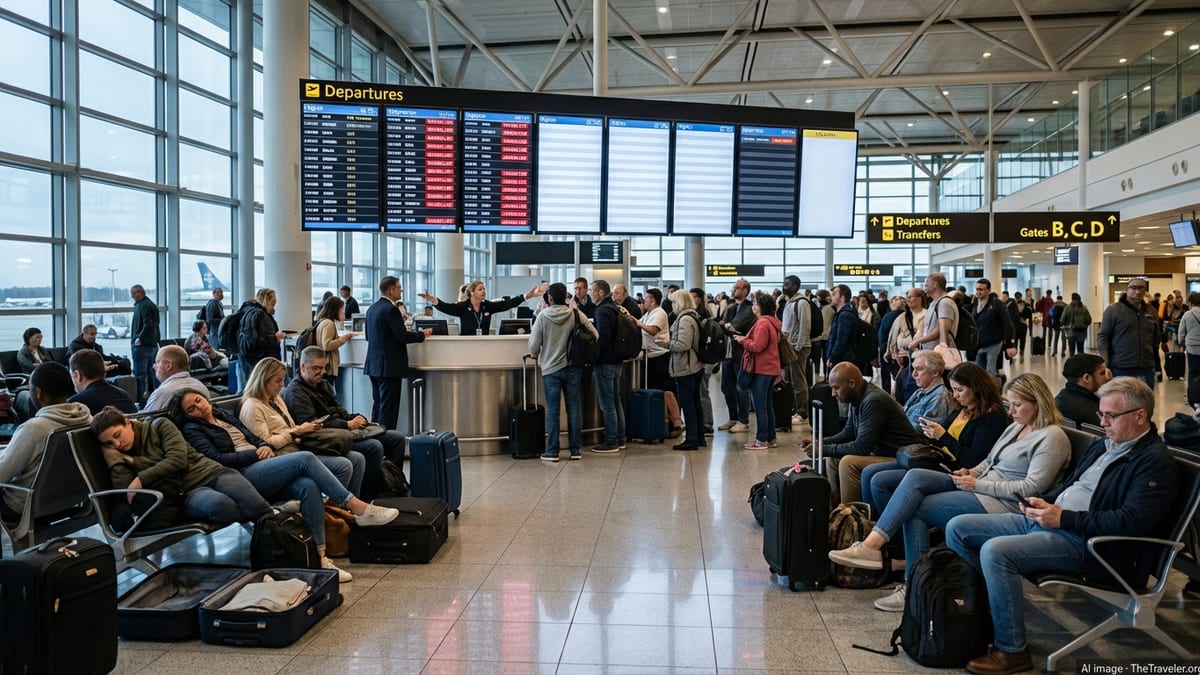
Missile and Drone Threats Push Kuwait to Close Skies
Publicly available information indicates that Kuwait temporarily closed its airspace after renewed missile and drone activity linked to ongoing regional hostilities, including reported strikes and attempted attacks on critical infrastructure in and around Kuwait International Airport. Local press and aviation advisories describe the closure as a preventive safety measure, implemented amid fears that further projectiles could cross or target the country’s airspace.
The latest shutdown follows months of intermittent disruption since late February, when missile and drone campaigns tied to the wider conflict between Iran and regional rivals repeatedly targeted Gulf infrastructure. Kuwait International Airport suffered documented damage to facilities and navigation systems earlier in the year, prompting an extended suspension of regular commercial operations and only gradual, tightly controlled reopenings.
Notices to airmen and regional risk bulletins describe a fluid threat environment, with short-notice alerts about possible missile overflights and drone activity. In response, Kuwaiti aviation authorities have repeatedly opted for full or partial airspace closures, underscoring how even limited attacks can bring an entire national aviation system to a standstill.
Although partial reopening milestones were reported in late April and early June, the most recent shutdown shows how quickly progress can be reversed when new intelligence or incidents suggest an elevated risk to civil aircraft.
Emergency Diversions and Stranded Passengers Across the Gulf
As Kuwait closed its skies, airlines operating over the northern Gulf were forced to divert mid-flight, turn back to origin airports, or reroute through Saudi and southern Gulf corridors. Flight-tracking data cited in open reporting shows multiple Kuwait-bound services diverting to Dammam and Riyadh, while others entered extended holding patterns as crews waited for updates on the status of Kuwaiti airspace.
For passengers, the operational decisions translated into hours-long delays, unexpected overnight stops, and complex rebookings at already busy regional hubs. Travel risk advisories note that some carriers chose to cancel Kuwait rotations outright rather than risk aircraft and crew becoming stranded if airspace closures were extended with little warning.
The wider Gulf network also felt the shock. Kuwait functions as both an origin and overflight state on popular Europe–Asia and Europe–Indian Subcontinent routes. When its airspace closed, airlines that would normally cut across the northern Gulf were forced to plot longer detours, adding flight time, fuel burn, and crew duty constraints that cascaded into subsequent rotations.
Analysts tracking the disruption point out that even a national airspace closure lasting only a few hours can ripple for days through aircraft utilization patterns, slot allocations, and crew rosters, especially when it coincides with peak travel seasons.
Knock-On Effects for Regional Hubs and Global Routes
Kuwait’s shutdown did not occur in isolation. Since early 2026, a series of rolling airspace restrictions across Jordan, Iraq, Qatar, Bahrain, and parts of Iran have periodically constrained the main east–west corridors that link Europe with the Gulf and onward to Asia. Travel risk bulletins compiled this year describe a pattern of rapid, overlapping closures triggered by missile overflight risk or nearby strikes.
Major hubs in Dubai, Abu Dhabi, Doha, and Riyadh have had to absorb surges of diverted traffic every time a neighboring state abruptly restricts its airspace. When Kuwait closed, these airports once again became pressure valves, handling aircraft that could neither continue to destination nor return to origin without breaching restricted zones.
International carriers have responded by redrawing their preferred routings, in some cases shifting flights south of the traditional Gulf corridor, or adding significant mileage to avoid specific flight information regions. Industry-focused analyses note that these changes can add 30 minutes or more to sector times on some Europe–Gulf legs, increasing fuel costs and complicating crew scheduling at a time when airlines are already managing tight margins.
For travelers, the operational complexity manifests as longer journeys, more frequent schedule changes, and reduced reliability of tight connections. Travel advisories now routinely recommend that passengers transiting the Middle East build in additional buffer time, particularly when connecting through hubs that interface with the northern Gulf and Iraq–Iran airspace blocks.
Airlines Recalibrate Risk and Rerouting Strategies
The Kuwait airspace shutdown has become a case study in how airlines manage fast-moving security threats in one of the world’s most critical aviation corridors. Open-source aviation safety briefings highlight how carriers increasingly blend government advisories, real-time threat intelligence, and commercial risk assessments before deciding whether to route near conflict-affected areas.
Some regional airlines with strong exposure to the northern Gulf have reportedly increased their reliance on Saudi and Red Sea corridors when feasible, even during periods when Kuwait and neighboring airspaces technically remain open. Others have trimmed frequencies to Kuwait or shifted capacity to alternative points until a more stable operating pattern emerges.
Global carriers, particularly in Europe and Asia, are also reassessing their dependence on single-corridor routings through the Middle East. Analysts point to greater diversification of overflight strategies, with some operators favoring longer but more predictable paths to reduce the possibility of sudden mid-flight diversions that disrupt entire daily schedules.
Insurance costs and war-risk premiums form another part of the recalibration. Industry reporting suggests that cumulative drone and missile incidents across the Gulf are prompting more granular route-by-route evaluations, where even short segments near active conflict zones can influence whether a flight remains commercially viable.
Uncertain Outlook for Kuwait’s Recovery as a Transit Node
Prior to the current crisis, Kuwait had been investing heavily in expanding its aviation role, including terminal upgrades and new routes intended to position Kuwait International Airport as a more competitive Gulf gateway. The cycle of closures, damage from strikes, and stop-start reopening efforts has instead exposed just how vulnerable such ambitions are to regional security shocks.
Recent reports that terminals and selected routes have resumed operations offer some indication of resilience, but repeated shutdowns whenever new missile or drone threats appear are likely to make airlines cautious about rebuilding full schedules. Aviation analysts note that carriers crave stability, and may prioritize airports where the risk of sudden closures is deemed lower, even if that means slightly longer flight times or higher fees.
For travelers, Kuwait’s uncertain trajectory as a transit point means that many itineraries that once relied on smooth connections through the country now default to alternative hubs. Industry commentary suggests that passengers are increasingly checking not only fares and flight times, but also the recent track record of a route’s reliability in regions affected by missile and drone activity.
With no definitive timeline for a durable security settlement, Gulf aviation remains exposed to further shocks. Kuwait’s latest airspace shutdown illustrates how a single national decision, driven by the need to protect civil aviation from missile threats, can reverberate far beyond its borders, reshaping travel patterns between Europe, the Gulf, and Asia in real time.