


More news on this day
Thailand is preparing to join a growing list of destinations that charge dedicated fees to foreign visitors, underscoring how governments from Asia to Europe are turning to tourist levies to manage overtourism, fund infrastructure and protect fragile environments.
Get the latest news straight to your inbox!
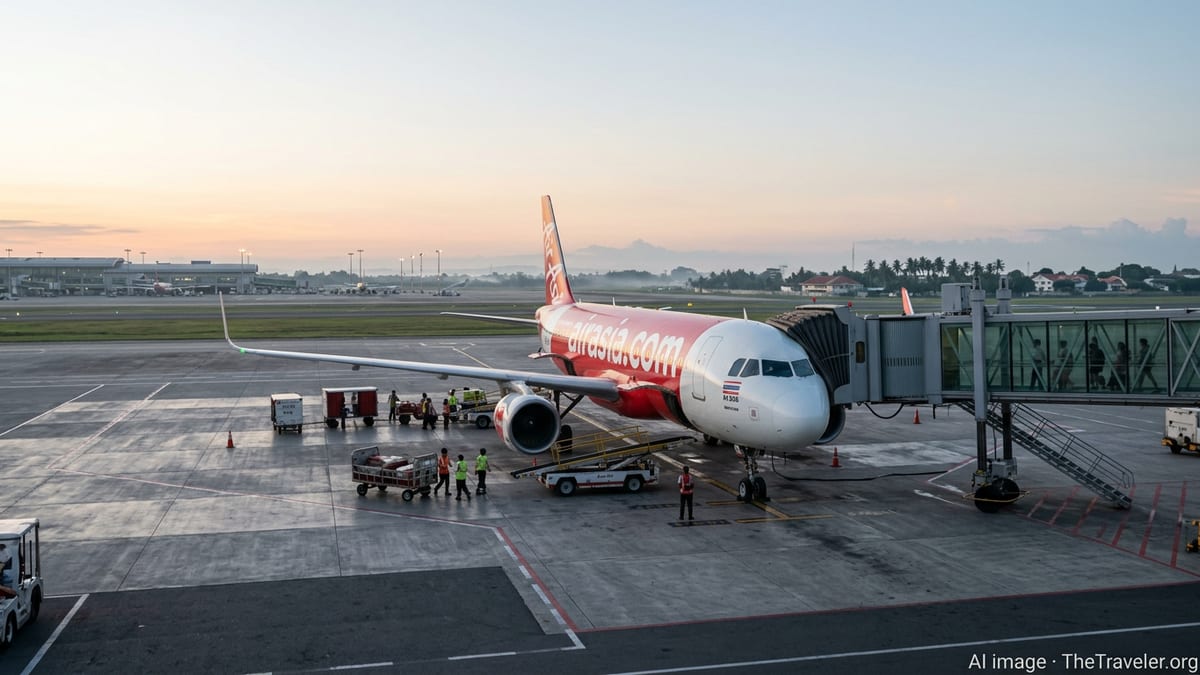
Thailand’s Planned Tourist Fee and Why It Matters
Thai authorities have spent several years considering a dedicated tourism fee for foreign visitors, separate from the airport taxes already embedded in most airfares. Earlier proposals outlined a charge of 300 baht for air arrivals and 150 baht for travelers entering by land or sea, with revenue earmarked for tourism development, insurance coverage for visitors and upgrades to popular destinations. Implementation has been repeatedly delayed as officials weighed the impact on the country’s price competitiveness and recovery after the pandemic.
Recent public discussion indicates that a dedicated levy remains on the policy agenda, aligning Thailand with regional peers that now treat tourist-specific charges as a standard management tool rather than an exception. While exact timing and final amounts are still subject to adjustment, the direction of travel is clear: visitors can expect an additional line item tied directly to tourism when the measure takes effect.
For travelers, the Thai fee is unlikely to be trip‑breaking in pure cost terms, but it signals a shift in how the country frames tourism. Once seen almost exclusively as an engine of growth, inbound travel is increasingly discussed in terms of carrying capacity, environmental costs and the need for shared financial responsibility. The fee debate also shows that Thailand does not want to be left behind as neighboring destinations formalize similar mechanisms.
Trip planners should monitor how and where the fee will be collected. If Thailand follows other markets, the charge may be embedded in airline tickets for air arrivals and potentially handled through digital systems or border payments for land and sea entries. How visible the fee is to travelers, and how clearly authorities communicate its purpose, will help determine whether it is perceived as a nuisance or as a reasonable contribution.
Japan’s Higher Departure Tax and Local City Levies
Japan was an early mover in Asia with its national “International Tourist Tax,” commonly known as the departure or “sayonara” tax. Since 2019, travelers leaving Japan have paid a flat charge bundled into air and sea tickets. Publicly available information shows that in 2026 the national rate was tripled from 1,000 yen to 3,000 yen per departure, regardless of nationality, with revenue directed toward measures such as crowd control, digital infrastructure and upgrades at major gateways.
The increase reflects mounting concern about overtourism in popular areas like Kyoto, Tokyo and Osaka. Reports indicate that national and local governments are under pressure from residents to manage congestion on public transport, preserve cultural sites and address rising accommodation costs. A higher departure tax is intended to provide more funding for these efforts while spreading the cost across the entire pool of international travelers using Japan’s airports and ports.
On top of the national levy, some Japanese cities are moving ahead with their own accommodation-based charges. Prefectures and municipalities have introduced per‑night hotel taxes that scale with room rates, a trend similar to tourist bed taxes in European cities. While small individually, these stacked fees mean visitors to Japan now routinely contribute several different tourism-related charges over the course of a trip.
For travelers, the key practical point is that Japan’s departure tax and local hotel levies are largely invisible at the border. The national charge is folded into ticket prices, and accommodation taxes are paid at hotels or factored into nightly rates. Costs are modest on a per‑person basis but can add up for families and longer stays, making it sensible to account for them in budgeting.
Bali’s New Entry Levy on Foreign Tourists
The Indonesian island of Bali, one of the world’s most tourism‑dependent destinations, introduced a specific levy on foreign tourists in February 2024. The provincial regulation sets a one‑time fee of 150,000 rupiah per international visitor, collected to support cultural preservation and environmental protection projects. The charge applies to foreign travelers entering Bali, whether they arrive directly from overseas or via other parts of Indonesia.
Local government communications describe the levy as a way to offset the growing strain on the island’s infrastructure and natural resources. Income from the fee is earmarked for initiatives such as waste management, beach and reef conservation and the safeguarding of Balinese cultural heritage. It is explicitly framed as a contribution from visitors toward the long‑term resilience of the island’s tourism economy.
Bali has rolled out digital channels to make payment more efficient, including an official online platform where travelers are encouraged to pay before departure. Airport messaging and accommodation partners guide visitors through the process if payment has not been completed in advance. In practice, most tourists encounter the levy as an extra but relatively modest cost on arrival, on top of Indonesia’s visa and existing airport charges.
Travelers planning Bali itineraries should note that the levy is charged per entry, not per day. This makes it manageable for longer stays but more noticeable for short stopovers. When combined with higher accommodation prices in popular areas and stricter rules on visitor behavior, the fee illustrates how Bali is repositioning itself from a low‑cost playground to a destination seeking more responsible, higher‑value tourism.
Bhutan’s High-Value Model and Daily Sustainable Development Fee
If Bali and Japan illustrate incremental tourist levies, Bhutan represents a far more robust model. The Himalayan kingdom has long pursued a “high value, low volume” tourism policy, using a mandatory Sustainable Development Fee as a core tool. Official tourism information shows that most foreign visitors currently pay 100 US dollars per person per night as an SDF, following a reduction from an earlier 200‑dollar rate. Travelers from India pay a lower per‑night fee in local currency.
The SDF is collected through Bhutan’s visa and permit system and is ring‑fenced for public goods that support both citizens and the visitor experience. Government and tourism board materials state that revenue funds free healthcare and education, upgrades to public infrastructure, training for tourism workers, environmental conservation and cultural preservation projects. In effect, tourists are asked to help underwrite the social and ecological pillars that make Bhutan attractive in the first place.
For travelers, Bhutan’s SDF has a significant impact on trip planning. A week‑long visit can add hundreds of dollars in mandatory charges on top of flights, accommodation and guiding services. This pricing structure intentionally limits visitor numbers and steers the market toward longer, more immersive and higher‑spending trips. Tour operators typically build the SDF into package quotes, so visitors pay as part of an overall itinerary rather than as a separate daily transaction.
Bhutan’s approach is closely watched by policymakers elsewhere, including in Southeast Asia, as debates about overtourism intensify. While few destinations are likely to match such high nightly fees, the idea that tourism must directly finance environmental and social priorities is increasingly influential. Thailand’s own discussion around a modest national fee fits into this broader regional reassessment of how visitors contribute.
ETIAS and the Spread of Entry Fees in Europe and Beyond
Beyond Asia, Europe is also moving toward more structured fees for foreign visitors. The European Travel Information and Authorisation System, known as ETIAS, will require travelers from many visa‑exempt countries to obtain advance authorization before entering most European Union and Schengen‑associated states. European Commission updates show that the application will carry a 20‑euro fee, valid for multiple trips over a set period, with exemptions for certain age groups.
ETIAS is modeled on systems such as the United States Electronic System for Travel Authorization and Canada’s Electronic Travel Authorization, which already charge small fees for pre‑screening visitors before departure. The European scheme is framed as a security and migration management tool rather than a tourist tax, but from a traveler’s perspective it functions as another paid prerequisite to entering a destination. It effectively widens the net of visitor‑specific fees to a large portion of the continent.
Alongside ETIAS, several European countries and cities continue to apply or expand local tourist taxes, often in the form of nightly hotel surcharges. Major urban and resort destinations cite similar rationales to their Asian counterparts: funding for public transport, environmental measures, cultural site maintenance and community services strained by high visitor numbers. For long‑haul travelers mapping multi‑country trips, the result is a patchwork of small but accumulating costs.
These developments mean that fees are no longer confined to airport departure taxes hidden in airfares. From online travel authorization charges to entry levies and per‑night bed taxes, visitors increasingly encounter destination‑specific costs throughout the planning and travel cycle. The practical response for travelers heading to Thailand or any of the other destinations highlighted is to check official tourism and government information before departure, factor these fees into budgets and understand how they connect to the local debates around overtourism and sustainability.