


More news on this day
Kazakhstan is set to strengthen its role as a bridge between Europe and Asia as Emirates SkyCargo introduces a new dedicated freighter service linking Dubai and Almaty, creating a fresh trade lane for high-value and time-sensitive cargo moving in and out of Central Asia.
Get the latest news straight to your inbox!
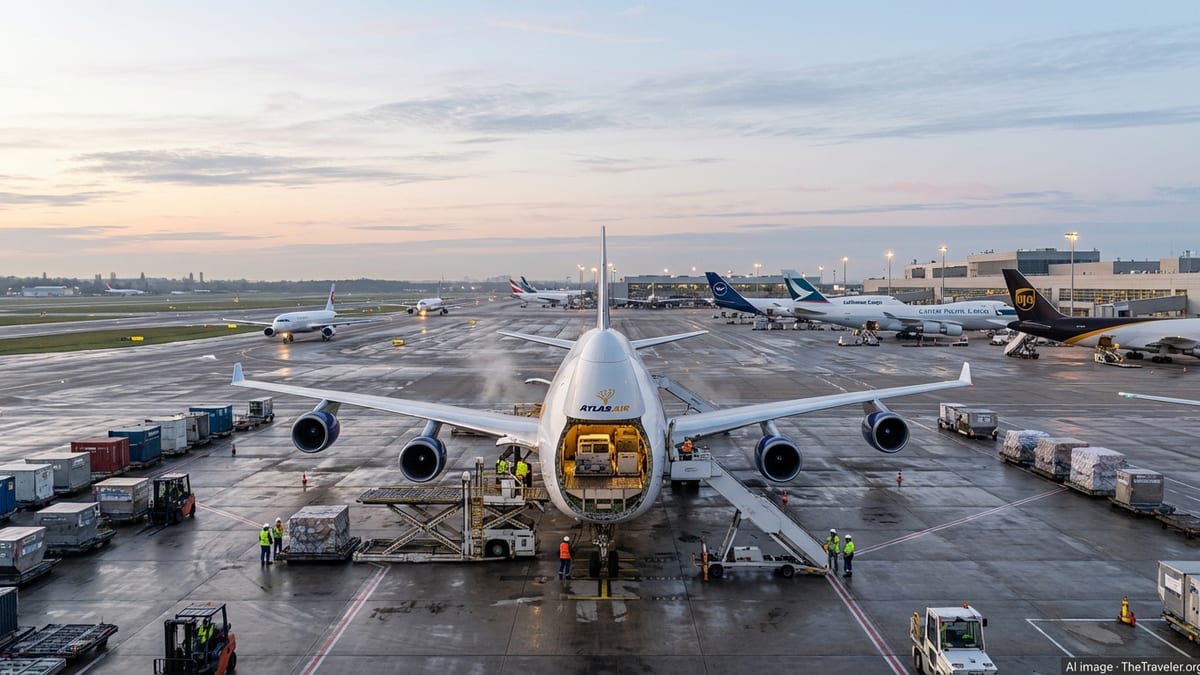
A Weekly Boeing 777 Freighter Linking Almaty to Global Markets
Publicly available information from Emirates SkyCargo and regional coverage indicates that the carrier will launch a weekly Boeing 777 freighter service between Dubai and Almaty from mid-June 2026. Scheduled as a dedicated cargo operation, the new route is designed to support rising demand for reliable air freight links into Kazakhstan and onward to neighboring markets.
The Boeing 777 freighter typically offers in excess of 100 tonnes of cargo capacity per flight. Reports on the launch suggest that this capacity will be available once a week on the Dubai–Almaty sector, significantly boosting space for exports and imports compared with reliance on passenger aircraft bellyhold alone.
Dubai functions as Emirates SkyCargo’s primary cargo hub, with connections spanning Africa, Europe, the Middle East, Asia, and the Americas. By adding Almaty to its freighter network, the airline is effectively plugging Kazakhstan directly into this global web of routes, simplifying logistics for shippers who previously had to rely on more circuitous routings or trucking to larger hubs.
Kazakhstan already benefits from scheduled passenger services between Dubai and Almaty, which offer limited cargo capacity in the holds of widebody aircraft. The new freighter service marks a step change by providing space and handling tailored specifically to freight, allowing larger, heavier, or more specialized shipments to move more predictably.
Strategic Timing for Kazakhstan’s Trade Ambitions
The timing of the new route aligns with Kazakhstan’s broader ambitions to position itself as a logistics and trade hub along key Eurasian corridors. Over the past decade, the country has invested in rail and road infrastructure and sought to attract more transit cargo between China, Russia, the Caucasus, and Europe. Enhanced air connectivity is a crucial component of that strategy.
Almaty, Kazakhstan’s largest city and commercial center, already acts as a gateway for consumer goods and industrial supplies destined for the wider Central Asian region. Additional freighter capacity from Dubai is expected to support imports of electronics, fashion, automotive parts, and machinery, while also offering new options for outbound commodities and value-added exports.
Industry observers note that Central Asian economies have been working to diversify trade routes and reduce overreliance on any single corridor. Air cargo, although more expensive than sea or rail transport, provides speed and reliability that are essential for sectors such as pharmaceuticals, perishables, and e-commerce. The Dubai–Almaty freighter gives Kazakhstan-based exporters and importers an extra lever to manage supply chain risk and transit times.
The route also dovetails with the ongoing expansion of Emirates SkyCargo’s dedicated freighter network. The carrier has signaled plans to increase its freighter fleet and add new destinations through 2026, and Almaty’s inclusion highlights the airline’s confidence in demand from Central Asia.
What the New Route Means for Shippers
For businesses in Kazakhstan and across Central Asia, the new freighter service brings a number of practical advantages. First, the scheduled weekly operation offers predictability in capacity, which is essential for forward planning in sectors with regular shipment cycles. Shippers can book space with greater confidence than on passenger flights, where cargo availability can be more variable.
Second, the use of widebody freighter aircraft opens up opportunities for moving outsized or heavy cargo, including industrial components, oil and gas equipment, and project cargo that might exceed the dimensions or weight limits of passenger aircraft bellies. This is particularly relevant for Kazakhstan’s energy, mining, and infrastructure sectors, which often require specialized logistics solutions.
Third, the Dubai hub gives exporters and importers a single consolidation point for multiple destinations. Goods loaded in Almaty can be transferred in Dubai to onwards flights across the Middle East, Africa, Europe, Asia, and the Americas on the same carrier, reducing the number of handovers and potential bottlenecks. Conversely, global suppliers can ship to Almaty via Dubai, streamlining procurement and inventory management for companies operating in the region.
Logistics providers in Kazakhstan are likely to leverage the new route to offer more competitive transit times and service levels for high-value and time-critical shipments. The additional capacity could also help smooth seasonal peaks, such as during major shopping periods when e-commerce volumes spike, or when agricultural exports require rapid air transport.
Integration With Kazakhstan’s Logistics and Infrastructure Push
The launch of Emirates SkyCargo’s Almaty freighter route fits into a larger picture of Kazakhstan’s efforts to modernize its logistics ecosystem. In recent years, the country has invested in airports, cargo terminals, and customs processes intended to speed up the movement of goods and attract transit flows between East and West.
Almaty International Airport has been undergoing gradual upgrades to handle greater passenger and cargo volumes, with cargo operators viewing it as an efficient entry and exit point for Central Asia. Additional freighter traffic from a global carrier strengthens the business case for further investments in warehousing, cold chain facilities, and value-added logistics services such as packaging, labeling, and light assembly.
Trade analysts point out that closer integration with Gulf hubs, particularly Dubai, provides access not only to air connectivity but also to financial, commercial, and technological ecosystems. As Emirates SkyCargo broadens its operations, Kazakhstan-based exporters can tap into more competitive freight rates and more diverse service offerings, including temperature-controlled logistics and specialized handling for pharmaceuticals and perishables.
The Almaty route could also stimulate collaboration between Kazakh and Emirati logistics and trade bodies, with both sides seeking to promote corridor development, harmonize procedures, and encourage investment in cross-border supply chains.
Key Details Travelers and Businesses Should Know
While the new Dubai–Almaty freighter route is primarily a cargo service, its introduction has implications for both business travelers and companies planning supply chains through the region. For travelers, the presence of stronger cargo links can support more robust passenger services over time, as airlines benefit from combined passenger and freight revenue that underpins route viability.
For businesses, the main practical details concern schedule, capacity, and product suitability. The Emirates SkyCargo service is expected to operate once weekly using a Boeing 777 freighter, providing over 100 tonnes of capacity per flight. Companies shipping pharmaceuticals, perishables, express parcels, and high-tech goods can work with freight forwarders or directly with the airline’s cargo products to secure space and specialized handling.
Shippers should also consider how the Dubai hub can be integrated into multimodal strategies. For example, goods may move by road or rail from other Central Asian cities into Almaty, connect onto the freighter to Dubai, and then be distributed onward by air or even sea-air combinations through the wider Gulf region. This flexibility can be useful when balancing cost, speed, and resilience.
As Emirates SkyCargo and Kazakhstan’s logistics sector continue to evolve, the new route is likely to be watched closely by regional and global players. Its performance could influence decisions on adding frequencies, expanding to other Kazakh cities, or launching additional services into Central Asia, further cementing the region’s role in global trade flows.