


More news on this day
Thailand is preparing to introduce a dedicated entry fee for foreign visitors, joining a growing list of destinations from Japan to Bali that are using new tourist charges to fund infrastructure, manage overtourism and cover rising public costs. For travelers, the shift means headline airfares and hotel rates tell only part of the story of what a trip will actually cost in 2026 and beyond.
Get the latest news straight to your inbox!
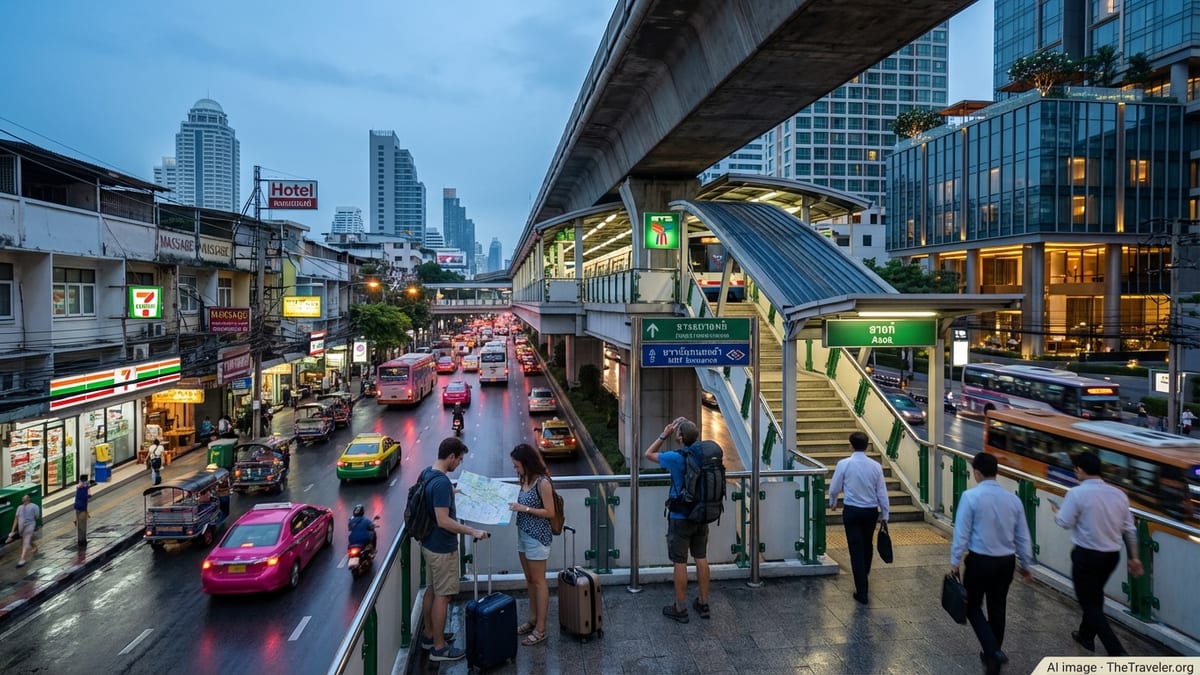
Thailand’s Long-Discussed Tourist Fee Moves Closer to Reality
Plans for a specific tourist entry fee in Thailand have circulated for several years, but recent statements reported in regional coverage indicate that the new government is moving to fast-track the measure. Proposals have centered on a 300 baht charge, roughly 9 US dollars, for foreign arrivals by air, framed as a way to support tourism management and visitor insurance schemes.
Earlier drafts suggested a lower amount for travelers arriving by land or sea, but more recent discussions reported in local media suggest that a single flat rate is now under consideration. Officials have also publicly floated the possibility of increasing the fee above 300 baht to reflect inflation and higher healthcare costs linked to unpaid medical bills from foreign visitors.
Implementation details, including the exact start date, collection method and final amount, have not yet been formalized in publicly available regulations. However, the direction of travel is clear: Thailand is positioning a tourist-specific fee as part of a broader toolkit that already includes a digital arrival card system for foreign nationals and ongoing scrutiny of visa runs and stay extensions.
For travelers planning late-2026 or 2027 trips, this means budgeting for an additional charge layered on top of existing costs such as visas, airport taxes included in air tickets and accommodation fees. It also signals a policy shift in a country that has long emphasized accessibility and relatively low upfront entry costs for international tourism.
Japan’s Rising Departure Tax Shows How Fees Can Escalate
Japan offers a clear example of how tourist-related charges can expand once in place. The country introduced its International Tourist Tax in January 2019, adding what became widely known as the “sayonara tax” to the cost of leaving the country by air or sea. Public information from Japan’s National Tax Agency describes the levy as a per-departure charge that applies to almost all travelers, regardless of nationality, and is typically folded into ticket prices.
Originally set at 1,000 yen, recent government announcements and tourism board updates show that the tax has been tripled to 3,000 yen in 2026, in response to sustained record visitor numbers and growing concern about overtourism in major cities and heritage sites. Revenue is earmarked for measures such as improving visitor facilities, digital border tools and destination management.
Because the tax is embedded in air and sea fares, many visitors may not notice it as a separate line item, but it still affects the total cost of a trip, particularly for budget travelers and families. For those planning multi-country Asia itineraries with repeated entries and exits through Japanese airports, the cumulative cost can become significant.
Japan’s experience underscores a key point for travelers looking at Thailand’s plans. Once a tourism-related fee is established, authorities can adjust it over time in line with policy goals and fiscal pressures. A modest charge introduced in one year may rise as destinations seek additional funding to cope with visitor demand.
Bali’s Dedicated Tourist Levy Becomes a Model for Island Destinations
Bali has been one of the most prominent adopters of a stand-alone tourist levy. From mid-February 2024, provincial regulations introduced a 150,000 rupiah fee, payable once per visit by foreign tourists entering the island. Information shared by Indonesian and foreign consular authorities explains that the levy is intended to support the protection of Balinese culture and the island’s natural environment.
The charge is separate from Indonesia’s national visa fees and is collected through a dedicated system widely referred to as “Love Bali,” with payment encouraged before arrival but also possible at various touchpoints on the island. Local government guidance indicates that the payment is valid for a defined period, covering a visitor’s continuous stay in Bali as long as they remain within Indonesia.
In practice, travelers typically experience the levy as a small additional charge on top of flights, visas and accommodation. However, for long-stay visitors, backpackers and repeat regional travelers, it reinforces the sense that Southeast Asia’s most famous beach and cultural destinations are no longer the ultra-cheap escapes they once were.
Bali’s approach has drawn interest from other island and resort provinces that face similar strains on local infrastructure, public waste systems and heritage conservation budgets. For Thailand, which manages heavy visitor flows to islands such as Phuket, Koh Samui and the Phi Phi archipelago, Bali’s model offers a case study in how a subnational government can implement and administer a dedicated tourist levy within a larger national framework.
Europe’s New Entry Rules and Fees Add to the Global Patchwork
While Thailand, Japan and Bali focus on per-visit or per-departure charges, Europe is building a different kind of cost layer through digital travel authorization and border systems. The European Union is rolling out the Entry/Exit System for non-EU nationals and plans to activate its European Travel Information and Authorisation System, known as ETIAS, for visa-exempt travelers in the coming years.
Publicly available information on ETIAS indicates that visitors from many non-EU countries who currently enter the Schengen Area visa-free will soon need to apply online for an authorization and pay a fee that reports suggest could reach around 20 euros after an announced increase. The authorization is expected to be valid for multiple trips over several years, spreading the cost for frequent travelers but introducing a new up-front expense for occasional visitors.
At the same time, a number of European cities and regions have introduced or expanded local tourist taxes, often collected per night through accommodation bills. Venice, for example, has piloted a daytime entry charge for short-stay visitors on peak days, adding yet another layer of potential cost for those combining Italian city breaks with long-haul travel from Asia or the Americas.
The result is a global patchwork of fees that can be difficult to navigate without careful planning. A traveler linking Thailand, Japan, Bali and a European stopover in a single long-haul itinerary may encounter distinct charges in each destination, ranging from exit taxes and tourist levies to digital travel authorization fees and city-level nightly taxes.
What This Means for Your Next Trip
For individual travelers, the growing wave of tourist fees does not necessarily mean canceling trips, but it does require a shift in how budgets are built. Instead of focusing only on advertised airfares and hotel rates, prospective visitors need to factor in entry and departure taxes, destination levies, visa or authorization fees and local accommodation taxes across every country on their itinerary.
Researching these charges before booking can prevent surprises at airports, border crossings or hotel check-outs. Since many levies are adjusted periodically, relying on older guidebooks or outdated online posts carries a risk. Checking recent government advisories, tourism board updates and airline booking breakdowns can give a more accurate view of the final cost.
The policy rationale behind these fees varies. Some destinations highlight the need to protect fragile environments and cultural heritage, others point to the burden of unpaid tourist medical bills or the strain on local infrastructure as visitor numbers reach or exceed pre-pandemic records. Common across the board is the idea that visitors should contribute directly to the upkeep of the places they enjoy.
As Thailand edges closer to introducing its own tourist entry fee, the country is aligning with a global trend rather than striking out alone. For travelers, the message is increasingly consistent from Bangkok to Bali and Tokyo to Venice: the price of seeing the world now includes a growing set of small but cumulative charges that are rapidly becoming part of the standard cost of international tourism.