


More news on this day
Travelers passing through Istanbul Sabiha Gokcen International Airport faced fresh uncertainty this weekend as Kuwait Airways grounded two flights linked to its Kuwait City hub, disrupting onward journeys to Casablanca, Tirana, Ercan, Budapest, Antalya, Bucharest and other major destinations across Europe, North Africa and the Eastern Mediterranean.
Get the latest news straight to your inbox!
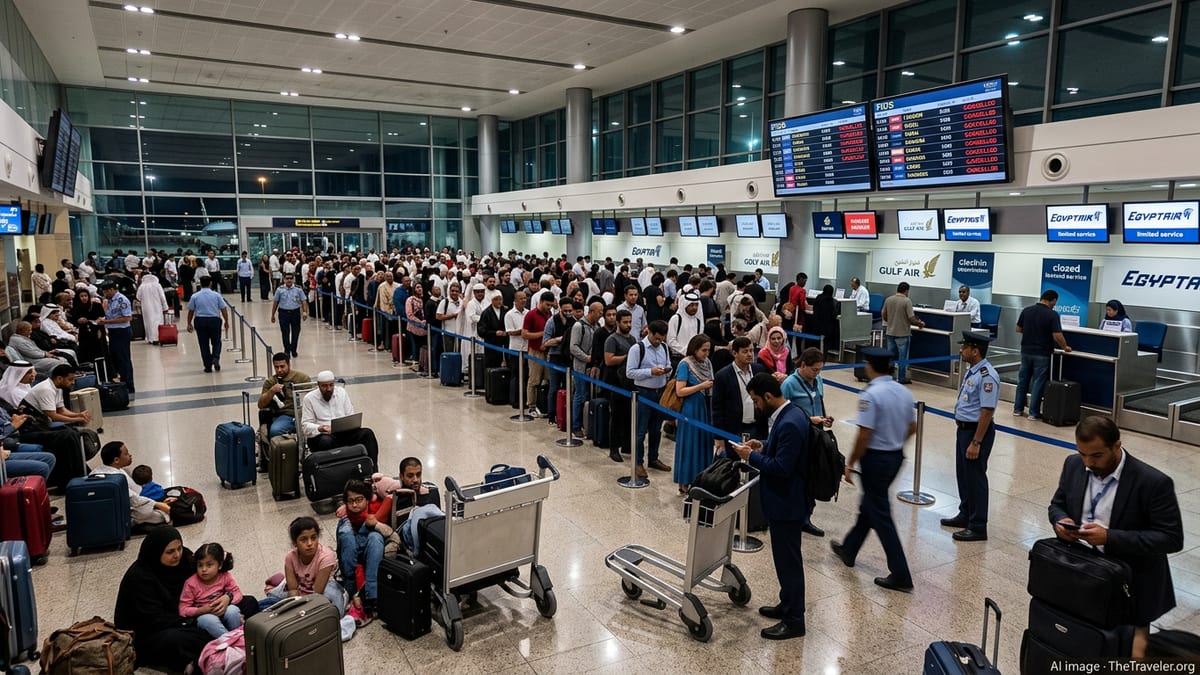
Grounded Flights Expose Fragile Kuwait City Hub
Publicly available schedule data and flight tracking platforms show that at least two Kuwait Airways services touching Istanbul Sabiha Gokcen were withdrawn from operation or marked unavailable at short notice, forcing passengers onto alternative routings or leaving them awaiting clarification on next steps. The affected flights connect into Kuwait City, a hub that normally feeds a web of onward links toward North Africa, the Balkans and key leisure markets.
The timing of the disruption is especially sensitive because Kuwait International Airport has only partially resumed operations following months of severe regional instability and airspace restrictions. While a limited number of departures and arrivals have restarted, capacity remains constrained and network planning for Gulf carriers is still highly fluid, leaving little slack when a scheduled rotation is removed.
The Istanbul flights act as crucial spokes in Kuwait Airways’ network, providing both point to point traffic and connecting flows. When a single rotation is grounded, the impact can cascade across multiple destinations, affecting itineraries that combine Kuwait Airways sectors with regional or European partners to reach cities such as Casablanca, Tirana, Budapest or Bucharest.
Recent online discussions among affected travelers indicate a pattern of short notice cancellations and automated messages advising passengers of schedule changes with limited rebooking options. For many, this latest Istanbul disruption reinforces concerns about the reliability of itineraries that depend on Kuwait City transfers while the airport’s reopening remains gradual.
Ripple Effects on Routes to Casablanca, Tirana, Ercan and Beyond
The knock-on impact of the grounded Kuwait Airways flights at Sabiha Gokcen has been felt far beyond the Turkey to Kuwait corridor. Many passengers use Kuwait City as a stepping stone between Istanbul and secondary destinations in North Africa, the Balkans and the Eastern Mediterranean, including Casablanca, Tirana and Ercan in Northern Cyprus, as well as popular leisure cities such as Antalya, Budapest and Bucharest.
Published coverage on Sabiha Gokcen’s March 2026 traffic trends highlights Antalya and Ercan as among the airport’s busiest routes, underlining how sensitive the local network is to any disruption on key regional links. When one of the Gulf connectors feeding that network stumbles, both inbound and outbound passengers can find themselves scrambling for seats on already busy Turkish and European carriers.
For travelers booked on multi segment journeys, the grounding of a single Kuwait Airways flight can invalidate entire itineraries. Missed minimum connection times at Kuwait City, or the simple absence of onward sectors, leave passengers facing lengthy layovers, forced overnights or last minute purchases of replacement tickets on different airlines. In some cases, reports suggest that only refunds have been offered, shifting the burden of finding alternatives onto customers.
This instability is particularly challenging for passengers heading to or from smaller markets, where direct options are limited and fares on remaining services can climb quickly. With summer demand building across the Mediterranean and Black Sea region, the sudden loss of capacity on any Gulf connector risks putting additional pressure on seat availability to cities like Casablanca, Tirana and Budapest.
Sabiha Gokcen’s High Traffic Levels Amplify Disruption
Istanbul Sabiha Gokcen has entered 2026 as one of Europe’s busiest airports, handling more than four million passengers in January alone and ranking among the continent’s top ten hubs by traffic. Recent network and delay reports for the wider European system show Sabiha Gokcen regularly appearing among airports with notable ground and air traffic management related delays, a reflection of its dense schedule and tight turnaround patterns.
In such an environment, even a modest reduction in predictability from a transfer partner like Kuwait Airways can produce outsized disruption. Missed connections, aircraft arriving out of sequence and last minute rebookings all complicate operations at a facility that already runs close to capacity during peak periods. The same reports indicate that previous weather and infrastructure constraints at Istanbul’s airports have triggered hundreds of delays in single days, demonstrating how quickly conditions can deteriorate when one part of the system falters.
The recent move toward a “silent terminal” concept at Sabiha Gokcen, with fewer loudspeaker announcements and greater reliance on digital information screens, adds another layer of complexity for passengers caught in irregular operations. While the new approach is designed to reduce noise and improve the airport experience in normal conditions, it also places a premium on travelers’ ability to monitor their flights via apps and display boards when schedules change rapidly.
For tourists unfamiliar with Istanbul’s layout or lacking strong language skills, the combination of grounded flights, tight connections and less frequent audio announcements can increase anxiety. Many only discover problems with their Kuwait Airways segments when online check in fails or status pages flag cancellations, leaving little time to react before departure.
Passenger Experience: From Stranded Transit to Costly Workarounds
Accounts shared on travel and consumer forums over recent months describe a difficult operating environment for passengers transiting Kuwait City and Istanbul, including long delays, missed connections and extended airport stays. Some travelers passing through Sabiha Gokcen on other carriers have reported being stranded overnight after late inbound arrivals caused them to miss onward flights, with limited assistance and significant out of pocket expenses for accommodation, visas and replacement tickets.
In the specific case of Kuwait Airways, recurring references to automated cancellations, slow refunds and limited rebooking options suggest that customers affected by the latest Istanbul flight groundings may face similar challenges. With Kuwait International Airport still on a phased reopening path, the airline’s flexibility to reroute passengers over alternative hubs is constrained, leaving fewer straightforward solutions when a flight is pulled from the schedule.
For many passengers, the financial impact extends beyond the value of the ticket. Non refundable hotel bookings, prepaid tours and connecting low cost flights booked on separate tickets can all be lost if the original itinerary collapses. As a result, some travelers are weighing whether to proactively avoid routings that rely on Kuwait City transfers until the regional situation stabilizes and a more consistent pattern of operations is established.
Consumer advocates note that travelers in such situations often have to navigate a patchwork of airline policies, third party agency rules and differing interpretations of passenger rights frameworks. In practice, that can mean lengthy waits for refunds, complex claims processes and uncertainty about compensation when cancellations are attributed to broader security or airspace issues.
What the Disruption Means for Summer Travel Plans
The timing of Kuwait Airways’ latest operational setback at Sabiha Gokcen is particularly unwelcome for travelers planning summer holidays across the Mediterranean and Black Sea region. Demand for routes linking Istanbul with coastal destinations such as Antalya, as well as city break favorites like Budapest and Bucharest, typically surges from late May through September, leaving limited spare capacity in the system.
Industry analyses of the Turkish aviation market for 2026 already highlight structural pressures, including aircraft delivery delays and engine maintenance bottlenecks that limit the ability of carriers to add backup capacity. When combined with regional geopolitical risk and the partial reopening of Kuwait International Airport, the margin for error on complex connecting itineraries narrows significantly.
Travel planners suggest that passengers with upcoming trips routed via Kuwait City and Istanbul consider monitoring their bookings frequently, paying close attention to schedule changes and allowing additional buffer time between connections where possible. Some may opt to secure alternative routings through other Gulf or European hubs that currently show more stable operations, even if that entails slightly higher fares or longer total journey times.
For Sabiha Gokcen itself, the Kuwait Airways disruption arrives as the airport seeks to balance rapid growth with stability, supported by infrastructure upgrades and operational initiatives. How effectively the wider network absorbs this latest shock will be closely watched by airlines, regulators and travelers alike as the peak travel season approaches.