


More news on this day
New York’s LaGuardia Airport is experiencing a fresh wave of operational disruption, with travelers encountering extended flight delays and a growing number of cancellations as the busy summer travel period intensifies.
Get the latest news straight to your inbox!
Summer Surge Meets a Congested Airport
LaGuardia has long been one of the most delay-prone major airports in the United States, and current conditions underscore how challenging it can be to keep operations running on time during peak travel season. Publicly available performance data compiled through late June and early July 2026 show on-time departure rates slipping as traffic volumes climb, with many departures now pushed back well beyond scheduled times.
Analyses of recent operations indicate that when LaGuardia moves into a ground delay program, average departure delays can exceed an hour. Even on days without formal traffic management programs in place, rolling gate holds and extended taxi queues have become common, particularly in the late afternoon and evening peaks when arrival and departure banks overlap.
For passengers, the effect is a patchwork of disruption. Many flights still leave close to schedule, but a substantial minority are experiencing moderate to major delays, and a smaller share are being canceled outright, forcing travelers onto later services or alternative airports in the New York region.
Weather, Runway Limits and Recent Incidents Add Strain
Weather remains one of the most immediate triggers for widespread delays at LaGuardia. Thunderstorm activity over the New York area in recent weeks has led to holding patterns in the air, temporary ground stops for arrivals, and tighter spacing between aircraft on departure. Even brief cells of severe weather can ripple through the day’s schedule, creating backlogs that persist well after the skies have cleared.
Runway capacity is another persistent constraint. LaGuardia’s compact airfield and short parallel runways limit how many aircraft can safely take off and land each hour, especially when visibility is reduced or when strong crosswinds require specific runway configurations. When one runway is restricted or closed for inspection or maintenance, delays and cancellations tend to escalate quickly as airlines compete for a smaller number of available slots.
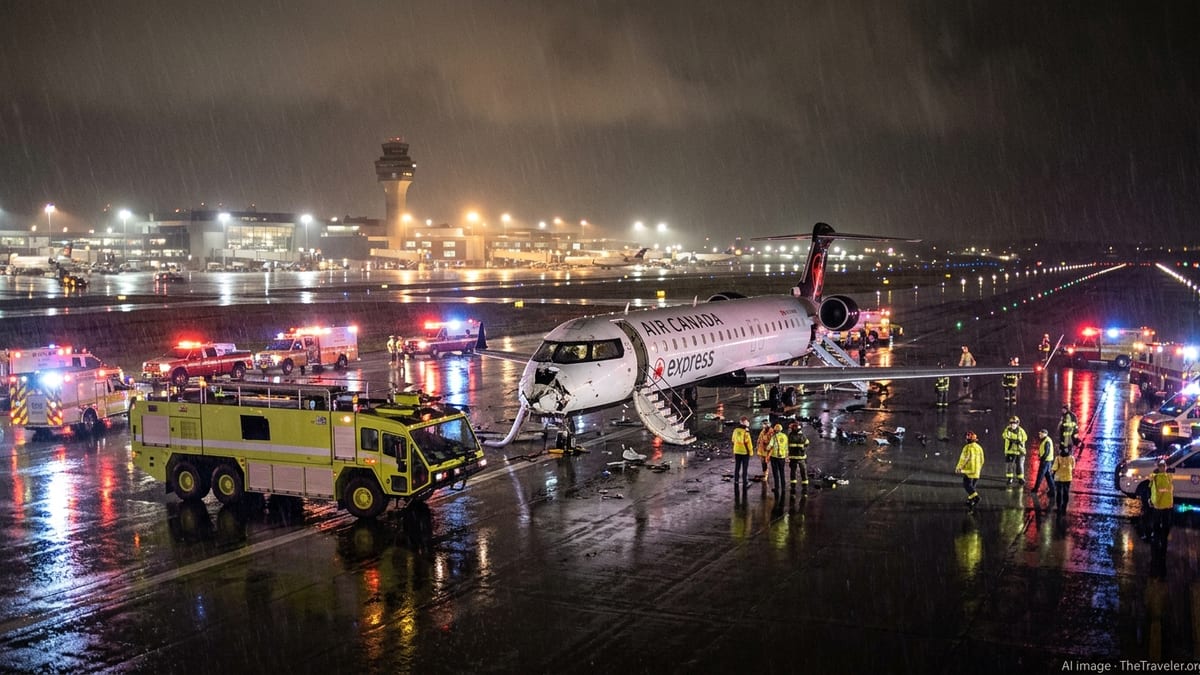
Recent operational disruptions have also heightened sensitivity to safety and infrastructure concerns. Earlier in the year, LaGuardia saw temporary closures and schedule disruptions linked to both airfield incidents and infrastructure inspections. While normal operations have resumed, the heightened caution around runway conditions and surface operations can lead to additional spacing and conservative scheduling, which in turn contributes to slower recovery when irregular operations occur.
Airlines Juggle Schedules and Recovery Options
Airlines operating from LaGuardia are now working within tighter regulatory and operational limits that are designed to balance safety, congestion and environmental impact. Federal rules capping movements at the airport, combined with updated delay-reduction and flight-data management initiatives, are reshaping how carriers build their schedules and manage disruption when it occurs.
Operational statistics published for several major carriers at LaGuardia over the past three months show a notable portion of flights categorized as significantly or majorly delayed, even as most services still depart within a reasonable window of their scheduled times. Some airlines report average delay figures in the range of 20 to 30 minutes, with spikes on stormy days when congestion compounds across the region.
When disruptions intensify, airlines have a limited set of tools available. These include rerouting traffic to nearby hubs such as Newark or John F. Kennedy, combining lightly booked services, or trimming frequencies on short-haul routes. Rebooking options can be constrained on peak summer days when alternative flights are already heavily sold, leaving some passengers facing overnight stays or lengthy waits for open seats.
Passengers Confront Long Lines and Uncertain Timelines
The impact of LaGuardia’s current delays and cancellations is felt most directly in crowded terminals and at overstretched customer-service desks. Travelers arriving for afternoon and evening departures frequently encounter congested check-in areas, long security queues and boarding gates where multiple delayed flights vie for limited seating and information screens.
Reports from recent travel days describe passengers dealing with multi-hour waits, rolling departure times and last-minute gate changes. For those connecting onward through other hubs, even relatively modest delays from LaGuardia can result in missed connections and the need to rebook entire itineraries. Travelers with checked baggage can also face complications when flights are canceled after bags have been loaded or transferred between aircraft.
Travel waivers and flexible rebooking policies have periodically been introduced by several carriers serving LaGuardia, particularly during periods of severe weather or temporary airfield closures. These measures can help reduce crowding by allowing passengers to shift to earlier or later flights, or even to alternate airports, without additional change fees. However, seats under such waivers can be limited, especially on popular routes along the East Coast and to major Midwest hubs.
What Travelers Can Do Right Now
With LaGuardia facing repeated bouts of disruption, travel planners are emphasizing preparation and flexibility. Current guidance suggests that passengers build in additional buffer time for both departure and arrival, especially when traveling during late-day peaks or when storms are forecast in the New York region or along the route of flight.
Real-time tracking tools provided by airlines and independent aviation data services can offer early clues about brewing delays, such as inbound aircraft arriving late, developing weather systems, or formal traffic management initiatives issued for LaGuardia. Monitoring both the departure and arrival airports, as well as the broader Northeast airspace, can help travelers adjust expectations and contingency plans before leaving for the airport.
Travelers with time-sensitive commitments are also weighing alternatives such as flying into or out of Newark or John F. Kennedy, or shifting to early-morning departures that historically see fewer disruptions. While no option is immune from delays, diversifying departure times and airports can reduce the risk of being caught in the worst of LaGuardia’s congestion during the busiest weeks of the summer.