


More news on this day
Los Angeles International Airport is experiencing significant operational disruption, with publicly available flight-tracking data showing at least 277 delayed departures and six cancellations, creating knock-on effects for passengers traveling across the United States, Asia-Pacific and Europe.
Get the latest news straight to your inbox!
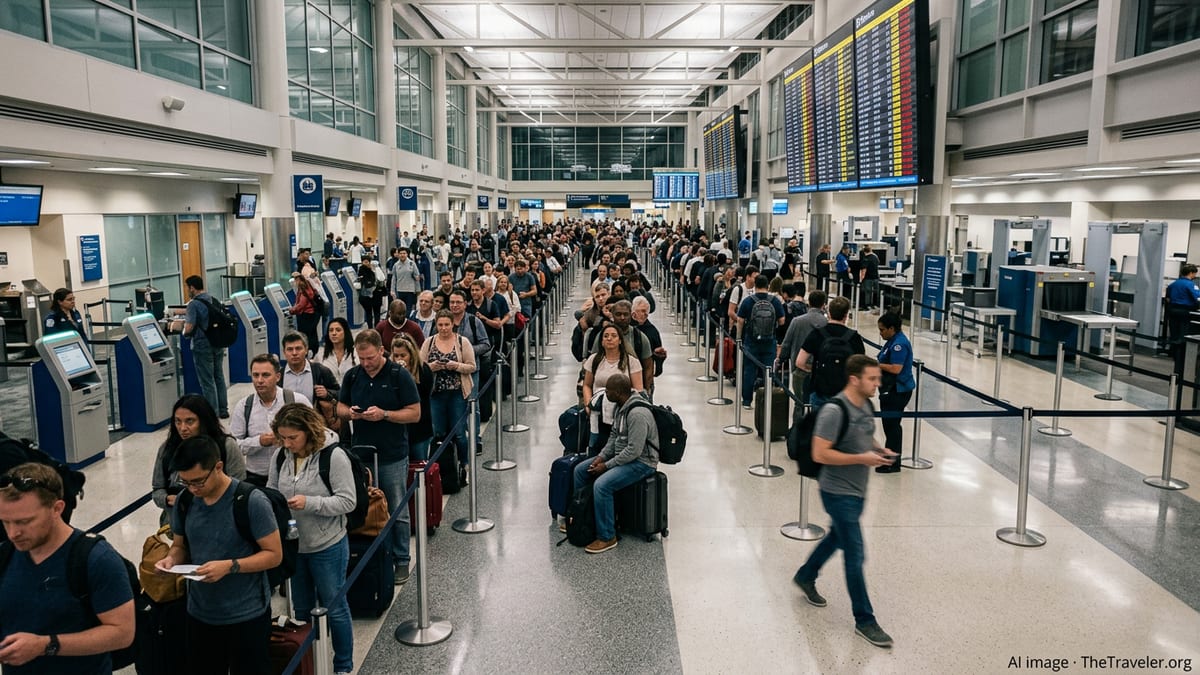
Heavy congestion pushes departure delays higher at LAX
Real-time information from airport and aviation tracking platforms on July 3 indicates that congestion at Los Angeles International Airport has translated into an elevated rate of delayed departures throughout the day. Federal aviation system status updates list LAX as experiencing volume-related delays, with average waits of around half an hour or more for many flights to push back from gates and join departure queues.
Terminal-by-terminal overviews show that the impact is spread across the airport’s major carriers, with American Airlines at Terminals 4 and 5, Delta Air Lines at Terminals 2 and 3, and Southwest Airlines at Terminal 1 all appearing among the most affected operators. Flight status boards and third-party trackers highlight long strings of services marked as late, as airlines work through peak morning and early afternoon traffic.
Operational data suggests that the airport itself remains open, with no weather closure in effect, but a combination of heavy holiday-week demand, tight turnarounds and congestion on key taxiways has slowed the flow of aircraft. The result is that many departures remain on the ground longer than scheduled, creating increasing pressure on gate availability and crew scheduling as the day progresses.
Although delays of around 30 minutes may appear modest in isolation, the sheer number of affected flights quickly compounds the disruption. With hundreds of services operating daily out of LAX, even small timetable shifts can cascade through the network, affecting aircraft rotations and onward connections both within the United States and on long-haul routes.
American, United, Delta and Southwest passengers face rolling disruption
Publicly available flight-tracker summaries for July 3 show that the bulk of delays at LAX are concentrated among the airport’s largest domestic operators: American Airlines, United Airlines, Delta Air Lines and Southwest Airlines. Departures to major hubs such as Denver, Seattle, Boston, Houston and Honolulu have been pushed back from their scheduled times, with many services operating 30 to 90 minutes behind plan.
For American and Delta, which run extensive domestic and international connectivity banks through LAX, late departures on key trunk routes risk missed connections for passengers heading on to secondary U.S. cities or onward long-haul flights. United’s operations to Houston, Chicago and other central hubs show similar patterns, raising the possibility of delays rippling into the evening schedule if recovery efforts are hampered by continued congestion.
Southwest, which concentrates its LAX flying in Terminal 1, is also contending with schedule pressure, according to route-level tracking data. High-frequency services to destinations such as Las Vegas, Phoenix and Hawaii are particularly sensitive to turn times, meaning that even short delays can quickly accumulate across a sequence of flights as aircraft move back and forth along the West Coast and out to the islands.
While a relatively small number of outright cancellations have been recorded compared with the large number of delayed flights, the cancellations that do occur often leave passengers facing more complex rebooking scenarios. With many departures heavily booked at the start of the peak summer holiday period, spare seats on alternative flights can be scarce.
Qantas and Asia-Pacific partners see knock-on effects
The disruption at LAX is also touching the Asia-Pacific region, where airlines rely on tightly timed links between U.S. West Coast departures and overnight transpacific schedules. Qantas, which uses LAX as a primary gateway for services between Australia and the United States, is among the carriers affected by the congestion, alongside partners that codeshare on American Airlines-operated flights feeding into and out of Los Angeles.
Flight listings for routes between LAX and key international destinations show that several services marketed by Qantas and its partners are operating behind schedule, particularly those relying on American Airlines-operated feeder flights from cities such as Boston and Denver. When these inbound connections arrive late, they compress the available time for passengers and baggage to be transferred onto long-haul departures bound for Sydney and other Australian cities.
Airlines across the Asia-Pacific region have been working with complex network patterns since the rebound in long-haul demand, and delays on one side of the Pacific can influence rotations days later. Aircraft scheduled to operate overnight transpacific sectors may arrive late into LAX due to upstream issues, then face additional departure delays as they queue for takeoff, further tightening aircraft and crew utilization across the network.
For travelers, the impact can extend well beyond Los Angeles. Passengers booked on multi-leg itineraries that include a domestic U.S. sector into LAX followed by a long-haul Asia-Pacific flight are particularly exposed, as a delay on the first leg can render onward connections unworkable. Re-accommodation options in such cases are often limited, with many long-haul services operating once daily or less.
European connections through West Coast gateways also affected
The current wave of delays at LAX is also feeding into wider transatlantic patterns, as European carriers and their U.S. partners rely on West Coast departures to connect to overnight flights heading to London, Paris, Frankfurt and other major hubs. While many Europe-bound services depart from other gateways, LAX remains a crucial node in alliance networks that link smaller U.S. cities and Asia-Pacific routes with European destinations.
According to published flight information, services between LAX and hubs such as London and Frankfurt are operating within a system already under strain from earlier disruptions. Delayed inbound domestic and regional flights reduce connection windows for west-to-east travelers, forcing some to be rebooked onto later departures or alternative routings via other U.S. cities.
Alliance structures mean that delays for American, Delta and United passengers at LAX can spill across to partners in Europe through shared codes, reciprocal bookings and coordinated schedules. Even where the transatlantic segment departs close to on time, late-arriving passengers and baggage can increase the risk of missed bags and longer waits on arrival in Europe’s already busy summer terminals.
For airlines, this dynamic complicates efforts to keep on-time performance metrics in line with seasonal expectations. With aircraft operating dense, round-the-clock schedules in July, recovery windows are limited, and a day of disruption on West Coast routes can echo into the following 24 to 48 hours of flying on both sides of the Atlantic.
Travelers urged to monitor status and prepare for extended journeys
Publicly available guidance from aviation and airport information services emphasizes that, during periods of heavy congestion like those currently affecting LAX, passengers benefit from close monitoring of flight status and building additional buffer time into their travel plans. Same-day connections, particularly those involving a switch from domestic to international legs, are regarded as high-risk when departure punctuality is under pressure.
Information platforms recommend that travelers check in as early as possible, arrive at the airport well ahead of standard minimum times and keep digital notifications enabled for real-time updates from airlines and tracking services. With some flights experiencing gate changes and rolling departure-time revisions, passengers who stay near their departure gate and monitor airport displays are generally better positioned to respond quickly to adjustments.
For those facing missed connections due to delays or cancellations, rebooking options may involve alternative routings through other U.S. hubs or, for long-haul journeys, shifting to next-day services. Given the strong demand typical of early July, particularly around holiday periods, seats on the most desirable replacement flights can be limited, and travelers may need to be flexible on departure times, routings and even destination airports in the same region.
Industry data from previous summers suggests that extended disruption at a major hub can take days to fully unwind, especially when weather, airspace constraints or crew-duty limitations overlap with volume-driven delays. Passengers connecting through Los Angeles in the coming days are therefore likely to feel the residual effects of today’s schedule pressures, even if headline statistics on delays at LAX begin to improve.