


More news on this day
British travellers heading overseas for summer 2026 are being urged to reassess their holiday plans as fresh travel warnings highlight a widening map of risk zones, surging extreme heat, tighter border checks and potential gaps in travel insurance cover.
Get the latest news straight to your inbox!
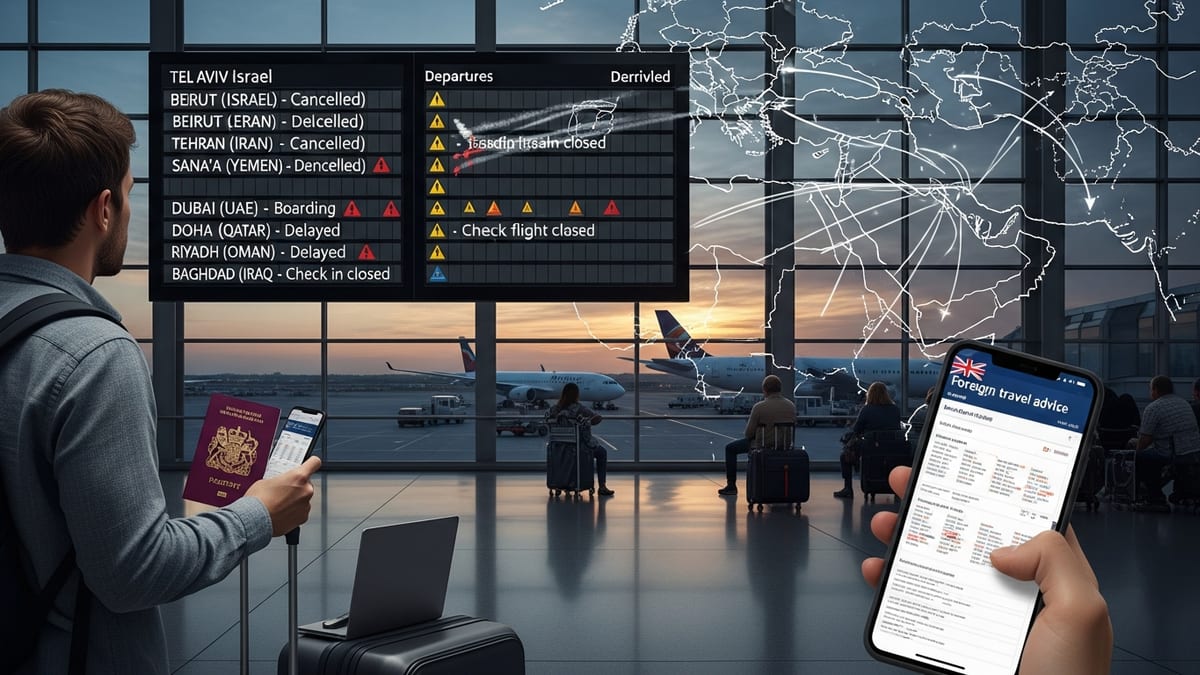
Expanded list of high‑risk destinations for UK travellers
Recent coverage of Foreign, Commonwealth and Development Office (FCDO) updates indicates that the number of countries and regions carrying strong warnings for UK travellers has grown again ahead of the main summer getaway. Reports on British travel briefings note that the government currently advises against all travel to a group of states facing conflict, civil unrest or widespread crime, and against all but essential travel to parts of several others.
Coverage in UK media summarising these changes points to long‑standing no‑go destinations such as Afghanistan and parts of the Middle East and Eastern Europe, alongside newer additions and revised regional warnings. A recent breakdown of the official advice highlights that around a dozen countries are now subject to blanket guidance against travel, while dozens more carry partial restrictions affecting specific provinces or border areas.
Analysts of the official advisory system stress that these classifications are not simply symbolic. When travel is advised against, many standard travel insurance policies limit or exclude cover for claims linked to the reason for the warning. Holidaymakers who proceed regardless may find that medical costs, cancellations or emergency evacuations are not reimbursed, even if they believed they were fully insured.
Travel industry guidance therefore urges British holidaymakers to check the safety and security sections for their chosen destination, drilling down into regional maps and recent incident reports, rather than assuming an entire country carries the same risk level. Travellers visiting friends and relatives in less touristy areas are being advised to be particularly cautious.
Extreme heat, wildfires and health risks across popular hotspots
Alongside geopolitical concerns, British travellers are being warned to prepare for another season of unusual weather patterns across Europe and beyond. Recent analysis of climate and meteorological data points to a continuation of hotter, drier summers in parts of southern Europe, increasing the risk of wildfires, heat‑related illness and transport disruption.
Publicly available information from European weather services and health agencies indicates that prolonged heatwaves are now occurring more often and earlier in the season, including in typically busy destinations such as Spain, Greece and Italy. These conditions heighten the risk of wildfires close to resorts, temporary beach and forest closures, and pressure on local emergency services.
UK health guidance for outbound travellers underlines that even those used to warmer climates may underestimate the intensity of extreme heat, particularly on city breaks, walking holidays and self‑drive itineraries. Dehydration, sunstroke and exacerbation of existing medical conditions remain major concerns. Travellers are being encouraged to monitor local alerts, consider flexible plans that avoid the hottest hours of the day and ensure adequate insurance for medical treatment abroad.
Separately, specific health warnings have been issued over outbreaks of gastrointestinal illness linked to popular winter‑sun and beach destinations visited by British tourists. Earlier this year, the UK Health Security Agency highlighted an increase in stomach bugs among visitors to the Cape Verde islands, prompting calls for better hygiene precautions and stronger awareness of local health risks when booking all‑inclusive or resort‑based holidays.
New border checks, documentation rules and airport bottlenecks
The latest travel warnings also focus on significant changes at European and international borders that could reshape the experience of flying out of the UK this summer. According to recent travel industry reports, 2026 is expected to be the first peak season in which new digital border systems in parts of Europe are fully tested by large volumes of British passengers.
Planned biometric entry and exit checks for non‑EU nationals, together with electronic travel authorisation schemes in some destinations, are likely to lengthen processing times at busy airports, ports and land crossings. Coverage of trial runs and earlier school‑holiday peaks has already highlighted queues at certain hubs when systems are introduced or upgraded.
At the same time, aviation and consumer outlets have reported concerns over jet fuel supply constraints in Europe, with warnings that some airlines may be forced to consolidate schedules or cancel flights earlier than usual. Industry commentary suggests that carriers facing sustained fuel price increases or shortages could trim less profitable routes, raising the risk of last‑minute changes for holidaymakers bound for popular Mediterranean resorts.
Against this backdrop, major airports on the continent have urged UK passengers to arrive earlier than in previous years, in some cases recommending three to four hours before departure during peak periods to clear security and border controls. Travellers connecting through hubs in southern Europe and the Middle East are being advised to allow generous transfer windows in case of queues or operational disruption.
Passport validity, insurance pitfalls and financial risks
In addition to safety and border issues, British travellers are being reminded that documentation and insurance rules remain a critical weak point in many summer plans. Analysis based on UK passport office data, highlighted by airline and consumer research earlier this year, suggests that a large cohort of UK passports is due to expire during the middle of 2026, coinciding with the peak holiday season.
Since many destinations require several months of remaining passport validity on arrival, travellers whose documents are close to their expiry date risk being turned away at check‑in or on arrival, even if they are still technically within the printed expiry. Consumer organisations have warned that airlines are unlikely to compensate passengers who have failed to meet published entry rules, and that travel insurance generally does not cover losses arising from invalid documents.
Insurance terms themselves are also under renewed scrutiny. Guidance aimed at UK holidaymakers stresses that policies may not pay out for trips to areas where the FCDO advises against travel, and may exclude claims linked to known events such as ongoing industrial action, named storms or pre‑existing medical conditions not declared at the time of purchase. Travellers are being urged to read policy wording in full, paying particular attention to sections on government advice, terrorism, natural disasters and supplier failure.
Financial risk is another growing theme of the latest warnings. With higher costs for flights, accommodation and package holidays, experts note that losing money to an airline, hotel or tour operator collapse can be significantly more damaging than in previous years. Britons are being encouraged to prioritise bookings that are protected under UK package travel regulations or covered by recognised financial protection schemes, and to use credit cards where possible to benefit from additional consumer rights on large purchases.
How UK holidaymakers are being urged to respond
The overall message emerging from the fresh wave of travel warnings is not that British holidaymakers should stay at home, but that they should approach overseas trips with more preparation and flexibility. Travel organisations, consumer groups and independent analysts consistently emphasise the importance of checking the latest official country‑by‑country advice shortly before booking and again just before departure.
Holidaymakers are being encouraged to keep a closer eye on regional developments rather than relying solely on headline summaries of destination risk. This includes monitoring local news for signs of protests, strikes, severe weather or transport disruption that could affect airports, ferry ports or railway hubs on route to or within a country.
Families and older travellers, in particular, are being advised to consider backup plans, such as alternative routes or dates, and to keep important documents together in digital and paper form in case of last‑minute schedule changes. Simple steps, including registering contact details with tour operators, enabling airline travel alerts, and making note of local emergency numbers and consular contacts, are being highlighted as basic precautions that can make a significant difference if something goes wrong abroad.
With schools breaking up and demand for flights and hotels building rapidly, the fresh travel warnings serve as a timely reminder for UK travellers to double‑check every aspect of their trip. From destination choice and insurance cover to border rules and health precautions, the advice for summer 2026 is clear: informed planning now could prevent serious disruption and unexpected costs later.