


More news on this day
A new analysis of federal flight statistics and disruption reports places New York City’s LaGuardia Airport among the most delay-prone hubs in the United States, ranking it No. 2 nationally for late departures and arrivals at major airports.
Get the latest news straight to your inbox!
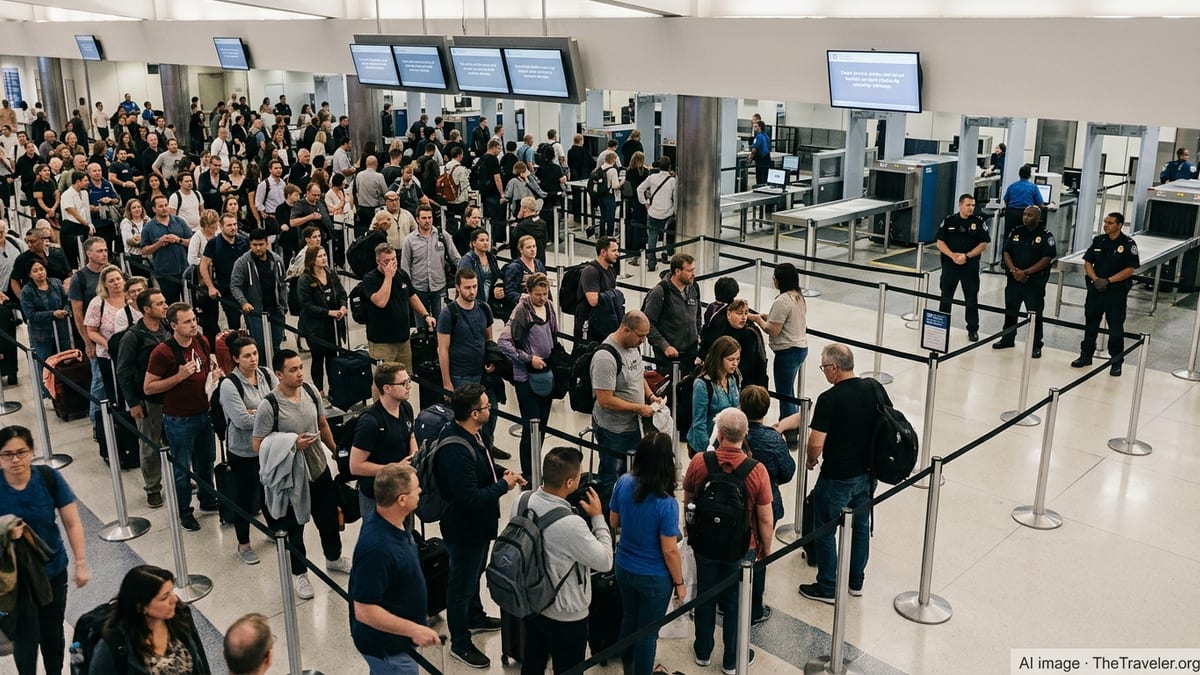
A fresh warning sign for LaGuardia travelers
Recent compilations of federal Bureau of Transportation Statistics data, analyzed by travel-insurance marketplace InsureMyTrip and flight-rights company AirHelp, show New York-area airports continuing to struggle with on-time performance. In the latest breakdown of U.S. disruption hot spots, LaGuardia (LGA) emerges as the second-worst major airport in the country for flight delays, behind only Ronald Reagan Washington National Airport in Washington, D.C.
Publicly available numbers show LaGuardia with one of the highest shares of late or canceled flights among large U.S. hubs, as measured by the percentage of operations arriving or departing behind schedule. While individual rankings vary slightly by methodology, multiple data-driven league tables place LGA near the top of the national delay charts, reinforcing the airport’s reputation as one of the most disruption-prone facilities in the country.
The ranking comes even as LaGuardia’s terminals and passenger facilities have undergone a widely praised multibillion-dollar overhaul in recent years, underscoring that operational reliability remains a separate challenge from terminal design and customer experience scores.
How LaGuardia’s delays compare nationwide
InsureMyTrip’s latest national airport statistics highlight New York’s ongoing reliability problem, noting that area airports “continue to struggle” as LaGuardia appears near the top of the list of U.S. airports with the highest percentage of delayed flights in 2025. The same dataset shows New York–New Jersey neighbors Newark Liberty International Airport and John F. Kennedy International Airport also ranking among the country’s most disruption-heavy hubs, but LaGuardia outpaces both on delay share in the most recent analysis.
In a separate AirHelp “USA Flight Disruption Report” for 2025, more than 248 million passengers nationwide experienced a delay or cancellation, and all three New York City–area airports landed within the top 10 for overall disruption. Within that group, LaGuardia stands out for the proportion of flights running late by at least 60 minutes, a metric that captures not just the frequency but the severity of holdups.
Other independent assessments reach similar conclusions. Historical breakdowns of New York airport performance by regional outlets show LaGuardia producing some of the longest median delays in the state, regularly exceeding 50 minutes on late flights, compared with shorter median waits at JFK. Together, these figures help explain how LaGuardia has climbed to the No. 2 national position in current delay-focused rankings.
Why delays at LaGuardia are so persistent
A combination of geography, airspace congestion and staffing challenges contributes to LaGuardia’s troubles. The New York metropolitan region hosts the busiest multi-airport system in the United States, and federal documentation notes that the close proximity of JFK, LaGuardia and Newark creates complex, overlapping flight paths that are a significant driver of chronic delays.
The Federal Aviation Administration has acknowledged that key air-traffic control facilities responsible for the New York area face staffing shortfalls, which can constrain the number of aircraft that can be safely handled at peak times. In response, regulators have periodically capped or reduced the number of takeoffs and landings at New York airports in an attempt to ease bottlenecks and reduce knock-on delays when weather or operational issues arise.
Weather is another major factor. Data analyses cited in regional reporting show some of LaGuardia’s worst months for delays occurring in the summer, when thunderstorms, heat and convective weather often disrupt the tightly choreographed arrival and departure patterns along the Northeast Corridor. Because LaGuardia operates with relatively short runways and limited room for expansion, the airport has less flexibility than some peers to recover quickly when schedules begin to slip.
Impact on travelers using New York’s No. 2 delay airport
The practical impact of LaGuardia’s No. 2 national ranking for delays is felt most acutely by travelers with tight connections, time-sensitive itineraries or business schedules. With a large share of flights running late, passengers are more likely to face missed meetings, curtailed trips and added hotel or rebooking costs when disruptions cascade throughout the day.
Travel-planning resources advise that those flying from LaGuardia build additional buffer time into itineraries, particularly during peak afternoon and evening departure banks when congestion tends to be worst. Analyses from booking platforms such as KAYAK, for example, have pointed to New York as a summer delay hotspot and suggested that earlier departures generally offer the best odds of leaving close to on schedule.
Travel insurance providers also note that high-disruption airports like LaGuardia see stronger demand for policies that include trip-delay and missed-connection benefits, reflecting a heightened awareness among frequent flyers that delays in the New York region are not merely occasional inconveniences but a structural feature of the local aviation system.
Steps being taken to improve on-time performance
Port Authority statistics for 2025 underline the scale of activity at New York’s three main airports, which together handle more than 140 million passengers in a typical year. Officials have sought to pair large-scale terminal investments at LaGuardia with airside and airspace changes intended to improve reliability, including updated taxiway layouts and new procedures designed to streamline arrivals and departures when weather cooperates.
On the federal side, FAA documentation details efforts to increase staffing at New York–area air traffic control facilities through incentive and training programs, and to redistribute some responsibilities across facilities serving nearby regions. The agency has also experimented with slot waivers and scheduling adjustments at LaGuardia, JFK and Newark in order to reduce overscheduling and give the system more resilience when disruptions occur.
Despite these measures, current rankings show that LaGuardia remains the No. 2 airport in the country for flight delays among major hubs. For now, travelers using the Queens gateway are advised to treat on-time departures as a welcome outcome rather than a guarantee, and to plan New York trips with a realistic expectation that delays are more likely here than at most other U.S. airports.
InsureMyTrip: U.S. airport flight delay and cancellation statistics
AirHelp: 2025 USA Flight Disruption Report