


More news on this day
Air travelers across the United States faced another difficult day as more than 899 flights were delayed and 126 were canceled nationwide, with weather and operational pressures combining to snarl schedules at some of the country’s busiest airports.
Get the latest news straight to your inbox!
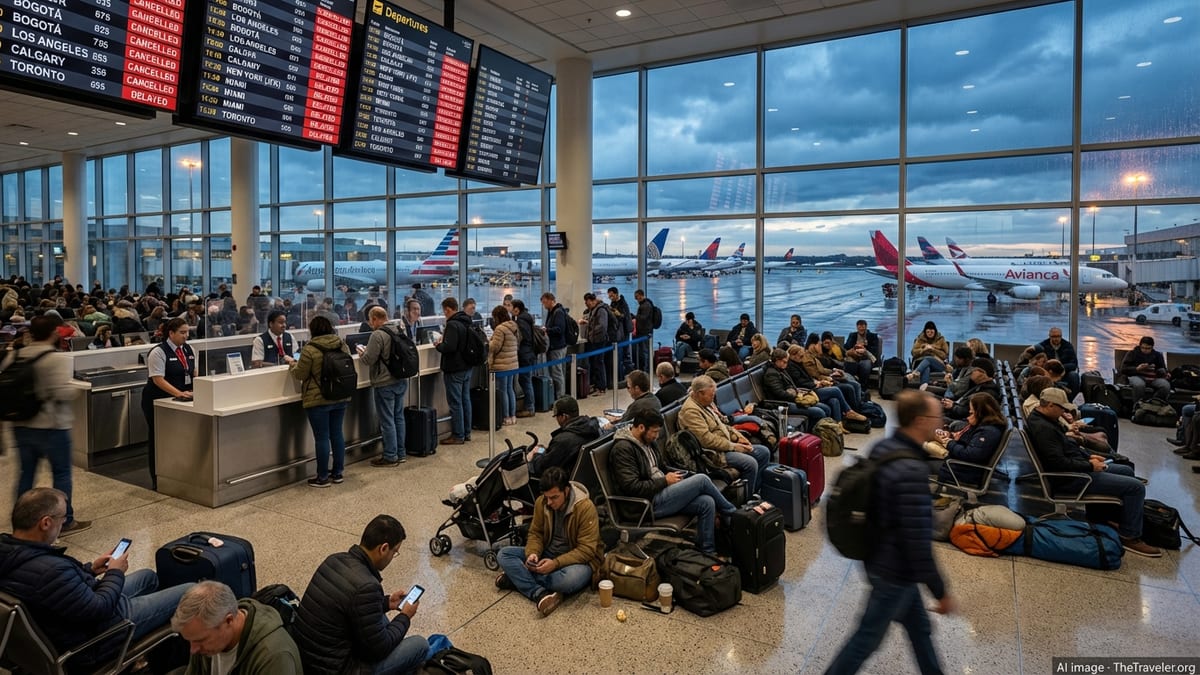
Nationwide Flight Delays Mount Across Major Hubs
Real-time tracking data from services such as FlightAware show that U.S. airports recorded over 899 delayed flights and at least 126 cancellations during the latest wave of disruptions, affecting journeys throughout the day for both domestic and international passengers.
According to published coverage based on that data, the impact has been widely dispersed rather than concentrated at a single hub, with major coastal gateways and large connection centers all reporting significant schedule upheaval. Travelers experienced rolling delays that often stretched through multiple departure banks, creating bottlenecks at gates and security checkpoints.
Reports indicate that some carriers were forced to adjust crew rotations and swap aircraft in response to the growing backlog, which in turn triggered additional knock-on delays. Once a critical mass of flights falls behind schedule, recovery can take hours, even after the immediate cause of the disruption begins to ease.
While the latest figures focus on one difficult travel day, they fit a broader pattern of recurring high-volume disruption this season, with several recent days also seeing more than 1,200 or even 1,900 delays and hundreds of cancellations nationwide.
Weather, Congestion and Airline Operations All Play a Role
Reports from aviation trackers and media outlets attribute the 899-plus delays and 126 cancellations to a mix of severe weather in key regions, airspace congestion and airline-specific operational challenges. Thunderstorms and unsettled conditions across parts of the Midwest and East Coast forced ground stops and flow-control measures that quickly rippled through airline networks.
When storms move through major hubs or along heavily used corridors, air traffic controllers often must space aircraft farther apart for safety, sharply reducing the number of takeoffs and landings that can occur in a given period. Even modest slowdowns can translate into hundreds of delayed flights once schedules are tightly packed during peak travel weeks.
Operational issues can further magnify the impact. Recent coverage of U.S. travel disruptions has highlighted how technology outages or crew-distribution problems at individual airlines can compound weather-driven delays, at times leaving aircraft and staff out of position for subsequent flights. In some previous events, single-carrier problems have resulted in more than a thousand delays and hundreds of cancellations in a single day.
Industry data compiled by the U.S. Bureau of Transportation Statistics and summarized in recent government analyses shows that weather, air traffic capacity and carrier-controlled factors together contribute to a sizable share of delays, especially during peak travel periods. The latest disruption is consistent with trends that have seen roughly one in five U.S. flights arrive at least 15 minutes late so far this year.
Passengers Face Missed Connections and Crowded Terminals
The uneven distribution of delays and cancellations has created particular challenges for passengers booked on multi-leg itineraries. When an initial flight departs late, travelers risk missing onward connections at hub airports, often forcing same-day rebooking or overnight stays.
Airports that function as major transfer points report some of the heaviest congestion when disruption spikes, as delayed inbound flights arrive in tight clusters rather than being spread over time. That can lead to long queues at customer-service desks, shuttle buses and airport hotels, and it strains baggage systems already operating near capacity.
Publicly available accounts from recent disruption days indicate that some travelers have been rebooked on later flights or rerouted through alternate hubs, occasionally arriving at their destinations many hours or even a full day behind schedule. Others chose to abandon their trips when same-day alternatives were no longer available.
For travelers still in the planning phase, the recurring pattern of large-scale delay days has become a factor in decision-making, encouraging some to select earlier departures, build in longer connection windows or consider nonstop routes where possible to reduce the risk of missed connections.
Understanding Passenger Rights and Airline Policies
While there is no comprehensive U.S. law guaranteeing cash compensation for flight delays, there are important protections and commitments that travelers can use to navigate disruption. The U.S. Department of Transportation’s Airline Cancellation and Delay Dashboard compiles each major carrier’s written promises for what it will provide during controllable delays and cancellations, including meal vouchers, hotel accommodations and ground transportation.
Publicly available information on the dashboard shows wide variation between airlines in the degree of support they commit to offer when disruptions are within their control, such as maintenance or crew issues. Several large carriers pledge hotel rooms and transportation for overnight delays they cause, while others limit their assistance to rebooking on later flights.
Weather-related disruptions are often treated differently, with airlines generally not required to provide hotels or meal vouchers when storms are the primary cause. However, carriers still must offer refunds when they cancel a flight or make a significant schedule change and the passenger chooses not to travel, according to U.S. consumer protection guidance.
Consumer-rights advocates recommend that passengers keep receipts for necessary expenses during long delays, monitor carrier-specific policies and, when appropriate, file complaints with the Department of Transportation if they believe an airline has not honored its published commitments.
How Travelers Can Navigate Ongoing Disruptions
As large-scale delay days become more frequent, travel experts and airline guidance converge on several practical steps for passengers seeking to minimize disruption risk. Reports consistently emphasize checking flight status regularly through airline websites or mobile apps, particularly in the 24 hours leading up to departure and en route to the airport.
Booking earlier flights in the day, when possible, can provide more rebooking options if something goes wrong. Nonstop itineraries reduce the chance of missed connections, while slightly longer layovers at hubs can create a buffer against inbound delays.
Publicly available advice from consumer groups also highlights the importance of enrolling in airline notifications, keeping contact details up to date and downloading carrier apps that enable self-service rebooking. When cancellations or long delays occur, passengers who can quickly search and request alternate routes often secure scarce seats before options run out.
Given recurring volatility in the U.S. air travel system, many travelers now factor disruption risk into trip planning, from purchasing flexible fares and travel insurance to building extra time into itineraries for major events, cruises or international connections. The latest day of more than 899 delays and 126 cancellations serves as another reminder that even routine domestic trips can be significantly affected when weather and operational strains converge.