

More news on this day
New York travelers heading into the Memorial Day weekend rush are facing major disruptions after a sinkhole forced the emergency closure of LaGuardia Airport’s primary runway, triggering cascading delays and cancellations across one of the country’s busiest air corridors.
Get the latest news straight to your inbox!
Runway 4/22 Closure Compounds Holiday Travel Pressures
Publicly available information indicates that crews discovered the sinkhole late Wednesday morning, May 20, near Runway 4/22 during a routine inspection of LaGuardia’s airfield. The depression was found close enough to the pavement used for takeoffs and landings that the runway was taken out of service while engineers assessed the damage and began emergency repairs.
Runway 4/22 is one of only two runways at LaGuardia, and recent operational data shows it handles a large share of the airport’s departures and arrivals. With that strip closed in the days leading into Memorial Day weekend, airlines have had to compress schedules onto the remaining runway, a scenario that sharply reduces capacity and leaves little room to absorb weather or congestion.
Multiple news outlets report that the closure has already contributed to hundreds of delayed and canceled flights since Wednesday, with disruption extending into Thursday and Friday. Aviation trackers show long ground holds and arrival metering programs at LaGuardia, while knock on effects have appeared at major hubs including Chicago, Atlanta, Dallas and Miami as aircraft and crews fall out of position.
Memorial Day weekend is historically one of the busiest travel periods of the year, and early forecasts for 2026 projected record passenger volumes nationwide. The unexpected loss of a key runway at a slot constrained New York airport is adding an extra layer of strain just as airlines and airports were preparing for peak summer demand.
Hundreds of Flights Affected as Airlines Trim Schedules
According to published coverage from national and local outlets, more than 400 flights connected to LaGuardia have been delayed or canceled since the sinkhole was discovered. Some carriers have proactively trimmed their schedules through the end of the week, consolidating lightly booked trips and shifting passengers onto remaining flights where seats are available.
Data from flight tracking services shows a particular hit to short haul routes along the densely traveled Northeast corridor, including service to Boston, Washington and smaller regional airports. These flights rely heavily on LaGuardia’s tight turnaround times, which become difficult to maintain when a single runway is sharing arrivals and departures.
Travelers are reporting long lines at check in and security, as well as crowded gate areas as departures roll from hour to hour. Some airlines have issued flexible travel waivers for customers booked to or from LaGuardia over the coming days, allowing changes to other New York area airports where seats can be found. However, both John F. Kennedy International and Newark Liberty International are also busy heading into the holiday period, limiting the ability to fully absorb displaced passengers.
Operational reports suggest that airlines are prioritizing mainline and long haul services while trimming some regional frequencies. That strategy may help keep overall passenger throughput higher but is likely to leave some smaller markets with fewer options or longer connection times over the weekend.
Engineers Race to Stabilize Airfield as Weather Threatens
Publicly available statements from the Port Authority of New York and New Jersey and media coverage indicate that repair crews moved in quickly with heavy machinery, including excavators and dump trucks, to excavate and stabilize the affected area near Runway 4/22. Images from television news helicopters show a sizable work zone carved out of the pavement and underlying fill, with crews working around the clock under portable lighting.
Initial assessments reported by outlets such as ABC News and NBC New York suggest the sinkhole formed in an area built on decades old fill near the edge of the airfield, a reminder of the geotechnical challenges that come with operating an airport on reclaimed shoreline. Engineers are reported to be compacting new material and reinforcing the subsurface before repaving, a process that must meet strict safety standards before aircraft can return.
Weather has complicated efforts at times, with passing showers and thunderstorms sweeping across the New York area since Wednesday. Even under normal circumstances, LaGuardia’s tight runway layout and waterfront location make it more vulnerable to delays during poor weather. With only one runway open and active construction nearby, any reduction in visibility or ceiling further slows traffic, adding to the backlog of flights.
Reports from regional media on Thursday suggested a tentative target to reopen Runway 4/22 by Friday, May 22, ahead of the busiest Memorial Day weekend departure windows. However, the timeline remains contingent on satisfactory engineering inspections, and airlines are planning on continued operational constraints even after the physical repair is complete.
Regional and National Ripple Effects for Memorial Day Travel
Because LaGuardia is a critical node in the domestic network, the sinkhole related closure is having repercussions far beyond New York City. According to aviation analytics cited in national travel coverage, aircraft scheduled to fly multiple legs per day are now experiencing extended ground times and diversions, which in turn disrupt flights in other regions hours later.
Travel analysts note that Memorial Day weekend demand is especially concentrated on Thursday and Friday departures, combining leisure travelers with late week business flyers. With LaGuardia’s capacity reduced just as that wave builds, passengers may see elevated fares, overbooked flights and limited same day rebooking options, particularly on popular sun and beach routes.
Other airports in the region are seeing knock on effects. Newark and JFK have recorded rising delay averages as more connecting passengers reroute through those hubs, while smaller alternatives such as Islip and Stewart are fielding increased interest from travelers willing to drive farther to avoid the congestion. Ground transportation providers into and out of New York are also bracing for heavier demand from stranded or rerouted passengers.
Industry observers expect operational challenges to persist even after Runway 4/22 reopens, as airlines work through a backlog of passengers and reposition aircraft and crews. Schedules may remain fragile throughout the holiday period, with relatively minor weather or technical issues capable of triggering fresh rounds of delays.
Longer Term Questions About Infrastructure Resilience
The sinkhole has revived discussion about the vulnerabilities of aging airport infrastructure in the United States, particularly at coastal facilities built on fill or marshland. LaGuardia has undergone a multibillion dollar terminal overhaul in recent years, but the latest incident highlights that critical runway and taxiway systems still face structural and environmental pressures.
Background information from transportation and aviation agencies shows that LaGuardia has long been the subject of geotechnical monitoring, with ongoing work to maintain pavements and drainage in an area exposed to rising sea levels and intense storms. The newly formed sinkhole is likely to prompt fresh scrutiny of inspection regimes, subsurface conditions and long term capital plans.
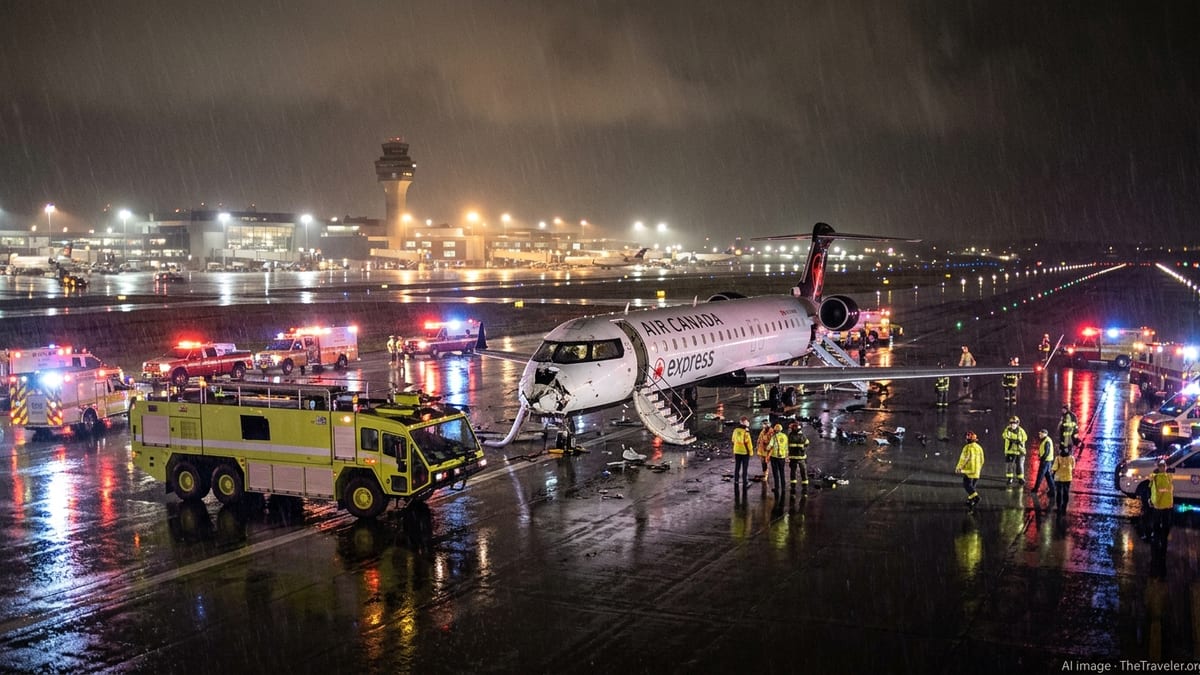
Safety advocates point out that this incident follows a separate high profile event in March, when an Air Canada Express aircraft collided with a fire truck on the same runway, raising broader concerns about ground operations and resilience at the crowded airport. While the causes of the two events are unrelated, their proximity in time has sharpened public attention on LaGuardia’s risk profile.
For travelers, the episode underscores how a single infrastructure failure at a major hub can disrupt plans across an entire holiday weekend. As airlines, airport operators and regulators review what happened beneath Runway 4/22, the focus will be on preventing a repeat at LaGuardia or any other critical link in the national air network during future peak travel periods.