

More news on this day
Air travelers across the United States faced another day of operational turbulence as 62 flight cancellations and 179 delays centered on Newark Liberty International Airport spread disruption across key domestic and transatlantic routes, affecting services operated by United, American, Republic, Delta and several international carriers.
Get the latest news straight to your inbox!
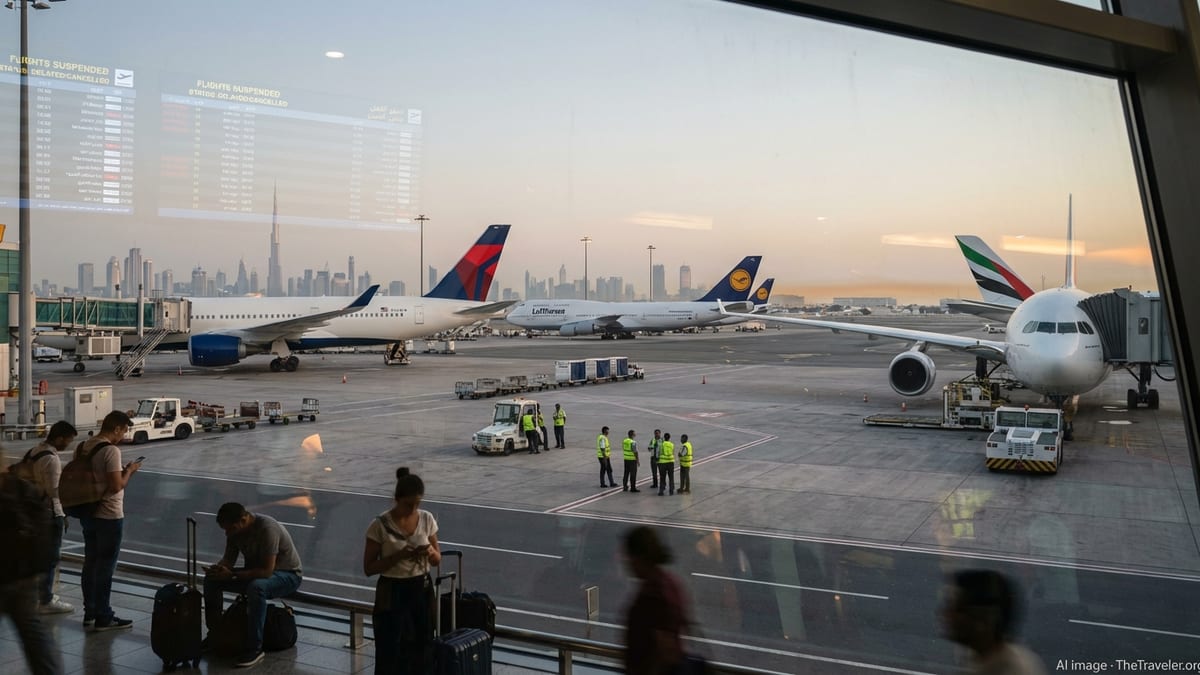
Newark Becomes Focal Point of a New Wave of Disruption
Publicly available flight-tracking data for Friday, May 22, showed Newark Liberty International Airport once again emerging as a disruption hotspot, with 62 flights canceled and 179 delayed, affecting both arrivals and departures. The latest interruptions added pressure to an already busy late-spring travel period, stranding passengers and complicating crew and aircraft rotations across airline networks.
Reports indicate the disruption at Newark spilled into a mix of short-haul and long-haul corridors, with knock-on effects for connections throughout the United States and onward links to Europe, Canada, Mexico and parts of Latin America. Travelers on tightly timed itineraries, particularly those connecting through Newark to international flights, were among the most exposed to missed connections and same-day rebooking challenges.
Operational dashboards and aviation data providers showed that while the nationwide total of cancellations remained significantly lower than during major weather or holiday meltdowns, Newark’s concentrated cluster of delays contributed disproportionately to misaligned flight schedules and crew timing issues across multiple carriers.
The pattern follows a broader trend of individual hubs experiencing localized stress that quickly reverberates across airline networks. When a single major airport logs more than 200 operational interruptions in a day, even modest additional disruption elsewhere can quickly accumulate into missed slots, rolling delays and last-minute schedule changes for passengers.
United, American, Republic and Delta Among Most Affected
Newark is a critical stronghold for United Airlines and a key station for regional operator Republic Airways, with American Airlines and Delta Air Lines also running a mix of domestic and international services through the region. Publicly available information shows that Friday’s disruptions touched a wide cross-section of these carriers’ networks, from mainline jets to regional feeder flights.
United and Republic, which together operate a substantial share of the departures from Newark, faced particular challenges in maintaining banked schedules designed around tight connection windows. Delays on early departures cascaded into later waves, complicating aircraft availability and crew duty-time limits on routes spanning the Midwest, South and West Coast.
American and Delta, which rely less heavily on Newark than on their own primary hubs, nevertheless saw itineraries disrupted where their flights connected with partner or codeshare services, or where passengers had built multi-airline journeys across major U.S. hubs. In some cases, travelers reported being rebooked via alternative airports in the New York region to work around congestion.
International airlines serving Newark, including transatlantic operators, were pulled into the broader disruption as late-arriving inbound aircraft forced schedule adjustments on evening departures back to Europe and Canada. For carriers operating tightly timed overnight rotations, even moderate delays can push crews toward regulated duty limits and compel additional schedule reshuffles.
Ripple Effects Reach London, Chicago, Boston and Other Hubs
The concentration of cancellations and delays at Newark had an outsized impact because of the airport’s role as a bridge between major U.S. business centers and global gateways such as London. Published coverage and route data show that services linking Newark with London Heathrow, Chicago O’Hare, Boston Logan and other high-traffic airports experienced elevated disruption as aircraft and crews fell out of position.
Routes between Newark and Chicago, a central connector for both domestic and international traffic, were especially sensitive to rolling delays. Even single-hour schedule slips can cause missed onward connections to cities across the Midwest, Mountain West and Pacific Northwest, prompting further rebooking and, in some cases, overnight stays for affected passengers.
In the Northeast corridor, flights linking Newark with Boston and other New England destinations faced similar challenges. Short-haul sectors are often used to reposition aircraft and crews for later long-haul departures; when those feeder flights encounter delays or cancellations, the resulting gaps can ripple across the evening departure bank bound for the West Coast and Europe.
London-bound operations felt the impact as well. Transatlantic flights depend heavily on precise timing to align with morning arrival waves in Europe and late-day departures from U.S. hubs. Disruptions at Newark increased the risk of missed connections for travelers originating in cities such as Atlanta, Washington, Charlotte and Orlando who were scheduled to connect to overnight services to the United Kingdom and continental Europe.
Wider U.S. Network Still Under Strain After Recent Turbulence
The concentrated numbers at Newark came against the backdrop of a broadly stressed U.S. air travel system. Earlier in the week, analytics firms tracking nationwide operations reported thousands of disrupted flights, with hubs including New York, Chicago, Dallas and Boston dealing with surges of delays and cancellations linked to a combination of storms, staffing constraints and airspace management programs.
Recent data from flight-tracking platforms and federal air traffic reports show that, on peak disruption days, overall U.S. delays can run into the thousands, with several hundred cancellations scattered across multiple carriers. While Friday’s Newark-centered event was smaller in scale, the episode underlined how even localized operational issues can quickly draw in carriers that might otherwise appear to be performing relatively well in national tallies.
Boston Logan and Chicago O’Hare, both already busy with seasonal traffic, experienced secondary pressures as aircraft and crews arrived late from the New York region. Public information from airspace status tools also pointed to periodic ground delay programs and flow restrictions at other East Coast hubs during the week, compounding the challenges of maintaining on-time performance.
For travelers, that meant an unpredictable mix of outcomes: some airports showing only modest average delays, while specific flights tied into the Newark network suffered extended holds, rolling departure times and, in some cases, same-day cancellations once crew or maintenance limits were reached.
What Travelers Can Expect and How to Prepare
With the busy Memorial Day and summer travel periods approaching, operational experts and consumer advocates warn that similar days of concentrated disruption are likely to recur, particularly at complex hubs such as Newark, New York’s other airports, Chicago O’Hare and major coastal gateways. Publicly available planning briefings from aviation authorities regularly highlight the risk of weather-related delays, runway and taxiway construction, and airspace flow programs in these regions.
Travel industry guidance commonly recommends that passengers crossing through known congestion points build additional buffer time into itineraries, especially when connecting from shorter domestic legs onto long-haul flights. Early-morning departures typically face less cumulative knock-on disruption than late-day services, though they can still be affected by overnight maintenance issues or residual delays from prior days.
Travelers are also encouraged, in widely shared advice from airline and airport resources, to monitor their flight status closely through carrier apps and flight-tracking platforms, rather than relying solely on airport departure boards. Same-day schedule shifts, equipment swaps and gate changes have become more frequent as airlines adjust in real time to staffing and airspace constraints.
While Friday’s 62 cancellations and 179 delays at Newark are modest compared with the worst nationwide meltdowns of recent years, the breadth of the knock-on impact across United, American, Republic, Delta and partner routes to cities such as London, Chicago and Boston underscores how interconnected the modern U.S. air travel system has become, and how quickly localized turbulence can reshape travel plans far beyond a single airport.