


More news on this day
Las Vegas continues to dominate Nevada’s tourism landscape, drawing far more visitors than Reno and other cities even as rising airfares begin to test travelers’ budgets and influence how they reach the state.
Get the latest news straight to your inbox!
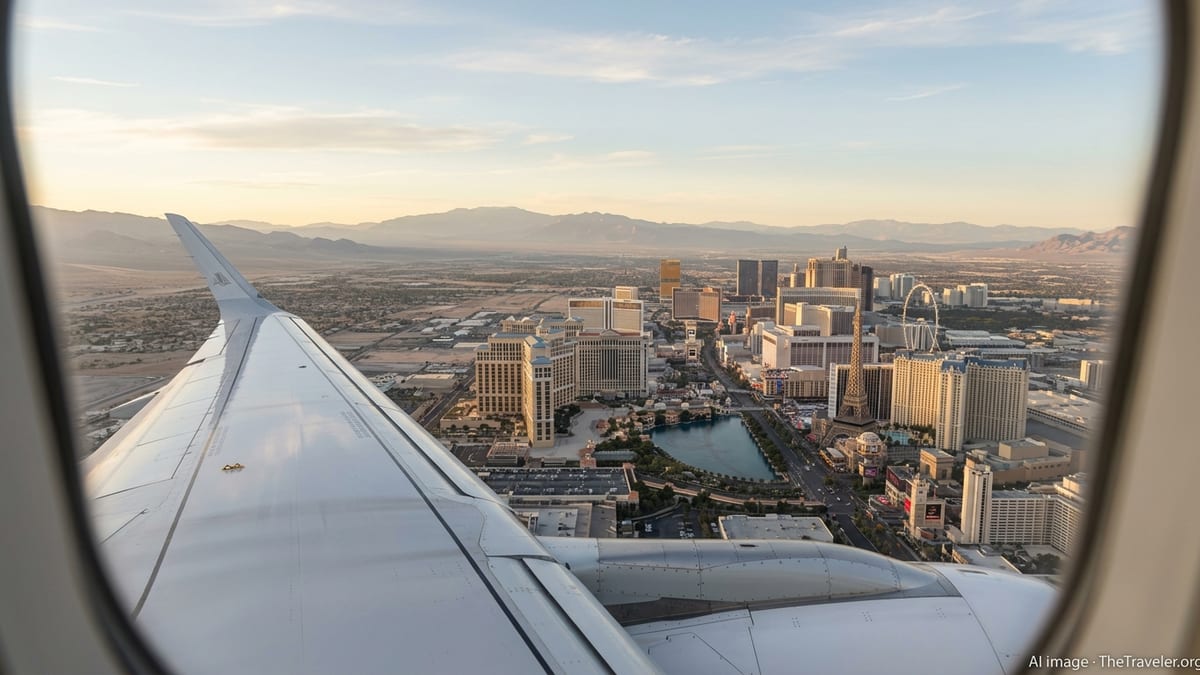
Las Vegas Remains Nevada’s Primary Gateway Despite Price Pressures
Publicly available visitor and airport data indicate that Las Vegas still accounts for the overwhelming share of trips into Nevada. Las Vegas Convention and Visitors Authority figures show more than 40 million annual visitors in recent years, far exceeding volumes recorded for the Reno-Sparks area and other parts of the state. The Las Vegas Valley remains the dominant hub for both domestic and international arrivals, with Harry Reid International Airport handling the vast majority of Nevada’s commercial air traffic.
State tourism and labor reports describe Las Vegas as the central entry point for Nevada’s broader visitor economy, with gaming, entertainment and convention business all heavily concentrated in Clark County. By contrast, the Reno-Tahoe region, while growing, serves a smaller mix of leisure, ski, outdoor and regional business travelers. This imbalance means that shifts in air pricing or capacity at Las Vegas have an outsized effect on how travelers experience Nevada overall.
Industry coverage notes that international carriers have continued to add or resume routes into Las Vegas in the past two years, including new or expanded links from Europe, Canada and Asia. That additional long-haul capacity has helped reinforce Las Vegas’s role as a global gateway, even as some domestic travelers weigh whether the total cost of a weekend in the city still fits their budget.
Airfare Data Shows Las Vegas Cheaper Than Average, Reno Rising Faster
Federal statistics suggest that, on paper, flying to Las Vegas remains relatively affordable compared with many other major U.S. airports, but that does not tell the full story for Nevada-bound travelers. The Bureau of Transportation Statistics’ average itinerary fare tables list Harry Reid International Airport with an average domestic fare below the national mean in 2024, reflecting the impact of sustained competition from low-cost carriers on key routes into the city.
Separate analyses of airfare trends, however, show that northern Nevada has been absorbing some of the state’s sharpest recent increases. A 2024 data study on U.S. airports found that Reno-Tahoe International ranked among the airports with notable jumps in average round-trip ticket prices year over year, with fares rising by more than six percent. That escalation, while starting from a lower base of total passengers, points to tightening capacity and strong demand in the Reno market.
At the national level, the Department of Transportation’s Domestic Airfare Consumer Report highlights city-pair markets where fares have moved significantly. While Las Vegas does not consistently appear among the steepest climbers, select routes into the city have registered measurable increases between late 2023 and late 2024, particularly from mid-size and regional origins that lack extensive carrier competition. Travelers bound for Nevada from those markets are feeling the impact even if headline averages remain moderate.
Capacity Growth in Reno and Other Markets Shifts the Cost Equation
Reno-Tahoe International Airport has reported some of its busiest traffic in nearly two decades, with airport updates describing 2024 as the strongest year since before the financial crisis. Reno has added seats and routes in recent seasons, particularly during peak summer and ski periods, as airlines respond to interest in Lake Tahoe, outdoor recreation and regional events.
Airport development materials highlight passenger totals approaching five million annually at Reno, a significant increase compared with earlier in the 2010s. The rapid growth has not fully closed the gap with Las Vegas, which handles many times that volume, but it has started to change how visitors distribute themselves across the state. As more nonstop and seasonal services arrive in northern Nevada, a larger share of travelers can bypass Las Vegas and fly closer to their final destination, even if that sometimes means paying more per ticket.
For smaller Nevada markets without major commercial airports, such as rural communities and resort areas ringing Lake Tahoe, Reno’s air service acts as the primary gateway. With limited alternatives, those travelers are often more exposed to fare increases on the routes the region does have, reinforcing Reno’s sensitivity to nationwide pricing trends and airline capacity decisions.
State Travel Policies Respond to Higher Ticket Prices
Rising airfares have not only affected leisure visitors but also public-sector and business travel within Nevada. A 2026 statewide travel bulletin outlines changes to how agencies book flights between Reno and Las Vegas, noting the discontinuation of a specific maximum rate for that route in favor of a tiered discount structure negotiated with a major carrier. The change is framed as a way to expand flexibility while still seeking savings on commonly used itineraries.
By steering government travelers toward contracted fares on high-volume routes such as Reno to Las Vegas, the state aims to manage costs at a time when published prices can be volatile. Similar policies are increasingly common among large employers and organizations that move people frequently across Nevada, suggesting that higher airfares are prompting institutional adjustments as well as individual trade-offs.
For private travelers, the effect of these shifts is more indirect but still meaningful. As negotiated contracts absorb some demand on core intrastate routes, inventory and pricing for the remaining seats can fluctuate, especially around major conventions, festivals and sporting events in Las Vegas when demand surges sharply.
Travelers Reassess How They Enter and Move Around Nevada
The combination of Las Vegas’s enduring dominance, rising fares in key secondary markets and evolving state travel policies is encouraging some visitors to reconsider how they reach Nevada. Travel forums and consumer discussions increasingly reference scenarios where travelers debate flying into Las Vegas to capitalize on lower base fares, then renting a car or connecting onward to Reno or other destinations, versus paying more for a nonstop into northern Nevada and avoiding long drives.
In practice, decisions often hinge on the total trip cost rather than airfare alone. While Las Vegas can offer cheaper tickets, visitors frequently encounter higher hotel and resort fees on peak dates, as well as elevated event pricing. Reno, by contrast, may entail higher airfare but lower on-the-ground costs and easier access to outdoor attractions, which can rebalance the equation for certain travelers and lengthier stays.
For Nevada as a whole, the latest data and policy signals point to a nuanced picture. Las Vegas still outpaces Reno and other cities as the state’s primary air gateway, but rising ticket prices and capacity shifts are gradually redistributing some visitor flows. How airlines, tourism agencies and travelers respond over the next few seasons will help determine whether Las Vegas continues to capture the bulk of air arrivals or whether Reno and other regional gateways claim a larger share despite steeper fares.
Bureau of Transportation Statistics – 2024 Domestic Air Fare Data
U.S. DOT Domestic Airfare Consumer Report
Reno-Tahoe International Airport – Air Service Development