


More news on this day
As another wave of mass flight disruptions ripples across major hubs from London to North America, images of passengers sleeping on airport floors have become a stark symbol of a strained global aviation system that still struggles to protect travelers when operations collapse overnight.
Get the latest news straight to your inbox!
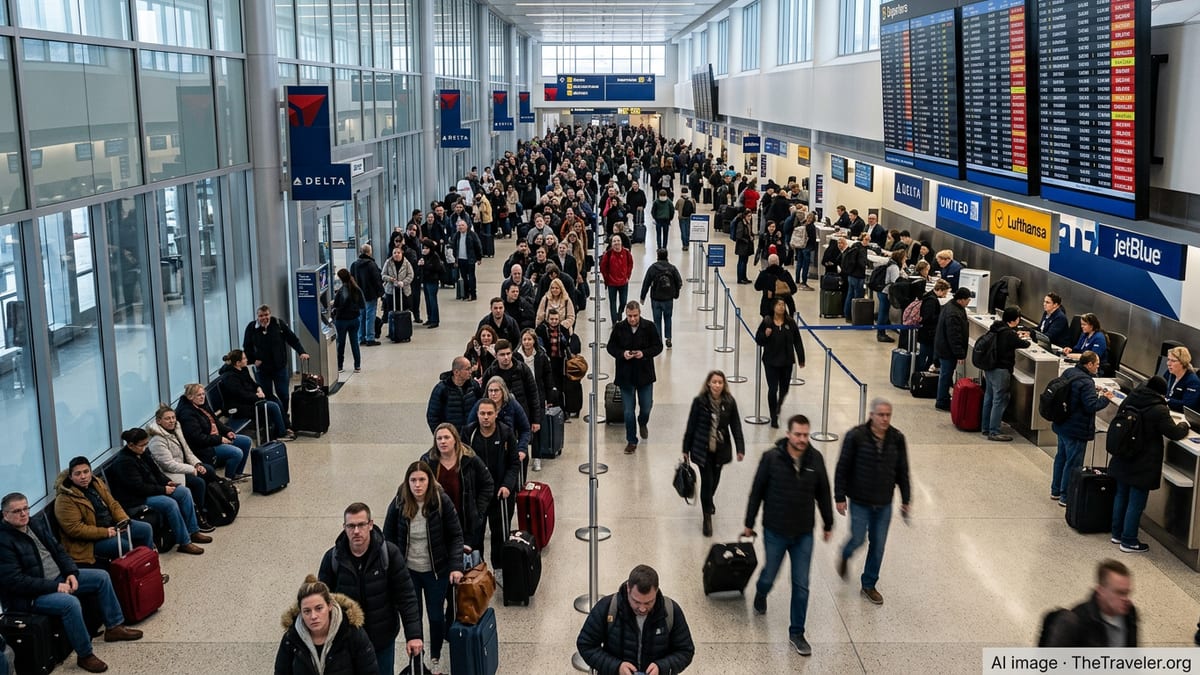
Fresh chaos puts exhausted travelers on the floor
Reports from the United Kingdom on 8 and 9 September 2026 describe thousands of passengers stranded after an air traffic control problem triggered widespread cancellations and delays. Coverage indicates that more than 1,000 flights were canceled in a single day, with London Heathrow and Gatwick among the hardest-hit airports as schedules unraveled into the night.
Passengers described terminal scenes of “carnage” as families laid out jackets and thin blankets on the hard floors around power outlets and departure boards. According to published coverage, some travelers reported being awake for more than 24 hours as they queued for rebooking, only to find that nearby hotels were sold out and airport seating was already full.
Images shared in UK and international media show people stretched out beside trolleys and suitcases in departure halls, echoing similar disruptions seen during previous air traffic and airline IT failures. For many of those affected this week, the only option was to try to sleep on the floor and wait for news of a replacement flight.
The scene is not limited to Britain. Recent disruptions in Boston left JetBlue passengers sleeping on airport cots after a series of delays and cancellations, while coverage from other North American hubs shows travelers camped out overnight near shuttered concessions and darkened gates.
Recurring pattern from London to North America
Current events fit a now-familiar pattern, where a single failure reverberates through tightly scheduled aviation networks. Reports on the latest UK air traffic control fault indicate that knock-on delays spread across Europe and into transatlantic services, leaving arriving and departing passengers simultaneously stranded in multiple countries.
Earlier this summer, separate coverage from Gatwick Airport highlighted how even non-aviation issues such as a regional water outage can quickly reduce comfort and basic facilities for those stuck overnight. With toilets and restaurants partially closed, travelers were again pictured sitting or lying on the floor as they waited for information and running water.
In North America, local news out of Boston in late July detailed how passengers were still sleeping on cots at Logan Airport after days of weather and operational disruption at a single carrier. That incident followed other high-profile meltdowns in recent years in Atlanta and at major hubs used by Delta and other large airlines, where travelers were shown lining corridors and terminal spaces when hotel rooms and rebooking options ran out.
Consumer advocates note that social media and video platforms are increasingly filled with accounts of missed connections turning into unplanned airport sleepovers, from Florida to Europe. Posts describing people “exhausted after sleeping on the airport floor” have become a recurring shorthand for the strain frequent travelers now expect when something goes wrong.
What airlines owe stranded passengers varies widely
While the frustration looks similar from one terminal to the next, passenger rights differ significantly by region. In the European Union and the United Kingdom, regulations broadly known as EU261 and UK261 can require airlines to provide care such as meals and hotel accommodation when cancellations or long delays are within the carrier’s control. Technical faults at airlines or some air traffic failures can fall into that category, although each case depends on specific circumstances.
By contrast, in the United States, publicly available guidance from the Department of Transportation emphasizes that airlines are not universally required to provide hotel rooms or meal vouchers during disruptions. Instead, U.S. carriers publish individual customer service commitments, and assistance is often handled case by case. Weather-related problems in particular frequently fall outside mandatory compensation rules, leaving many travelers to arrange and pay for their own lodging when they are forced to stay overnight and sleep in the terminal if hotels are too costly.
Recent cases also highlight gray areas, such as government shutdowns or infrastructure outages that indirectly lead to flight disruptions. Coverage of staff shortages at major U.S. airports in 2026, for example, noted longer security lines and knock-on delays but no blanket obligation for airlines or airport operators to provide rest facilities for passengers who miss connections because of congestion at checkpoints.
For travelers caught in the current wave of cancellations, that patchwork of rules often translates into confusion at customer service desks and long waits to understand what support, if any, is available. Many of those now sleeping on airport floors report learning about their options from online resources or fellow passengers, rather than from clear, proactive information at the gate.
Comfort strained as infrastructure and staffing lag demand
The visual of people resting on polished tile and thin carpet also underscores lingering structural challenges. Industry analyses in 2026 from air passenger rights groups point to traffic volumes that are at or above 2019 levels on many routes, even as some airports and airlines still operate with leaner staffing and aging IT systems.
Recent disruptions have exposed how quickly key functions can become overstretched. Air traffic systems that suffer a software failure, ground handling firms facing staff shortages, and airline call centers overwhelmed by simultaneous rebooking requests can all contribute to terminal bottlenecks. When that happens late in the evening, limited seating, closed concessions and a lack of quiet rest areas can turn an operational issue into an overnight humanitarian problem.
Images from the current UK and U.S. incidents show crowded concourses dotted with people lying next to their luggage or improvising beds on benches. In some cases, airport operators have rolled out camp beds or thin mats, but coverage indicates that supplies are often insufficient for the number of affected passengers, leaving many still on the bare floor.
Advocacy groups argue that the experience is particularly hard on families with young children, older passengers and those with disabilities, for whom lying on the ground or navigating crowded overnight terminals poses health and safety concerns. Public discussions around these events increasingly focus on whether airports should be required to maintain a minimum stock of cots, blankets and staffed assistance points for major disruptions.
Calls grow for clearer standards and contingency plans
The latest scenes of exhausted travelers on airport floors are renewing debate about how aviation handles mass disruption. Passenger-rights organizations have for years called for clearer international standards governing care obligations when travelers are stranded overnight, especially when events are foreseeable or linked to infrastructure vulnerabilities rather than extreme weather.
In Europe, some lawmakers and consumer groups are using the current air traffic control crisis to press for improved redundancy in critical systems and more robust contingency planning at both airlines and airports. They argue that while technical failures may be unavoidable at times, large hubs handling tens of thousands of people each day should be better prepared to provide basic shelter, communication and support when operations pause for many hours.
In North America, consumer advocates continue to push for stronger federal rules that would align more closely with protections offered in parts of Europe. They point to the recurring images from Atlanta, Boston and other hubs as evidence that voluntary commitments have not eliminated overnight terminal stays or confusion about who is responsible for accommodation and care.
For now, travelers facing long delays remain advised by experts to understand local passenger-rights frameworks, keep essential items such as medications and chargers in carry-on bags, and budget time and money for the possibility of an unexpected overnight stay. The growing library of images of people sleeping on airport floors suggests that until systems and standards catch up, “we’re exhausted after sleeping on the airport floor” will remain an all-too-familiar refrain for global travelers.
Yahoo News: "We're exhausted after sleeping on airport floor" coverage
Associated Press: UK air traffic control issue and airport disruption
CBS Boston: JetBlue passengers sleeping on cots at Logan Airport