


More news on this day
Hundreds of flight cancellations and more than two thousand delays have rippled across key Asian hubs including Shanghai and Riyadh, as live tracking data and recent disruption reports point to another turbulent period for regional air travel.
Get the latest news straight to your inbox!
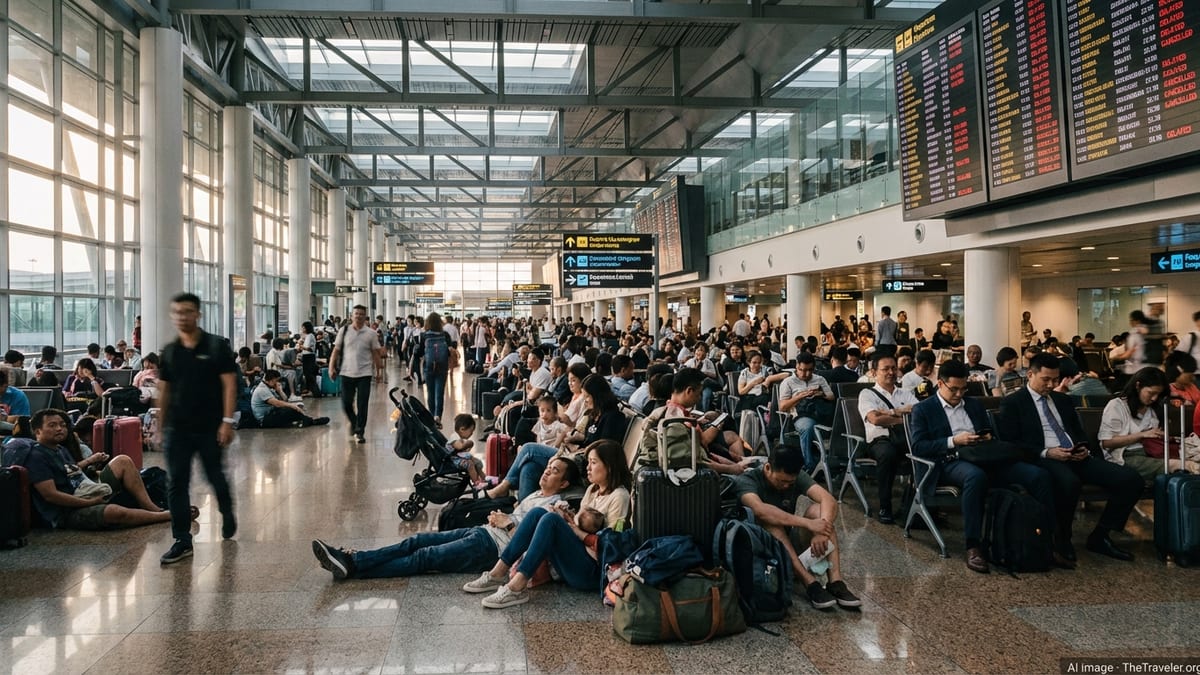
Fresh Wave of Disruptions Across Asian Hubs
Recent regional data compiled from live flight tracking dashboards and disruption summaries indicates that Asia has entered another spell of operational strain, with around 234 cancellations and more than 2,100 delays affecting major airports over a short multi day window. Aggregated figures from recent snapshots published by analytics and passenger rights platforms show that the latest turbulence follows a pattern of elevated disruption seen through June, July and August, when several events each triggered thousands of delayed and cancelled flights across the region.
Reports highlight Shanghai Pudong International Airport as one of the recurring focal points, with earlier breakdowns in June and July showing the hub near the top of Asia’s delay and cancellation rankings. One June disruption overview noted that Shanghai Pudong registered the highest number of delays in the region on the day in question, while a July weather related analysis later placed the airport among the three most affected Chinese hubs alongside Guangzhou Baiyun and Beijing Capital.
Complementary disruption maps tracking airport performance across Asia show that stress is not limited to China. Live indices produced by flight tracking services rate several large airports between “minor problems” and “major problems,” combining metrics such as the share of delayed departures, the proportion of cancelled flights and the average delay in minutes. While conditions fluctuate throughout the day, these indices confirm that bottlenecks routinely emerge around the same high volume gateways.
Within this broader context, the latest cluster of 234 cancellations and roughly 2,129 delays reflects how even a relatively short episode can cascade through interconnected schedules. With Asia’s main hubs already operating close to capacity during peak hours, small timetable shocks and localized weather systems can quickly translate into missed connections and rolling delays that are felt well beyond the region.
Shanghai’s Role in the Regional Bottleneck
Publicly available disruption tallies over recent months underline how frequently Shanghai features when Asia’s flight performance deteriorates. A June breakdown of airline and airport punctuality showed Shanghai Pudong at the top of the list for delays, with more than 270 late departures and arrivals recorded in a single day, along with multiple cancellations. A separate July assessment of severe summer storms again placed the airport among the most affected in mainland China, within a wider snapshot of more than 6,700 delays and over 200 cancellations concentrated at Guangzhou, Shanghai and Beijing.
These recent data points suggest that Shanghai has become a bellwether for broader volatility in the region’s air traffic. As one of Asia’s busiest international gateways and a major transfer point for travel between East Asia, the Middle East and Europe, disruptions in Shanghai can quickly spill over onto connecting routes. When departures are held back due to weather or congestion on the ground, aircraft and crews often arrive late into their next rotations, amplifying knock on effects at downline airports.
Capacity and scheduling decisions also play a role. Recent schedule filings tracked by airline timetable specialists show that some carriers are still adjusting their Middle East networks from Shanghai. For example, China Eastern’s Shanghai to Riyadh service has been pushed back, with first available flights for the upcoming season now scheduled to restart later and at a reduced weekly frequency compared with earlier plans. While these changes are not in themselves cancellations of active flights, they illustrate how airlines remain cautious in rebuilding complex long haul networks that depend on reliable on time performance at hub airports.
In practice, passengers transiting through Shanghai in recent weeks have faced a mix of local storms, air traffic congestion and residual schedule rebalancing. When all three factors intersect during a busy travel period, they can feed into the type of short, sharp spikes in cancellations and delays that underpin the latest regional numbers.
Riyadh and Middle East Connections Under Pressure
The latest wave of disruptions has also been felt at Middle Eastern hubs that link Asian traffic to Europe and Africa, with Riyadh’s King Khalid International Airport featuring in several recent datasets. A late August analysis of Asia focused disruptions that incorporated Middle East gateways reported double digit cancellations and more than one hundred delays at Riyadh on a single day, with local airlines bearing the bulk of the schedule cuts.
Historical statistics gathered over the last month show that Riyadh’s overall cancellation rate has remained modest in percentage terms, but the absolute number of flights affected on peak days has been enough to unsettle onward travel plans. Online status boards for Riyadh based carriers on affected nights list clusters of delayed and cancelled services across key domestic routes such as Abha and Jeddah, as well as long haul flights to destinations including Manila and European capitals. These localized cancellations, when combined with arrival delays from Asia, make it harder for airlines to keep tightly timed banks of connecting flights intact.
Riyadh’s position as both a growing regional hub and a transfer point for Asia originating itineraries amplifies the impact of any disruption in Shanghai or other East Asian cities. Pagination tools for Shanghai to Riyadh itineraries show that many journeys rely on one stop connections through intermediate hubs in China or the Gulf, meaning that delays in any link of the chain can cause misconnected passengers to accumulate in Riyadh. When irregular operations are already pushing ground and crew resources to their limits, each missed inbound connection raises the risk that later outbound flights will depart with further delays or in some cases be cancelled.
For travelers, the practical consequence is a more fragile schedule environment where even a relatively modest regional disturbance described by numbers such as “234 cancellations and 2,129 delays” can translate into hours of additional waiting time at Riyadh and other Middle Eastern hubs tied into Asia’s traffic flows.
Weather, Infrastructure and Scheduling Combine to Drive Disruption
Sector wide reporting over the northern summer points to a combination of severe weather, infrastructure constraints and tightly packed schedules as common drivers behind the rolling waves of flight disruption across Asia. A July review of thunderstorm related disruptions described nearly 7,000 delays and more than 200 cancellations across a multi day period, most of them concentrated at large Chinese gateways. That pattern closely resembles other episodes this year where high intensity storms quickly overwhelmed already busy air traffic corridors.
At the same time, airport disruption maps published by live tracking platforms on a daily basis repeatedly show how even airports with relatively low cancellation counts can register very high rates of delayed departures and arrivals. On some days, hubs such as Tokyo Haneda, Dubai International and Istanbul have logged delayed departure shares exceeding half of all flights, with average delays measured in tens of minutes despite minimal outright cancellations. Such conditions suggest that runways, taxiways and terminal gate systems are operating near saturation during peak hours, leaving little margin when weather or airspace restrictions reduce usable capacity.
Asian carriers and airport operators also continue to rebuild networks and staffing after earlier years of suppressed demand. Schedules that concentrate many departures into narrow time banks can optimize connections when everything runs on time, but they are inherently vulnerable when even a small share of inbound flights arrives late. Under those circumstances, airports like Shanghai and Riyadh that handle both origin and transfer passengers become pressure points during disruption events, feeding into the aggregated cancellation and delay figures now being reported.
Industry observers note that while the current numbers are lower than the most severe global disruption events of recent years, they are significant enough to prompt renewed scrutiny of contingency planning, crew and aircraft reserves and the resilience of ground handling operations at the region’s biggest hubs.
What Passengers Can Do When Flights Are Cancelled or Delayed
For travelers caught up in Asia’s latest wave of cancellations and delays, passenger rights and airline policies remain critical tools. Large carriers serving Shanghai and other Chinese airports publish detailed conditions of carriage outlining how tickets are handled in cases of schedule changes. These documents typically distinguish between disruptions attributable to the airline and those caused by external factors such as weather or air traffic control restrictions, with different rules for rebooking, refunds and additional services.
Several international claims platforms now maintain dedicated pages that track and explain major disruption events across Asia, including breakdowns of which airlines and airports recorded the highest number of affected flights. In some jurisdictions, passengers may be entitled to compensation when delays or cancellations meet specific criteria related to length, cause and notice period. Even where statutory compensation does not apply, many airlines offer voluntary rebooking options or travel vouchers during large scale disruption events to protect customer goodwill.
Given the frequency of recent disturbances, passenger advocates recommend that travelers build additional buffer time into itineraries that involve tight connections at major Asian hubs, particularly during storm prone months. Monitoring real time flight status on airline or airport websites before leaving for the airport can help identify emerging problems early, allowing more time to explore alternative routings or request changes. With Asia’s aviation network continuing to experience intermittent bouts of strain, informed and flexible planning remains one of the most effective ways for passengers to navigate periods marked by statistics such as 234 cancellations and more than 2,000 delays.
AirHelp Asia flight disruptions report, June 2026
AirHelp Asia weather related disruptions analysis, July 2026
NomadLawyer overview of Asia flight delays and cancellations, August 2026
Airportia statistics for Riyadh King Khalid International Airport