


More news on this day
LATAM Brasil experienced a wave of operational disruptions with 17 flight cancellations and 114 delays across its domestic network, severely affecting traffic through São Paulo, Recife, Salvador and several other Brazilian cities, according to data compiled from real-time tracking platforms and local media reports.
Get the latest news straight to your inbox!
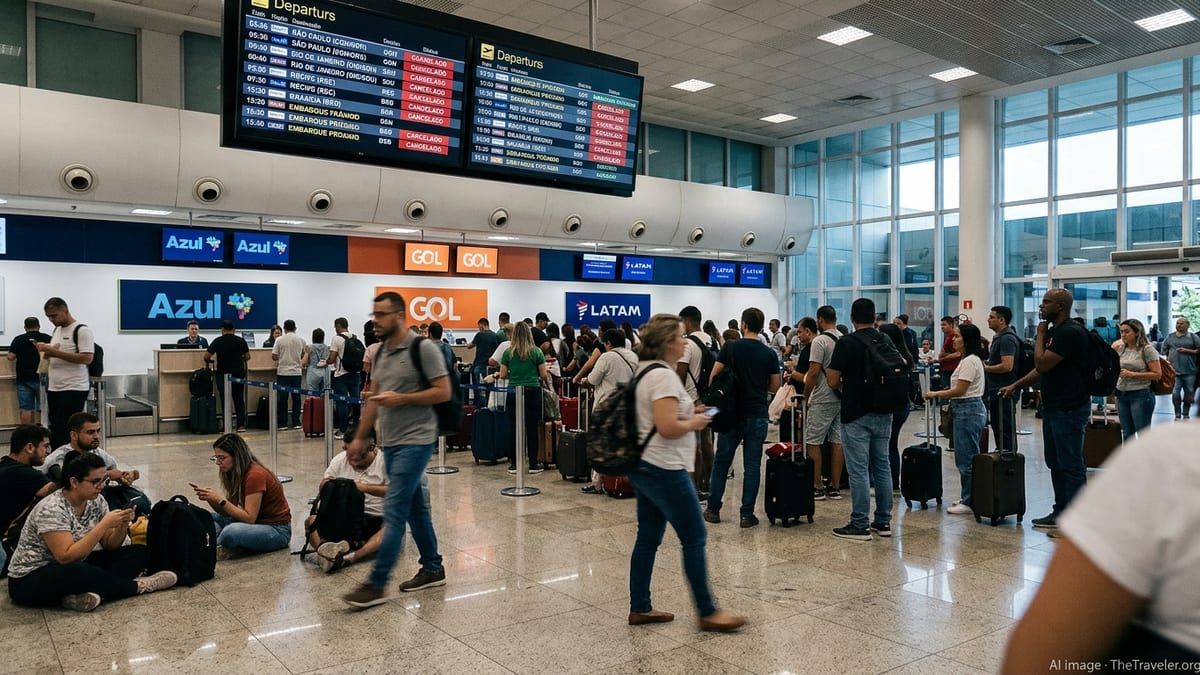
Network-wide disruption centered on São Paulo hubs
Publicly available airport operations boards and flight-tracking data indicate that the bulk of the latest cancellations and delays involved services touching São Paulo’s main gateways, including Guarulhos and Congonhas, where congestion can quickly cascade across the wider network. With aircraft and crews rotating through these hubs, even short gaps in the schedule tend to create knock-on effects in secondary cities.
On the day of the disruption, at least 17 LATAM Brasil flights were listed as cancelled and more than 100 as delayed, affecting a mix of trunk routes and feeder services. Travelers reported significant waiting times, gate changes and rolling departure estimates as the airline worked to re-sequence aircraft and reassign crews.
The irregular operations spilled over to other airports that depend on São Paulo connections, including Florianópolis and regional centers in the Northeast. Local coverage in Brazil described longer queues at check in and customer service counters, as passengers sought rerouting options and clarification on their rights.
While the exact trigger for the day’s problems was not immediately clear, the pattern resembled previous episodes in which issues at São Paulo’s control or terminal infrastructure have quickly translated into delays and cancellations at multiple LATAM Brasil destinations.
Recife, Salvador and Northeast routes face cascading delays
Routes linking São Paulo with major Northeastern cities such as Recife and Salvador featured prominently among the delayed services, according to information aggregated from airport displays and aviation data platforms. These cities function as key gateways to Brazil’s coastal tourism regions and to domestic connections further inland, which magnified the impact of each disruption.
Reports indicate that several Recife and Salvador flights operated with departure or arrival delays exceeding one hour, with some rotations pushed back longer as aircraft arrived late from previous sectors. In a network already adjusted for higher fuel costs and slim scheduling buffers, each delay left fewer spare aircraft and crews available to absorb further shocks.
Local news coverage highlighted crowding in arrival halls and baggage claim areas as late-evening flights arrived well behind schedule. In some cases, passengers connecting onward from Recife and Salvador to smaller Northeastern cities faced missed connections or overnight stays, particularly where there were limited daily frequencies.
The timing of the disruptions was especially sensitive for leisure travelers returning from holiday periods and for business passengers booked on early week departures. Travel advocates have noted that concentrated clusters of delays in the Northeast frequently strain accommodation availability near airports and can increase ground-transport costs for stranded passengers.
Operational strain follows months of capacity adjustments
The disruption comes after a period in which LATAM Brasil has been reshaping its schedule in response to higher jet fuel prices and broader cost pressures. Recent business coverage in Brazil has described how the airline trimmed planned capacity for mid-year months by a few percentage points, seeking to balance demand with the rising expense of operating domestic and regional routes.
These cuts, while relatively modest, can leave fewer spare aircraft and crews available to recover from unplanned events. Aviation analysts often point out that when airlines operate close to their maximum daily aircraft utilization, small technical, weather or airspace issues can quickly cascade into widespread delays and cancellations.
LATAM group’s published traffic statistics for recent months show overall passenger volumes continuing to grow year on year, even as the company fine-tunes capacity and adjusts individual markets. Industry observers say this dynamic increases the importance of robust contingency planning, including backup aircraft and flexible crew arrangements, to preserve on-time performance.
The latest wave of disruptions at LATAM Brasil is being viewed in that broader context of a market still rebuilding capacity, contending with infrastructure constraints at major hubs and responding to cost volatility linked to global energy and geopolitical trends.
Passengers navigate rebooking, refunds and compensation rules
For affected travelers in São Paulo, Recife, Salvador and other cities, the immediate challenge has been securing new itineraries or refunds. Publicly available guidance from LATAM and consumer-rights organizations outlines several options, including rebooking on later flights on the same route or, in some cases, rerouting via alternative hubs when space permits.
Brazilian aviation consumer rules and international regulations can entitle passengers to care measures such as meals, communication assistance and, in some circumstances, accommodation when delays or cancellations lead to significant waiting times. Eligibility often depends on the cause of the disruption, whether it is linked to factors under the airline’s control or to external issues such as airspace restrictions or severe weather.
Specialist passenger-rights platforms tracking LATAM performance have noted a rising number of claims in recent years involving delayed and cancelled flights in Brazil. These services typically advise travelers to retain boarding passes, booking confirmations and receipts for additional expenses, which can be important when filing complaints or compensation requests.
Consumer advocates in Brazil regularly remind passengers that they may seek redress through the airline’s official customer service channels, national consumer platforms and the court system if they believe legal obligations have not been fully met. However, these processes can be time consuming, making same-day solutions at airport counters and digital service channels the priority for many travelers.
What travelers should do on days of major disruption
Experienced travelers and travel advisers commonly recommend several strategies for days when an airline’s operations are clearly under strain. One priority is to monitor flight status frequently through official channels and airport information screens, since departure times may change multiple times as schedules are reworked.
Passengers are also encouraged to check in as early as possible and to keep boarding passes and booking references easily accessible, which can speed up rebooking at customer service counters or via digital tools. When disruptions are widespread, alternative flights may fill quickly, making rapid decisions important for securing new seats.
For those with tight connections in São Paulo, Recife, Salvador or other hubs, travel planners often suggest allowing extra buffer time between flights, especially during peak holiday or long-weekend periods when airports are busier. Building flexibility into itineraries can reduce the risk of missed onward connections when irregular operations occur.
Travel industry commentary indicates that irregular operation days such as the one affecting LATAM Brasil’s 17 cancellations and 114 delays are likely to continue as infrastructure, weather patterns and cost pressures interact with high demand. For passengers, preparation, flexibility and awareness of rights remain key tools for navigating an increasingly complex air travel landscape.