


More news on this day
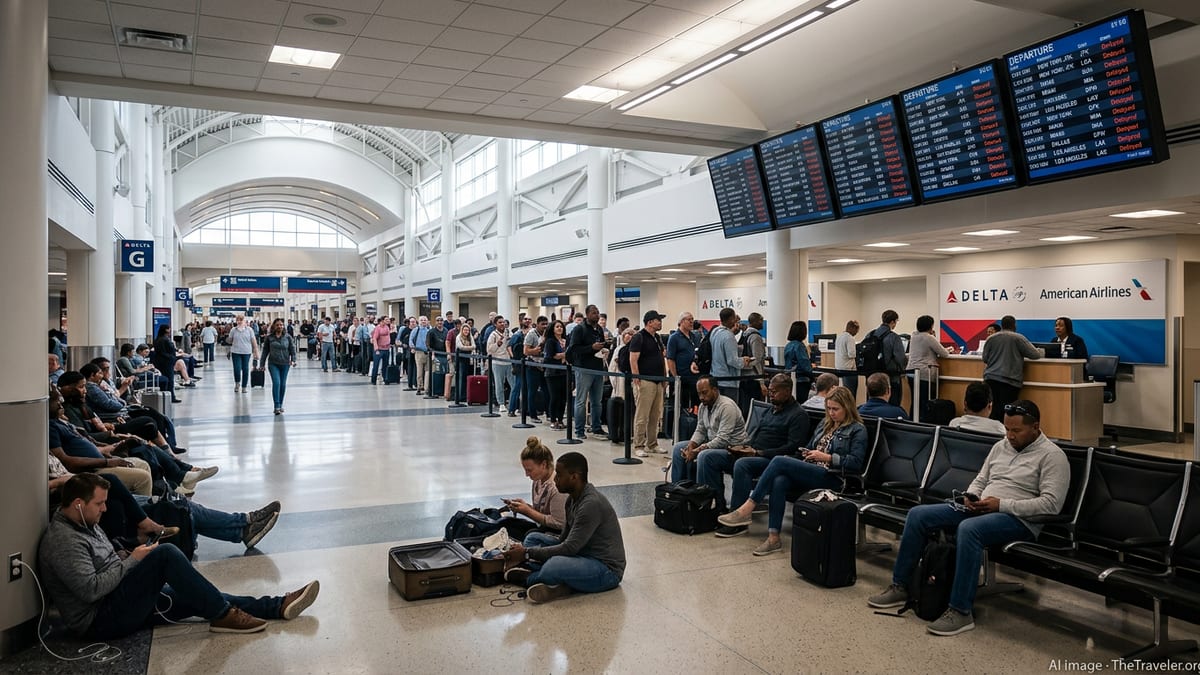
Operations at Miami International Airport were severely disrupted on Thursday as more than 100 delayed departures and several cancellations involving American Airlines, Frontier, Southwest, Envoy Air and other carriers left travelers stranded and scrambling to rebook flights to destinations across the Americas and Europe.
Get the latest news straight to your inbox!
Widespread Disruption Across Major Carriers
Publicly available flight tracking data for Thursday indicates that Miami International Airport experienced a sharp spike in operational disruptions, with around 107 delayed departures and at least four cancellations attributed to a mix of mainline and regional operators. The impact was concentrated among large carriers that dominate Miami’s schedule, including American Airlines and its regional affiliate Envoy Air, as well as low cost and point to point operators such as Frontier and Southwest.
The pattern of disruption was most visible during peak afternoon and evening departure banks, when Miami typically funnels long haul and transcontinental flights alongside dense North American traffic. Delays of one to three hours were common on several departures, with rolling schedule changes announced throughout the day on airport boards and airline apps.
Available data shows that even as the Federal Aviation Administration listed Miami as “on time” at a national airspace level, individual airlines struggled to keep their schedules intact. The contrast between nominally favorable airfield conditions and mounting delays in the terminal underscores the growing role of airline specific factors such as crew availability, aircraft rotations and maintenance in shaping the travel experience.
While the number of outright cancellations remained limited relative to the total schedule, each disruption had an outsized effect in a hub airport that serves as a critical bridge point between North and South America and between the United States and Europe.
Key Routes Hit: From Maiquetía to Madrid and Los Angeles
Passengers headed for several of Miami’s most important international and domestic destinations experienced extended waits. Flights to Simón Bolívar International Airport, serving Maiquetía and the Caracas metropolitan area, were among those affected, compounding travel challenges on a corridor that already grapples with limited capacity and tight connectivity windows.
Long haul services to European and South American gateways also felt the strain. Miami to Madrid, one of the airport’s busiest transatlantic routes, saw departure times pushed back as aircraft and crews cycled through earlier delays. Southbound overnight service to Rio de Janeiro, a key link for business and leisure travelers, operated under tightened turnaround conditions after upstream schedule disruptions, raising the risk of further slippage and missed onward connections in Brazil.
On the domestic front, heavily traveled routes to New York City area airports and Los Angeles International faced knock on effects. These flights are central to Miami’s role as a national hub, feeding both coastal business travel and connecting international traffic. When aircraft destined for New York or Los Angeles depart late from Miami, the disruption often ripples through subsequent rotations, affecting travelers far beyond South Florida.
The combination of affected routes illustrates how a single day of irregular operations at a major hub can reverberate across multiple regions. Travelers bound for Latin America, the U.S. West Coast and Europe frequently share the same aircraft during different legs of the day, so delays on one sector can cascade into later flights serving entirely different markets.
Underlying Pressures on Airline Operations
Recent performance data and industry discussions point to several structural pressures that leave airlines vulnerable when schedules tighten. Miami International Airport’s own statistics highlight how heavily its operations rely on a small group of large carriers and their regional partners, with American Airlines and Envoy Air handling a substantial share of daily movements alongside competitors such as Southwest and Frontier. That concentration increases the stakes when any of these operators encounters an operational bottleneck.
Across the U.S. network, carriers have been contending with a mix of maintenance demands on aging fleets, constrained spare aircraft availability and ongoing crew scheduling challenges. In public forums and traveler reports, American Airlines in particular has faced scrutiny over the way relatively minor disruptions can snowball into long, rolling delays for passengers, especially during peak travel periods.
Low cost carriers operating from Miami, including Frontier, have also been exposed to schedule volatility. Their point to point business models often rely on high aircraft utilization and minimal buffers, so a delay early in the day can cascade across multiple sectors. As the day progresses, the margin for recovery narrows, raising the probability that later flights will face significant delays or outright cancellations.
Although weather can still play a role, Thursday’s pattern in Miami, where national airspace tools showed no major ground stops in effect, suggests that airline controlled factors were central to the disruption. Tight turn times, staffing constraints and maintenance checks all appear to have contributed to the difficulty of getting flights off the gate on time.
Stranded Passengers Face Rebookings and Missed Connections
The operational strain translated into long lines at check in counters and customer service desks as passengers sought alternative options. With popular routes to Maiquetía, New York, Los Angeles, Madrid and Rio de Janeiro already heavily booked, rebooking choices were often limited to flights departing the following day or to multi stop itineraries through other hubs.
Travelers connecting in Miami to continue onward to South America or Europe were particularly exposed. A delay on a domestic feeder flight into Miami can easily cause passengers to miss a once daily long haul departure to destinations such as Madrid or Rio de Janeiro. When that happens, overnight accommodation and rebooking become complicated, especially when subsequent flights are already near capacity at the height of summer travel.
Some passengers opted to abandon their original itineraries altogether and purchase new tickets on alternative airlines or through different connecting cities. Consumer advocacy resources note that while U.S. regulations do not guarantee cash compensation for most delays, carriers typically provide rebooking assistance and, in some cases, hotel or meal support when disruptions are within the airline’s control. In practice, access to those options can depend on how quickly travelers reach an agent and the specific circumstances coded into airline internal systems.
The scene at Miami on Thursday mirrored a broader pattern seen across the U.S. network in recent months, in which pockets of severe disruption at individual hubs have periodically stranded travelers for extended periods, even when weather and air traffic conditions appear manageable at the national level.
Broader Implications for Summer Travel Through Miami
The latest disruptions arrive as Miami International Airport prepares for one of its busiest summer seasons on record, driven by strong demand for leisure travel to Florida, Latin America and Europe. The airport’s role as a gateway for major sporting and cultural events, as well as its growing long haul schedule, means that any breakdown in reliability can affect not only local travelers but also visitors connecting between continents.
Travel analysts and consumer advocates have encouraged passengers using major hubs such as Miami to build extra time into their plans, particularly when relying on tight international connections. Booking longer layovers, avoiding the last flight of the day where possible and tracking aircraft rotations can reduce the risk of missed onward journeys when delays emerge.
Industry observers also point to the need for airlines to maintain realistic schedules that reflect current staffing levels and maintenance requirements. While carriers have steadily rebuilt capacity since the height of the pandemic period, catching up on deferred maintenance and training new crews continues to put stress on operations, especially at complex international hubs like Miami.
For now, travelers booked through Miami are being urged by publicly available advisories and travel alerts to monitor their flight status closely in the 24 hours before departure and to be prepared for last minute gate changes, rolling delays or aircraft substitutions. Thursday’s wave of disruptions serves as a reminder that even on days without major storms or system failures, the margin between a routine connection and an unexpected overnight stay can be very thin.