


More news on this day
Los Angeles International Airport is confronting a difficult convergence of resurgent tourism demand, lingering labour tensions and staffing shortages, creating fresh disruption risks for major carriers including United Airlines, Delta Air Lines, American Airlines, British Airways, Lufthansa, Emirates, Air France and Qatar Airways, particularly on transborder and long-haul routes used heavily by Canadian travellers.
Get the latest news straight to your inbox!
Tourism Recovery Outpaces LAX’s Operational Capacity
Los Angeles remains one of the world’s leading origin and destination markets, and passenger numbers at Los Angeles International Airport have been climbing back toward pre‑pandemic levels. Publicly available figures from Los Angeles World Airports show traffic rebounding to more than 76 million passengers in 2024, with modest year‑over‑year growth even as domestic volumes soften. International demand into Southern California has proven especially resilient, helped by the city’s status as a gateway for Asia-Pacific, Latin America and Europe as well as a key hub for film, entertainment and convention travel.
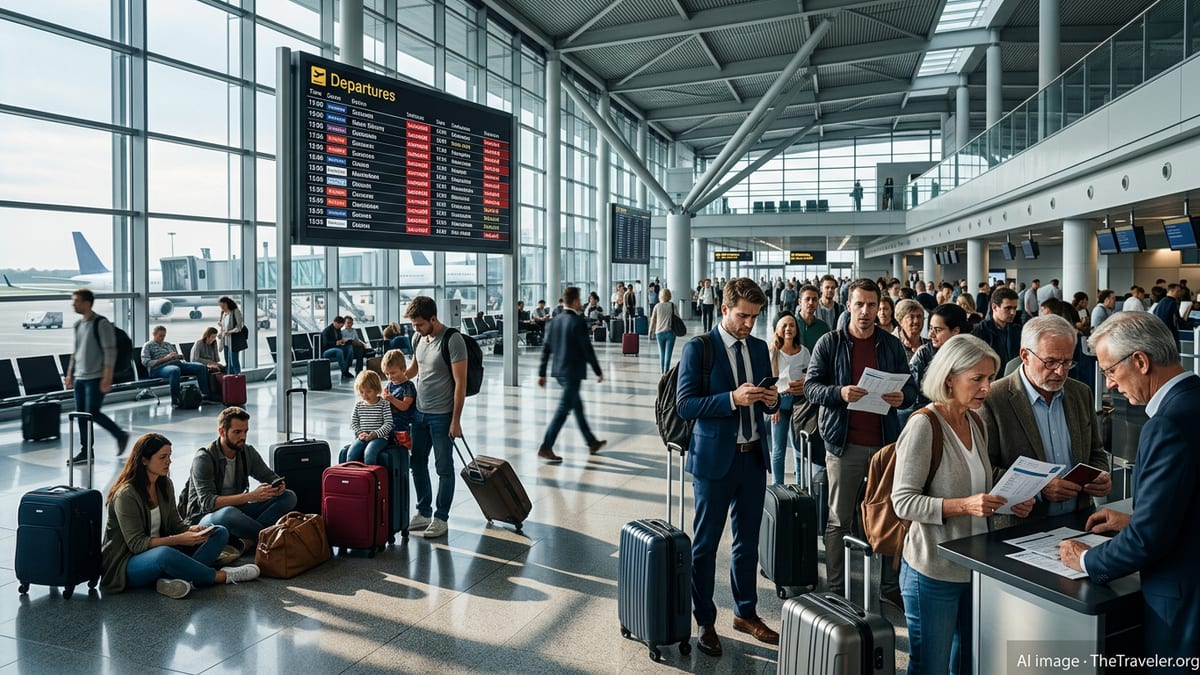
This steady recovery is creating pressure points across the airport complex. The Tom Bradley International Terminal, which handles most widebody services for foreign carriers such as British Airways, Lufthansa, Emirates, Air France and Qatar Airways, is reported to be operating close to saturation during peak evening and overnight banks. Industry commentary in May 2026 highlighted days when more than 150 departures and arrivals were classified as delayed, underscoring how quickly the system can become overloaded when weather, technical issues or staffing gaps coincide.
United Airlines, Delta Air Lines and American Airlines, all of which maintain significant operations at LAX, are attempting to match this demand with constrained fleets and workforces. Delivery problems at aircraft manufacturers, higher fuel prices and a renewed focus on profitability have already led to selective capacity cuts and schedule reshaping. When those strategic constraints collide with local airport bottlenecks, the result is tighter connection windows, crowded gate areas and an elevated risk of missed flights for passengers transiting Los Angeles.
The imbalance between growing demand and limited resilience is particularly visible on key long‑haul routes to London, Paris, Frankfurt, Dubai and Doha, as well as on high‑frequency North American services that feed those flights. Even small disruptions on these routes can cascade, especially where aircraft operate multi‑sector rotations through LAX in a single day.
Airport Labour Tensions Add to Disruption Risk
While headline‑grabbing nationwide strikes have not shut LAX in 2026, the wider environment for airport labour on the U.S. West Coast remains unsettled. National and regional labour trackers show worker actions across transport, logistics and services staying well above pre‑pandemic norms, reflecting cost‑of‑living pressures and tighter labour markets in California. At LAX, unions representing ground handlers, construction workers and support staff have pursued grievances over pay and conditions, with some disputes spilling into arbitration and legal proceedings.
Construction on major projects such as the Automated People Mover and terminal upgrades has also drawn labour-related claims, including cases where subcontracted workers sought back pay and benefits. While these proceedings do not directly halt passenger operations, they highlight structural strains in the airport’s labour ecosystem. Any escalation affecting security screening, baggage handling or terminal services could quickly ripple into delays for airlines operating at thin margins of turnaround time.
On the airline side, United, American and Delta have each navigated protracted negotiations with cabin crew and other staff since 2020. United’s flight attendants only recently ratified a new long‑term contract that delivers substantial pay rises and new boarding pay provisions after years of frozen wages. Similar agreements at American and other major carriers have reduced the immediate risk of full‑scale strikes, but they also raise operating costs at a time when airfare inflation and competitive pressures are already acute.
International carriers serving LAX, including British Airways, Lufthansa, Emirates, Air France and Qatar Airways, depend on local contractors and airport‑wide services for check‑in, ramp work and catering. Even if their own crews are not involved in U.S. labour disputes, shortages among these shared providers can affect turnaround times, gate availability and baggage delivery, leading to knock‑on disruption for flights to and from Canada and other markets.
Systemic Staffing Shortages Across Aviation
The situation in Los Angeles is reinforced by wider staffing challenges in aviation. Industry analyses in 2026 continue to flag shortages of pilots, maintenance technicians, air traffic controllers and safety inspectors across North America. U.S. federal watchdog reviews have drawn attention to staffing gaps within the Federal Aviation Administration’s oversight teams assigned to large carriers, including United Airlines, noting that limited resources can constrain the frequency and depth of routine inspections.
Airlines are responding with a mix of wage increases, retention bonuses and training programs, but these measures take time to translate into fully qualified staff. In the interim, carriers are operating complex global schedules with minimal slack. A shortage of reserve crew or ground technicians on a given day can make it harder to recover from a mechanical delay or a weather‑related diversion, especially at a congested hub such as LAX.
To protect reliability, some airlines are trimming capacity. United has already signalled cuts to certain less profitable routes and a partial pullback in international flying where aircraft availability and fuel costs make schedules hard to sustain. Similar network adjustments at other U.S. and international airlines may reduce the number of daily frequencies on some Los Angeles routes, concentrating demand on fewer flights and increasing the stakes when disruption does occur.
For travellers, the cumulative effect is a system in which high demand meets constrained resources at multiple points: in the cockpit, in the cabin, on the ramp, at security checkpoints and within regulatory oversight. When tourism peaks coincide with holiday weekends or major events in Southern California, this fragility can translate into long queues, rolling delays and occasional cancellations across multiple airlines in a single day.
What Travellers From Canada Should Expect This Summer
Canadian travellers heading to or transiting through Los Angeles in 2026 are likely to feel these pressures most acutely on connections between Canadian gateways and long‑haul flights out of LAX. United, Air Canada and Delta rely on hub‑and‑spoke patterns that funnel passengers from Vancouver, Calgary, Edmonton, Toronto and Montreal into major U.S. hubs, including Los Angeles, for onward service to Asia-Pacific and Latin America. British Airways, Lufthansa, Emirates, Air France and Qatar Airways also carry Canadian passengers via codeshare and interline agreements, making LAX an important transfer point even when the ticket is sold by a Canadian carrier.
Because schedules are tight and turnarounds are closely choreographed, a weather delay in Western Canada or a ground‑handling issue at LAX can jeopardise minimum connection times. Travellers connecting from Canadian cities into evening departures to London, Frankfurt, Paris, Dubai or Doha may face heightened risk of missed connections if inbound flights are late and congestion at U.S. customs, security re‑screening or inter‑terminal transfers adds extra minutes.
Published data from Los Angeles World Airports indicates that while traffic growth has moderated compared with the immediate post‑pandemic rebound, peak‑hour volumes in 2024 were still significantly above pre‑crisis levels in certain terminals. For Canadian travellers arriving in those peaks, this means that clearance and baggage times can remain unpredictable, particularly during school holidays and major festivals in both countries.
Given the combination of strong demand, labour constraints and infrastructure limits, Canadian passengers may also encounter shorter booking windows for popular flights, higher fares on non‑stop services and fewer same‑day rebooking options if cancellations occur. Industry fare indices have already shown notable increases across North American routes in early 2026, reflecting both higher operating costs and the capacity discipline adopted by large airlines.
Practical Steps to Reduce Risk When Flying via LAX
In this environment, Canadian travellers can take several practical steps to reduce their exposure to disruption when flying with United Airlines or other major carriers through Los Angeles. Travel advisers currently recommend building in longer connection times at LAX than the legal minimums where possible, particularly on itineraries that involve changing terminals between domestic arrivals and international departures.
Choosing earlier flights in the day from Canadian origins can also improve resilience, since morning departures are less affected by the accumulated delays that often build up by afternoon and evening. Where budgets allow, selecting refundable or flexible fares may offer more options if a schedule change or cancellation forces an itinerary to be rebooked at short notice.
Experts further suggest that passengers make active use of airline apps and airport information channels to monitor gate changes, security wait times and any developing operational issues. During periods of labour tension or peak travel, carriers are more likely to adjust schedules or swap aircraft types in response to staffing levels and maintenance needs. Staying engaged with these updates can help travellers adjust their plans, such as arriving earlier at the airport or requesting rerouting before flights become heavily oversold.
Ultimately, the convergence of tourism growth, labour pressures and limited spare capacity at LAX means that United Airlines and its global peers, from Delta and American to British Airways, Lufthansa, Emirates, Air France and Qatar Airways, will continue to operate under significant stress through the 2026 high season. For Canadian travellers, understanding these dynamics and planning with extra margin is becoming a necessary part of flying to and through Los Angeles.