


More news on this day
Travellers across Liverpool City Region are being warned to expect severe disruption as a four week shutdown on Merseyrail’s Northern Line halts key rail links serving suburbs, commuter towns and onward connections to the wider UK network.
Get the latest news straight to your inbox!
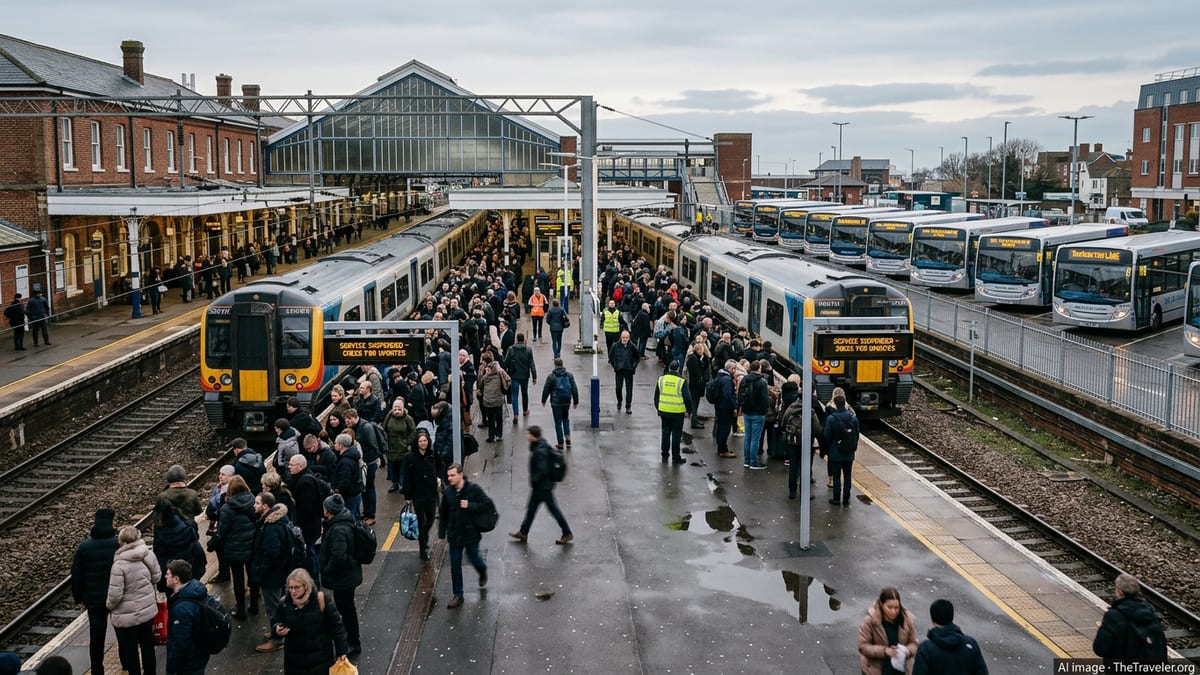
Major Northern Line Closure Hits Core Commuter Corridors
The Northern Line, one of two electrified routes on the Merseyrail network and a primary artery for Liverpool’s rail commuters, is facing a planned four week suspension on a central stretch to allow intensive engineering work. Publicly available information indicates that services on parts of the Southport, Ormskirk and Kirkby branches into Liverpool city centre will be withdrawn, with trains either terminating short of the affected section or replaced by buses.
The Northern Line normally carries frequent services linking destinations such as Southport, Ormskirk, Kirkby and Hunts Cross with Liverpool Central, where passengers interchange with the Wirral Line for routes under the River Mersey. The withdrawal of through trains into the core underground section removes a key link that many passengers rely on for work, education and major events in the city.
Network plans show that the closure falls during a busy late summer period, overlapping with festivals, sporting fixtures and peak tourism. The timing is raising concern among regular rail users and local businesses that depend on reliable rail access to central Liverpool and waterfront attractions.
Operators and transport authorities have framed the shutdown as essential for track and signalling upgrades, safety works and capacity improvements on a congested part of the network. The works are being presented as part of a broader programme to renew infrastructure and support future growth in passenger numbers.
Replacement Buses and Diversions Struggle to Match Lost Capacity
To keep people moving, a patchwork of rail replacement buses, diverted services and alternative routes is being assembled. According to published notices, buses will link key Northern Line stations with Liverpool city centre, while some trains will turn back at outer hubs such as Sandhills or Liverpool South Parkway, where passengers can switch to other rail or bus services.
While these arrangements provide a basic lifeline, they fall short of matching the Northern Line’s normal turn up and go frequency. Journey planners suggest significantly longer travel times for many commuters, with additional interchanges and greater exposure to road congestion on busy corridors into the city. The prospect of full buses and longer queues at interchange points is heightening fears of daily disruption.
Travellers making longer distance journeys are also affected. Liverpool Central, which normally channels passengers onto Wirral Line trains towards Birkenhead, Chester, Ellesmere Port, New Brighton and West Kirby, will be harder to reach for Northern Line users. Connections to mainline services at Liverpool Lime Street and to the City Line via Liverpool South Parkway are likely to be more complex and time consuming while the works are under way.
Transport analysts note that experience from previous major closures in the region and elsewhere in the UK suggests that a proportion of passengers may temporarily switch to cars, increasing pressure on road networks and city centre parking. Others may alter working patterns or avoid nonessential trips altogether during the most disruptive period.
Knock-on Effects Across Liverpool and Wider UK Routes
The shutdown is not confined to local inconvenience. Because the Northern Line feeds passengers into central Liverpool for onward national rail journeys, its closure is expected to reverberate along key intercity and regional corridors. Rail users travelling to and from cities such as Manchester, Birmingham, London and Leeds may find reduced flexibility and greater crowding on services that remain in operation.
Published engineering schedules already show heavy rail upgrades around Liverpool and Manchester during the summer, tightening capacity on parallel routes into the North West. With Merseyrail’s urban network partially offline at the same time, travellers who would normally remain on local electrified services could find themselves competing for space on fewer long distance trains or long haul coach services.
Hotels, visitor attractions and event organisers in Liverpool City Region are monitoring the situation closely. Reports indicate concern that visitors may be deterred by difficult rail journeys, particularly those arriving from outside the region who are less familiar with local alternative routes. Conference and tourism stakeholders are urging clear, consistent messaging from transport bodies so that guests can plan around the disruption rather than abandon trips altogether.
There is also potential for uneven impacts across communities. Areas heavily dependent on the Northern Line for access to jobs, education and healthcare could experience disproportionate disruption, particularly where bus links are limited or slower. Advocacy groups are calling attention to the need for accessible replacement services, with clear information at stations and online for passengers with mobility or sensory needs.
Authorities Urge Early Planning as Passengers Seek Workarounds
Publicly available information from operators and infrastructure managers consistently stresses the importance of planning ahead. Passengers are being advised to check timetables before travel, allow extra time for connections and consider travelling at less busy times where possible. For some, that will mean shifting journeys earlier in the morning or later in the evening to avoid peak replacement bus demand and crowded interchange points.
Local employers are also being encouraged, through open guidance, to consider flexible working arrangements during the closure. Remote work, adjusted shift times or temporary relocation to alternative offices closer to unaffected stations or bus corridors could help reduce pressure on the transport network and ease commuting stress for staff.
Travel planners recommend that regular rail users familiarise themselves with the geography of the network and bus routes before the closure begins. Identifying backup options such as using the Wirral Line via different entry points, switching to mainline services at alternative stations, or combining cycling with rail could provide resilience if primary routes become congested or replacement buses are delayed.
However, passenger forums and online discussion groups already reflect frustration about the frequency and scale of rail engineering work affecting the North West. Many contributors accept the need for infrastructure renewal but express concern that repeated large scale closures, often coinciding with key leisure and sporting weekends, are eroding confidence in rail as a dependable mode of transport.
Longer Term Upgrades Aim to Deliver More Reliable Network
Despite the short term upheaval, transport planners argue that the four week shutdown forms part of a wider effort to enhance rail capacity and resilience around Liverpool. The Northern Line, which runs through some of the region’s fastest growing districts and proposed new stations, is central to long term strategies to cut road congestion, support low carbon travel and improve access to jobs.
Recent public documents on future schemes, including the proposed Liverpool Baltic station on the Northern Line and ongoing work on station modernisation and new rolling stock, show a network in transition. Investment in tunnels, track and signalling during concentrated closures is presented as a way to reduce the risk of repeated smaller failures that can cause daily disruption once normal services resume.
Transport commentators caution, however, that the benefits of such work will only be felt if passengers remain engaged and informed during the most difficult phases. Clear, timely communication on what is closed, which alternatives exist and when normal services will return is widely viewed as critical to maintaining public trust.
As the start date for the Northern Line shutdown approaches, travellers across Liverpool City Region and beyond face a challenging month of altered routines. The extent to which replacement services and contingency planning can keep people moving will be closely watched, not only by passengers but by other UK cities contemplating similar large scale rail upgrades.