


More news on this day
The U.S. Department of Transportation and Federal Aviation Administration have begun a limited rollout of a new AI-supported air traffic management tool called SMART, a system designed to forecast congestion earlier and help reduce the delays and cancellations that ripple across U.S. flight schedules.
Get the latest news straight to your inbox!
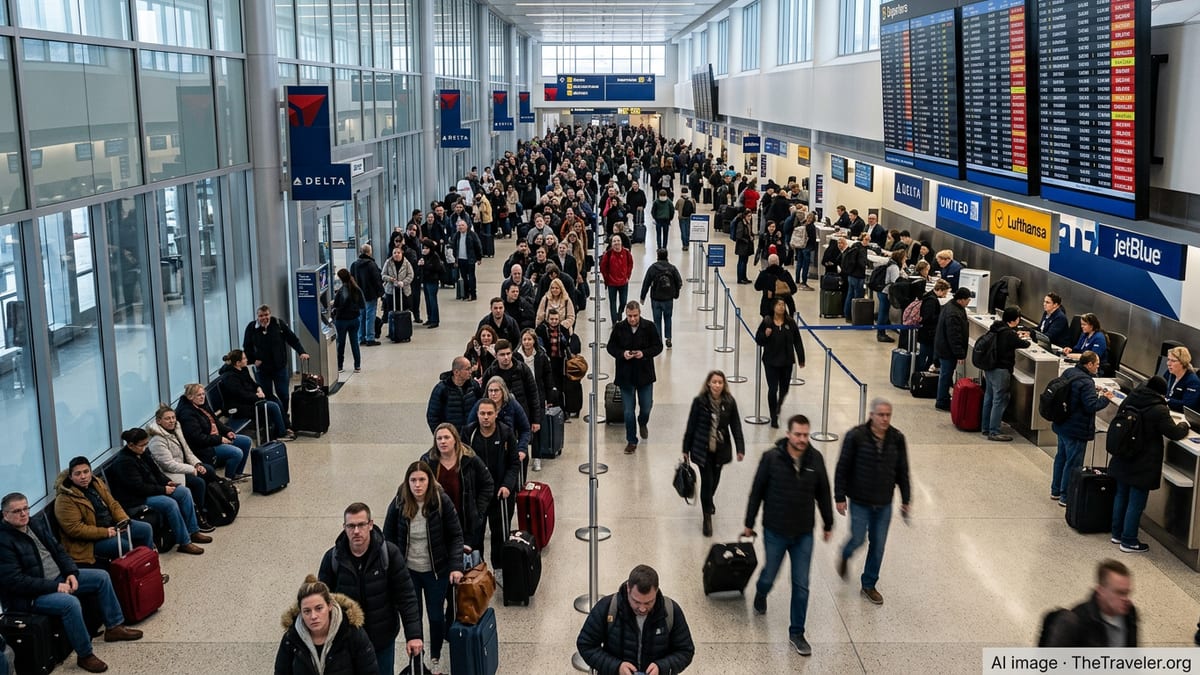
What SMART is, and where it is rolling out first
SMART, short for Strategic Management of Airspace, Routes and Trajectories, is being introduced first in the airspace around Washington, D.C., with a staged expansion planned for other parts of the country over the coming months. Publicly available information shows the FAA describes the debut as a limited mode deployment rather than an immediate nationwide switch.
Published coverage indicates the initial operating area is tied to the three major commercial airports serving the Washington region: Ronald Reagan Washington National, Washington Dulles International, and Baltimore-Washington International Thurgood Marshall. The goal is to use the National Capital Region as an early proving ground before scaling.
Transportation and aviation coverage has framed the launch as a practical attempt to make the system more predictive. Instead of waiting for delays to materialize, SMART is positioned as a planning aid that can flag problems far enough in advance to smooth out schedules and reduce airborne holding, ground stops, and last-minute reroutes.
How the AI-supported tool works day to day
According to DOT and FAA materials, SMART centralizes roughly 200 data streams into a single platform, bringing together inputs that are often viewed in separate systems. Those inputs include weather patterns, flight paths, traffic flow information, and controller staffing-related metrics.
SMART’s role is to synthesize those inputs into a shared visualization of where aircraft are expected to be, how much demand different parts of the system will see, and where constraints could trigger congestion. The aim is to spot pinch points before they become visible to travelers as delays at the gate or cancellations later in the day.
The agencies describe a recurring problem the tool is intended to address: early-day schedules that can be “built” beyond an airport’s practical capacity, especially when weather reduces usable airspace or forces reroutes. In those situations, delays can stack up quickly and spread to other regions, even if the original disruption is localized.
Humans still make the decisions, not the software
A key detail in the rollout is that SMART is not being positioned as a replacement for controllers or an automated system that takes control of aircraft. DOT and FAA descriptions emphasize that recommendations are reviewed by FAA staff, and local facility leadership can accept or decline scheduling suggestions.
Published coverage has also highlighted labor and safety sensitivities around introducing AI into safety-critical aviation operations. Reporting on the debut noted concerns about transparency and testing, alongside statements that any new technology should complement, not replace, the professional judgment of air traffic controllers.
For travelers, that distinction matters because it frames SMART as decision support rather than “autopilot for the airspace.” The likely near-term impact is better early warning and coordination, with changes implemented through existing FAA decision-making and airline operational processes.
Why the timing matters amid recent disruptions
The debut arrives as travelers continue to experience high-profile, systemwide disruptions tied to equipment issues, staffing constraints, and severe weather. In the days surrounding the rollout, published reporting described technical problems that disrupted flights across parts of the U.S. Northeast, including lengthy pauses in commercial arrivals at Newark and widespread cancellations at other major airports.
Events like that illustrate the difference between what predictive tools can and cannot do. SMART is presented as a way to anticipate demand-to-capacity problems and reduce avoidable gridlock, but it is not described as a cure for all outages or infrastructure failures. When a key facility experiences a technical breakdown, the fastest remedy may still be restoration of equipment and rerouting traffic with existing procedures.
Still, DOT’s stated intent is to move from reacting to disruptions as they happen to planning hours, days, and even weeks ahead when there are known constraints. For passengers, any improvement that prevents cascading schedule breakdowns could translate into fewer missed connections, less time on the tarmac, and fewer last-minute cancellations when the system is under stress.
How SMART fits into bigger FAA modernization efforts
The FAA has spent years modernizing U.S. air traffic systems through its NextGen program, an umbrella effort focused on updated communications, navigation, surveillance, automation, and information management. The agency’s publicly available NextGen materials describe a shift toward greater predictability, resiliency, and advanced analytics, including machine learning technologies.
SMART also aligns with the broader air traffic management concept known as Trajectory Based Operations, which focuses on strategic planning of aircraft flows to reduce capacity-to-demand imbalances. FAA materials describe how trajectory planning and time-based management can help meter aircraft through congested resources more efficiently, especially during “day-of operation” constraints such as weather or equipment outages.
Another major element is industry participation. Public statements included in FAA materials show major U.S. airlines supporting the modernization push and expressing interest in whether SMART can reduce delays and cancellations during weather events. The real-world test will be whether the limited rollout produces measurable improvements without adding new complexity to an already tightly managed national airspace system.