

More news on this day
Air travel across London’s main airports has been thrown into fresh disruption as more than 90 flights were cancelled at Heathrow, Gatwick and London City, affecting services operated by major carriers including British Airways, Gulf Air, Air France and Cathay Pacific.
Get the latest news straight to your inbox!
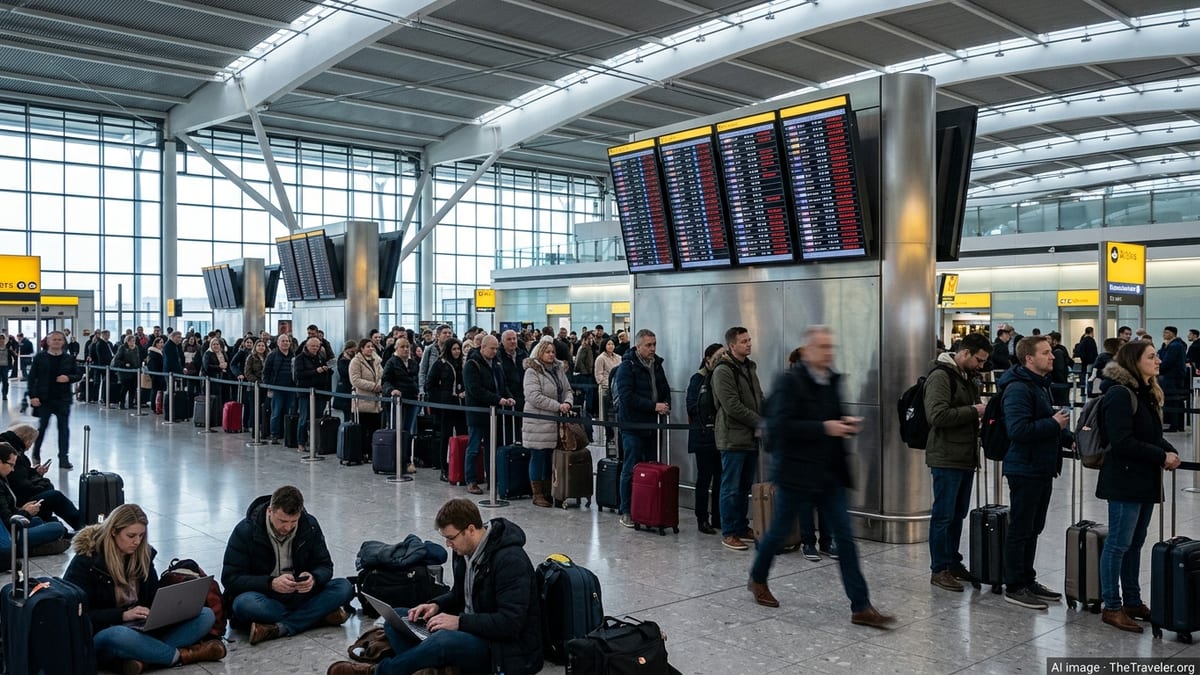
Widespread Cancellations Hit London’s Three Key Airports
Publicly available departure and arrival data for London’s airports show a cluster of cancellations across Heathrow, Gatwick and London City, with more than 90 flights removed from schedules in a matter of hours. The disruption has affected a mix of short haul and long haul routes, leaving passengers facing last minute changes, extended delays and unexpected overnight stays.
British Airways, which operates a substantial proportion of movements at Heathrow and Gatwick, appears among the hardest hit, with multiple services scrubbed from boards across European and long haul destinations. Reports from aviation tracking platforms and passenger forums indicate that cancellations are concentrated at peak periods when airports are operating close to capacity, amplifying knock on delays to later departures.
Alongside British Airways, services operated by Gulf Air, Air France and Cathay Pacific have also been affected, particularly on routes linking London with the Middle East and key Asian hubs. The pattern of disruption is contributing to crowded terminals, long queues at service desks and increased competition for remaining seats on alternative flights.
The cancellations come at a time when London’s airports are already managing a strained operating environment, with tight runway capacity and little slack in aircraft and crew rotations. When several airlines trim their schedules at once, the result is a rapid build up of stranded passengers and aircraft out of position across the network.
Middle East Tensions and Weather Strains Add to Operational Pressure
Recent weeks have seen a marked rise in disruption across routes touching the Middle East, with multiple international carriers suspending or rerouting services in response to regional conflict and changing airspace risk assessments. According to published coverage, airlines including British Airways, Air France and Cathay Pacific have adjusted schedules to destinations such as Dubai, Abu Dhabi, Doha, Bahrain and Tel Aviv in light of airspace closures and higher war risk insurance costs.
These route suspensions and diversions are reverberating through London’s hubs. Aircraft that would normally rotate through Gulf destinations are being reassigned, parked or sent on alternative routes, reducing overall flexibility when additional problems arise elsewhere in the network. This makes it harder for airlines to recover from isolated issues, such as a technical delay on one aircraft or crew reaching legal duty limits.
At the same time, the current European winter storm season has created challenging operating conditions across the United Kingdom and continental Europe, with strong winds and heavy rain frequently reported. Publicly available meteorological and transport updates describe periods of severe weather that have disrupted rail, road and air travel, requiring airports and air traffic control to slow operations and occasionally restrict movements for safety reasons.
When adverse weather combines with constrained airspace and elevated geopolitical risk, airlines often adopt pre emptive cuts to their schedules in order to avoid last minute turn backs, diversions and extended airborne holding patterns. The current wave of more than 90 cancellations across London’s three main airports reflects these overlapping pressures.
Ripple Effects for British Airways, Gulf Air, Air France and Cathay Pacific
For British Airways, London remains the central hub of its global network, meaning that any operational challenge in the capital quickly cascades across its short haul and long haul portfolios. Industry data on disruption patterns in early 2026 suggest that while most flights continue to operate as planned, tactical cancellations remain a key tool for the airline when weather, airspace restrictions or technical issues reduce available capacity.
Cancellations on British Airways services from Heathrow and Gatwick can lead to aircraft and crews being out of position for subsequent rotations, increasing the likelihood that later departures may also be delayed or cancelled. Passengers on multi segment itineraries are particularly exposed, as a missed or cancelled first leg can unravel the rest of their journey and require wholesale rebooking.
Gulf Air, Air France and Cathay Pacific are also facing a complex operating environment as they balance London schedules with evolving conditions in the Middle East and Asia. Publicly available statements and timetable updates from these carriers show reductions or suspensions on certain Gulf and Levant routes, alongside timetable tweaks to Asian services in response to demand and overflight considerations.
As these airlines trim or reroute services, the number of available seats on remaining departures contracts, limiting options for passengers seeking to rebook from cancelled flights. This dynamic is especially acute on busy trunk routes between London and major hubs in the Gulf and East Asia, where alternative departures may already be heavily booked days in advance.
Passengers Confront Long Queues, Limited Options and Confusing Information
Accounts shared on travel forums and social media over recent days describe crowded terminals at Heathrow and Gatwick, with long lines forming at airline service desks and automated kiosks as passengers attempt to secure new itineraries. Some travellers report learning of their cancellations only when attempting to check in online or at the airport, underscoring the challenges of keeping customer notifications aligned with rapidly changing operational decisions.
Published guidance from consumer advocates and transport regulators typically recommends that affected passengers first consult the airline’s official app or website to confirm the status of their booking, then explore rebooking options or refunds as set out under applicable fare rules and passenger rights legislation. However, when several airlines are simultaneously cutting services at the same hubs, available alternatives can quickly disappear, leaving travellers with limited same day or next day options.
Reports indicate that some passengers have been rebooked via alternative European hubs, adding extra connections and journey time, while others have been offered flights departing from different London airports or even regional airports elsewhere in the United Kingdom. Hotel accommodation and meal vouchers are being provided in some cases, depending on airline policy, the nature of the disruption and applicable regulations.
The uneven flow of information remains a recurring theme. While departure boards and airline apps are updated frequently, passengers report discrepancies between different channels and delays in push notifications, making it essential for travellers to check multiple sources and refresh information regularly when disruption is unfolding.
What Travellers Using London Airports Should Expect in the Coming Days
Industry observers suggest that the current wave of cancellations may not be an isolated event, given the combination of winter weather patterns, constrained airspace over parts of the Middle East and ongoing capacity pressures at London’s airports. Even if the pace of cancellations eases, schedules are likely to remain fragile, with modest disruptions potentially triggering larger knock on effects.
Travellers planning to use Heathrow, Gatwick or London City in the short term are being advised, through publicly available guidance, to build additional time into their journeys, monitor flight status closely and consider flexible booking options where possible. Those with critical connections or time sensitive commitments may wish to explore alternative routings, including indirect flights via continental hubs that currently appear less exposed to Gulf related disruptions.
Airlines, for their part, are continuing to adjust London schedules on a rolling basis, publishing updates through their digital channels and reservation systems. While the overarching trend in recent years has been toward improved reliability, the current environment illustrates how quickly external shocks can reverse those gains, particularly at densely used hubs such as Heathrow and Gatwick.
With more than 90 cancellations already recorded across London’s three principal airports, passengers are likely to face a period of continued uncertainty. Careful pre flight planning, close attention to rapidly evolving schedules and readiness to accept alternative routings are emerging as key strategies for navigating the latest bout of disruption in and out of the United Kingdom’s capital.