


More news on this day
Passengers traveling through London Gatwick on Wednesday, July 1 are encountering another day of disruption, with fresh delays and cancellations reported as airlines and air traffic control continue to recover from recent severe weather and capacity constraints across the UK network.
Get the latest news straight to your inbox!
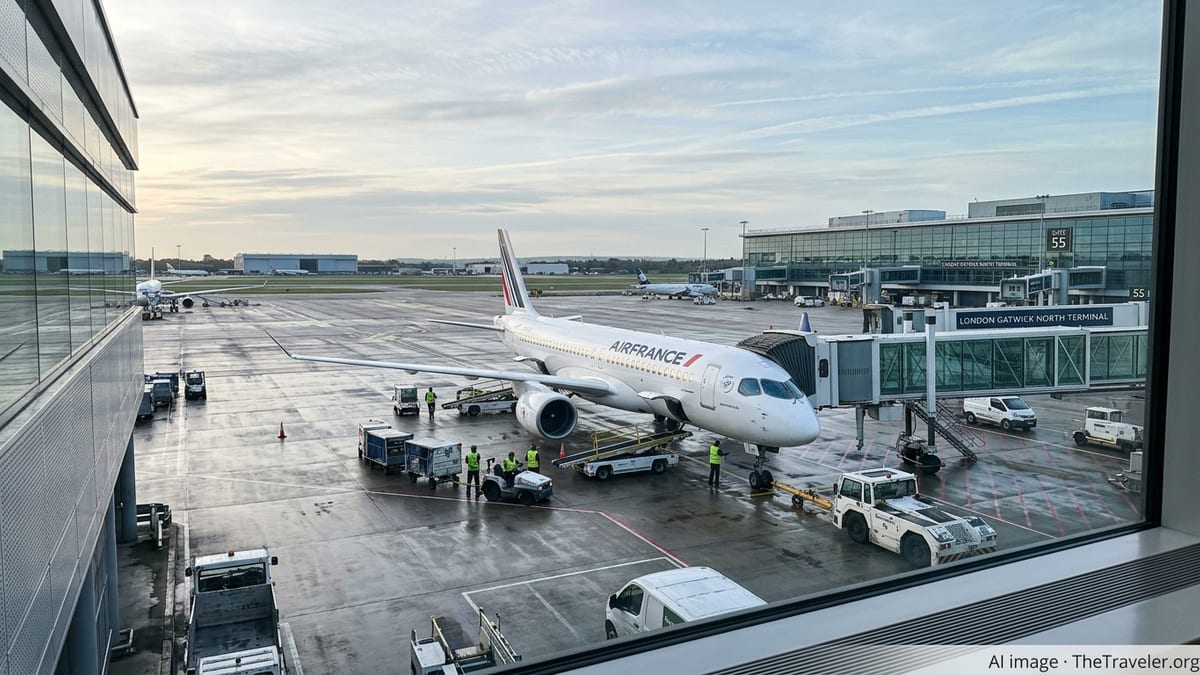
Knock-on disruption after recent thunderstorms
Publicly available flight-tracking data and media coverage indicate that operations at London Gatwick are still feeling the effects of intense thunderstorms that swept across southern England in recent days, prompting widespread delays at both Gatwick and Heathrow. Those storms led to temporary restrictions on take offs and landings, leaving aircraft and crews out of position for the start of the week.
Although conditions over London have improved, schedules on July 1 show a pattern of extended turnaround times and rolling delays on some short haul European services. Morning departures to popular leisure destinations are among those most exposed to earlier disruptions, with some aircraft starting the day away from their intended bases after diversion or late arrival the previous evening.
Information available from passenger reports suggests that while the scale of disruption is less severe than during the peak of the storms, many flights are still leaving later than timetabled. The mixture of aircraft positioning challenges and residual air traffic flow restrictions means that passengers are being advised, through airline channels, to check their flight status frequently on the day of travel.
Weather related disruption is considered an external factor for airline operations, but it typically takes several days for complex schedules at a busy hub like Gatwick to fully stabilise. This is particularly visible at the start of a new month and during a busy summer travel period, when spare aircraft and crew capacity is already limited.
Delays across key short haul carriers
On Wednesday, July 1, budget and leisure carriers that rely heavily on Gatwick as a base are experiencing a spread of departure and arrival delays. Flight tracking boards show slippages ranging from minor schedule creep of 20 to 30 minutes to more substantial hold ups of over two hours on some routes.
EasyJet, Wizz Air and other European airlines with dense summer schedules from Gatwick appear particularly exposed where aircraft are turning around quickly between sectors. Even a modest late arrival in the early morning can cascade into longer waits later in the day as ground handling, crew duty limits and slot availability combine to restrict recovery options.
Some passengers have also reported diversions and re-routings on services linked to Gatwick in recent days, highlighting how weather and congestion elsewhere in Europe can still affect operations at the London airport. When aircraft are diverted or rotated onto alternative routes, later flights from Gatwick can see last minute schedule changes or cancellations.
Operational reports and recent performance data for low cost carriers suggest that summer disruption has become a recurring pressure point. With Gatwick handling a high volume of point to point traffic, even small timetable changes can quickly filter down to holidaymakers connecting to cruise departures, onward rail journeys or time sensitive events.
Cancellations remain targeted but impactful
While the majority of scheduled services at Gatwick on July 1 are operating, publicly available information indicates that airlines have cancelled a smaller number of flights, mainly on busy leisure routes where multiple daily frequencies allow some consolidation. These targeted cancellations are often used as a tool to stabilise the wider schedule after days of weather and capacity disruption.
In cases where services are cancelled out of Gatwick, airlines typically seek to rebook passengers onto later departures from the same airport or, in some instances, from alternative London airports if seats are available. However, with aircraft already heavily booked for the early July peak, some travelers are facing re-routes that involve overnight stays or travel a day or more later than planned.
Recent consumer guidance relating to UK and EU air passenger regulations underlines that travelers whose flights are cancelled are entitled to rebooking or refunds, and that airlines retain a duty of care for meals and accommodation when passengers are stranded. Compensation eligibility, however, depends on the underlying cause of disruption, with extreme weather and certain air traffic control issues often classed as extraordinary circumstances.
Reports from passenger forums show that many travelers are still working through claims and rebooking processes linked to earlier cancellations into and out of Gatwick, and that Wednesday’s schedule changes are adding new cases to an already high summer caseload for airline support teams and claims handlers.
Air traffic flow and capacity constraints
Beyond the immediate impact of storms, broader capacity and air traffic flow management constraints continue to influence operations at Gatwick. Recent network performance documentation highlights that, in previous summers, weather and aerodrome capacity have been key contributors to average arrival and departure delays at the airport, particularly at peak times.
On July 1, traffic levels across European airspace remain high, and any fresh convective weather or congestion hotspots can trigger new flow restrictions that ripple outwards to hubs like Gatwick. When air traffic control introduces spacing measures or temporary route limitations, airlines may be instructed to hold aircraft on the ground or accept airborne holding, extending overall journey times for passengers.
Industry reporting also points to the ongoing challenge of aligning airport infrastructure, ground handling resources and staffing with post pandemic demand growth. Even as new operational tools and procedures are introduced to improve throughput and time based separations, temporary bottlenecks on stands, taxiways or security lanes can still affect departure punctuality on a day with tight scheduling.
For travelers using Gatwick on Wednesday, this means that even flights not directly affected by thunderstorms or technical issues may nonetheless experience minor knock on delays as the wider system manages high volumes and limited spare capacity. The effect is most visible during the early morning and late afternoon peaks, when runway and stand usage are close to maximum.
Advice for passengers traveling through Gatwick
Given the continued pattern of disruption around London and across parts of Europe, passengers flying from or to Gatwick on July 1 are being urged, through airline communications and consumer channels, to build additional time into their plans. This includes allowing for longer queuing times at check in and security, as well as potential delays in baggage reclaim on arrival.
Travel experts and consumer advocates consistently recommend monitoring airline apps and flight trackers closely on the day of departure, as schedules can change at short notice. For those with onward connections by rail or coach, flexible or later departure tickets can provide a buffer if inbound flights are delayed.
Travelers whose flights are cancelled or significantly delayed are advised by publicly available guidance to keep documentation such as boarding passes, booking confirmations and receipts for meals or accommodation, in case they need to pursue refunds or claims at a later stage. Many airlines now process these online, but high demand can mean that responses take several weeks.
With the summer peak now underway, London Gatwick is expected to remain busy in the days ahead. While Wednesday, July 1 does not appear to match the most severe disruption seen during recent thunderstorms, the combination of residual delays, targeted cancellations and tight capacity is making for another challenging day of travel at one of the UK’s busiest airports.