


More news on this day
Rail links to and from Heathrow Airport remain under pressure after recent disruption on the Elizabeth line and connecting routes, leaving London travelers weighing alternative options to reach the UK’s busiest hub.
Get the latest news straight to your inbox!
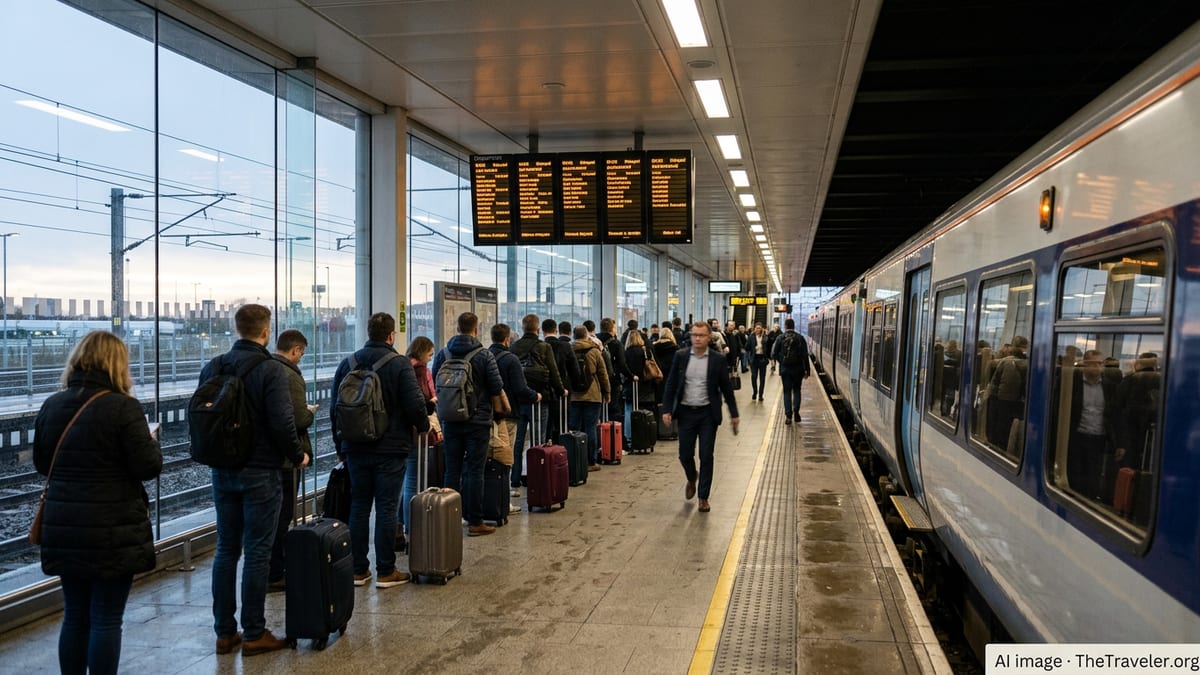
Elizabeth Line Services To Heathrow Still Recovering
Recent disruption on the Elizabeth line corridor into Heathrow has continued to affect journey times and reliability, particularly on services linking central London with Heathrow Terminal 5. The problems follow a trackside incident earlier in September that damaged infrastructure on a key approach into west London, resulting in a cascade of delays and train reallocations across the route.
Publicly available rail data shows that while most Elizabeth line services are now running, Heathrow branches have seen intermittent suspensions and short-notice alterations, especially during peak periods. Some trains have terminated earlier than planned in west London to ease pressure on constrained sections of the network, leaving airport-bound passengers requiring extra interchanges.
Coverage from UK transport news outlets indicates that the initial emergency response and subsequent repairs forced a temporary shutdown of Elizabeth line and Heathrow Express services between London Paddington and the airport on one of the recent busy travel weekends. Although those full closures have ended, residual disruption has persisted into mid-September as railway operators rebalance timetables and rolling stock.
Timetable summaries for stations such as Ealing Broadway suggest that Heathrow-bound Elizabeth line trains remain more vulnerable to delay than core central London services, with minor lateness and platform changes still being reported. Passengers are being advised across multiple travel information channels to check live departure boards shortly before departure and allow additional contingency time.
Knock-on Rail Disruption Across London And Beyond
The issues around Heathrow have unfolded alongside a wider pattern of rail disruption affecting London and its international links. Eurostar travel updates for services to and from St Pancras International have reported delays related to traffic problems on continental networks, compounding the sense of uncertainty for passengers connecting through the capital.
These separate incidents mean that travelers using London as a gateway, whether to reach Heathrow or to change between domestic and international trains, have faced a more fragile timetable than usual. On certain days in early and mid-September, a combination of late-running services, altered stopping patterns and short-notice stock changes has required passengers to re-plan connections on the move.
Local travel status dashboards compiling Transport for London feeds also show that, while most Underground and Docklands Light Railway lines continue to operate with a good service, targeted engineering work and localized issues have occasionally limited options for diverting around problem spots. Intermittent minor delays on segments of the Piccadilly line and Elizabeth line have at times overlapped with the Heathrow disruption, narrowing the range of straightforward alternatives for airport access.
According to multiple transport monitoring platforms, this patchwork of issues has not resulted in a citywide shutdown, but it has created enough volatility to push London’s rail system onto a heightened state of alert. Regular commuters appear to be adapting by checking status more frequently and building in margin, while visitors and infrequent travelers are more reliant on clear signposting at stations.
Better Travel Options Emerging For Heathrow-Bound Passengers
As operators work to stabilize services, a range of alternative options has come into sharper focus for those heading to and from Heathrow. Public information from travel planning sites highlights the continuing role of the Piccadilly line as a lower-cost, though slower, link between central London and the airport, particularly when Elizabeth line and Heathrow Express services are constrained.
National Rail connections via Reading and other Thames Valley stations have also provided a useful fallback for some travelers, especially those coming from the west of England. During periods when direct Elizabeth line services from central London to Heathrow have been curtailed, passengers have been able to combine main line trains with airport-bound services starting further out, though at the cost of extra changes.
Coach operators and dedicated airport bus services have reported steady demand on corridors linking Heathrow with key London hubs such as Victoria, Hammersmith and Stratford. Travel comparison tools suggest that journey times on these road-based options can be competitive when rail disruption is severe, even accounting for central London traffic.
Within London itself, the growing network of step-free interchanges on the Elizabeth line, Tube and London Overground is also helping some passengers assemble bespoke itineraries around localized rail problems. For example, when direct trains are not available, travelers can route via alternative west London interchanges or combine the Piccadilly line with short hops on the Elizabeth line where it is running more reliably.
What Travelers Should Expect In The Coming Days
Transport bulletins issued in mid-September indicate that further timetable adjustments and ongoing infrastructure checks are likely as operators continue to recover from the earlier disruption near Heathrow. Some services may continue to start or finish short of their usual destinations, and pockets of minor delay around Paddington and west London junctions remain possible.
Rail industry performance data and independent tracking sites both suggest that the overall direction of travel is toward gradual normalization, but with a higher risk of late alterations on routes that thread into Heathrow. Weekend engineering work, particularly overnight and on early Sunday services, is expected to interact with this recovery phase and could temporarily reintroduce more significant gaps in the schedule.
Travel advice circulating across journey-planning platforms consistently emphasizes flexible planning. Passengers are encouraged to consider more than one route to Heathrow, to check status close to departure, and to be prepared to switch between Elizabeth line, Piccadilly line, main line services and airport buses according to real-time conditions.
For inbound visitors unfamiliar with London’s extensive transport network, commentators recommend building in extra time for wayfinding and transfers at major hubs such as Paddington, King’s Cross St Pancras and Victoria. Clearer station announcements and updated display boards are expected to play a significant role in helping these travelers navigate what remains a complex and evolving disruption picture.
Impact On Tourism And Business Travel
The timing of the Heathrow rail disruption comes as London continues to experience strong late-summer and early-autumn visitor numbers. Industry observers note that while overall capacity to reach the city remains robust, unpredictable airport rail links can add friction for both leisure tourists and business travelers working to tight schedules.
Travel trade publications report that some tour operators and corporate travel managers have begun proactively building alternative surface transfer options into their itineraries, rather than assuming that premium rail connections will always operate as advertised. This shift reflects a broader emphasis on resilience and redundancy in trip planning, particularly for high-value long haul arrivals.
Hotel concierges and ground-handling providers around Heathrow are also understood to be placing greater emphasis on up-to-the-minute transport briefings for guests. Suggestions now more frequently include back-up Tube routes or pre-booked road transfers, alongside the traditional recommendation of fast rail services.
For London as a whole, the current situation around Heathrow serves as a reminder of the city’s dependence on a handful of critical rail corridors. As repairs are completed and timetables settle, attention is likely to remain focused on how quickly these links can return to the level of reliability expected by millions of travelers each year.