


More news on this day
London Waterloo has introduced regular dog patrols as part of a new security trial, adding three trained canines to the station team in a move designed to strengthen safety and reassure passengers at Britain’s busiest rail hub.
Get the latest news straight to your inbox!
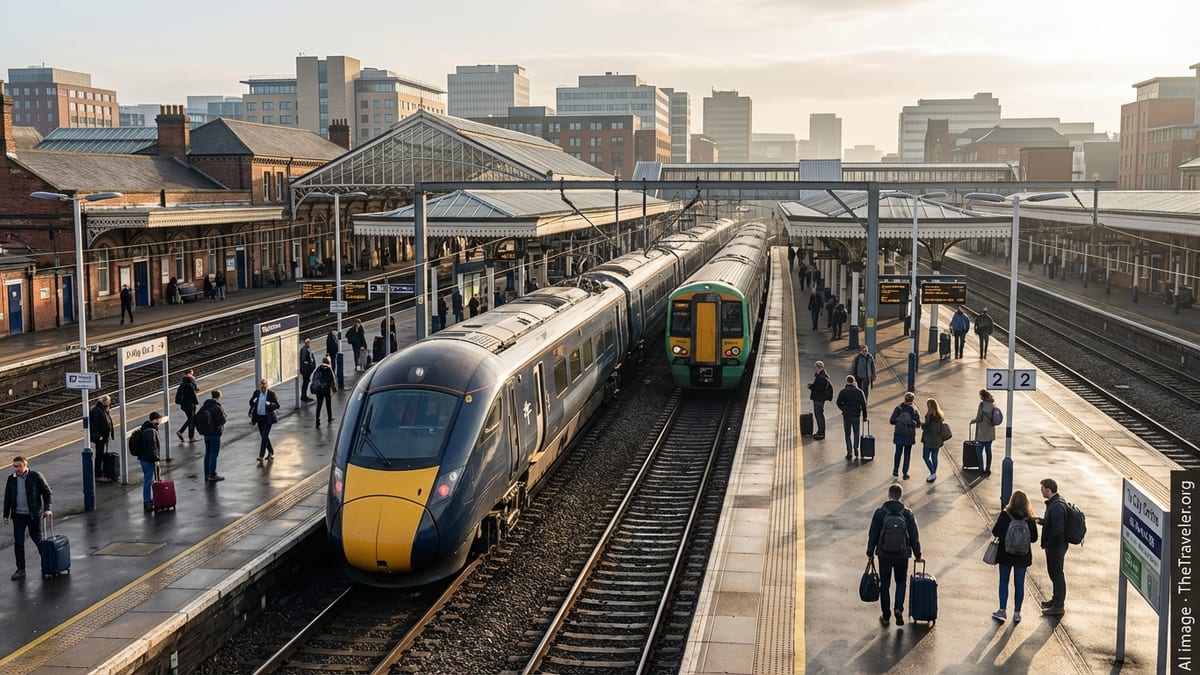
Three Dogs Join London Waterloo Security Team
Publicly available information from South Western Railway indicates that London Waterloo has become the first major station in Great Britain to introduce regular dog patrols as part of its day-to-day security operation. The initiative, launched on 21 August 2026, places three specialist dogs on rotating patrols across the concourse and key access points at the central London terminus.
The canine team consists of Riley and Buster, both Cocker Spaniels, and Flo, a Labrador, all in the later stages of their working lives. Reports describe the trio as experienced security dogs whose deployment at Waterloo forms the final chapter of their careers before retirement. Their handlers work alongside existing security staff to provide a highly visible presence during busy periods.
According to published coverage, the patrols are part of a three-month trial agreed by South Western Railway and Network Rail’s Wessex route, which jointly manage the station. The scheme is being delivered in partnership with Alpha Canine Specialists, a company that provides certified canine security services for public and private sector clients.
Information released about the trial stresses that the deployment is not a response to a specific incident or heightened security threat. Instead, it is presented as a proactive measure, intended to add another visible layer to a security model that already includes station staff, CCTV monitoring and British Transport Police patrols.
Focus on Deterrence and Passenger Reassurance
London Waterloo serves hundreds of thousands of journeys on a typical weekday, and is consistently ranked among the busiest rail terminals in the United Kingdom. Network Rail guidance notes that it is one of the leading locations nationally for pre-booked passenger assistance, reflecting the sheer volume and diversity of travellers passing through the complex station layout.
In this context, the new dog patrols are framed as an extra deterrent and a tool to improve the overall sense of safety on the concourse, platforms and entrances. Coverage of the trial explains that the dogs are trained to support their handlers in identifying suspicious behaviour, discouraging anti-social activity and helping maintain a calm environment during peak flows or disruption.
The move fits within a broader pattern of high-visibility security activity across London’s transport network. Information from the Mayor of London’s office and British Transport Police highlights how tactics such as uniformed patrols, specialist operations and occasional use of police dogs are used to deter crime and reassure passengers on national rail and Underground services. The Waterloo trial effectively adapts those principles to a focused, station-based canine presence.
Passenger-facing measures at Waterloo already include extensive CCTV coverage and close working relationships with rail policing teams. Public documents on London transport safety describe how these elements, combined with staff engagement and targeted patrols, are intended to keep major hubs low-crime environments despite the very high numbers of daily users.
Part of a Wider Security Innovation Drive
The dog trial is one of several recent steps by South Western Railway and Network Rail Wessex to refresh security and incident response around London Waterloo. In late July 2026, the two organisations highlighted the use of trackside drones as a new way to monitor infrastructure issues and potential obstructions, with the goal of preventing delays and providing quicker situational awareness for control and security teams.
That drone initiative followed stringent safety checks and is restricted to defined railway boundaries, with operators required to meet aviation and privacy standards. Information published about the programme indicates that the technology helps teams assess incidents remotely before staff reach the site, improving both safety and operational decision-making.
Against this backdrop of technological innovation, the addition of canine patrols represents a more traditional but still adaptable approach. Reports on the Waterloo scheme note that security teams see value in combining digital tools such as CCTV and drones with human-led and animal-assisted patrols to cover different types of risk and behaviour that may not be easily detected on screens alone.
Within London more widely, initiatives such as Project Servator and joint operations between transport and policing bodies show how layered tactics are increasingly common. These range from plain-clothes officers to mounted patrols and dog units, all intended to create an unpredictable and visible presence that discourages opportunistic crime and more serious threats.
What the Trial Means for Everyday Rail Users
For passengers, the most noticeable change at Waterloo is the sight of Riley, Buster and Flo moving through the station with their handlers during operating hours. Published accounts suggest that the dogs are chosen not only for their training but also for their calm temperament in crowded environments, an important factor in a location where footfall can surge during the morning and evening peaks or when major events take place in central London.
The initiative is presented as having several potential benefits for everyday travellers. A prominent deterrent can discourage theft, aggressive behaviour and other low-level offences that affect passengers’ sense of comfort. At the same time, the visible presence of trained dogs and handlers can make it easier for people to identify someone to approach if they feel unsafe or need to draw attention to a concern on the concourse.
Information from transport safety reports in London indicates that serious crime on public transport remains relatively low compared with the overall number of journeys, but that disruptive behaviour, theft and harassment still influence how safe people feel when travelling. By adding dog patrols to existing measures, Waterloo’s operators are aiming to address both actual risk and perceived risk, particularly during busy or late-night periods.
The trial also reflects a wider conversation about how Britain’s major stations can remain welcoming public spaces while accommodating growing passenger numbers and evolving security expectations. If the evaluation of the three-month scheme is positive, the approach could inform similar deployments at other large interchanges, or be scaled up during specific high-demand periods at Waterloo itself.
Waterloo’s Role in London’s Evolving Transport Security Landscape
London Waterloo occupies a central position in the capital’s transport system, linking suburban and regional rail routes with Underground lines and local bus services. Official station guides and city transport documents describe it as a critical gateway to the South Bank and central London attractions, as well as a key interchange for commuters from across the south and south-west of England.
Safety briefings and public reports over recent years have underlined how busy hubs like Waterloo require constant review of crowd management, incident response and security arrangements. Past assessments of London’s wider transport network emphasise the need to balance efficiency and capacity improvements with visible safety measures that can adapt to changing passenger behaviours and external risks.
Within this framework, the introduction of dedicated dog patrols at Waterloo represents a notable evolution in how one of the country’s busiest stations presents its security operation to the public. It demonstrates an ongoing willingness by rail operators to layer traditional methods, like trained dogs and on-the-ground staff, with newer technologies and partnership models.
As London’s rail usage continues to recover and grow, reports indicate that the experience at major terminals will remain under scrutiny from both passengers and policymakers. The outcome of Waterloo’s canine trial, and any potential expansion or replication of the concept, is likely to form part of that wider discussion about what effective, passenger-focused station security should look like in the years ahead.
South Western Railway: Paws on patrol news release
South Western Railway: Drones preventing delays feature