


More news on this day
Hundreds of passengers endured a long, uncertain night at Nairobi’s Jomo Kenyatta International Airport after a fresh aviation workers’ strike and air traffic control go-slow disrupted flights, leaving travelers stranded in crowded terminals and on delayed aircraft.
Get the latest news straight to your inbox!
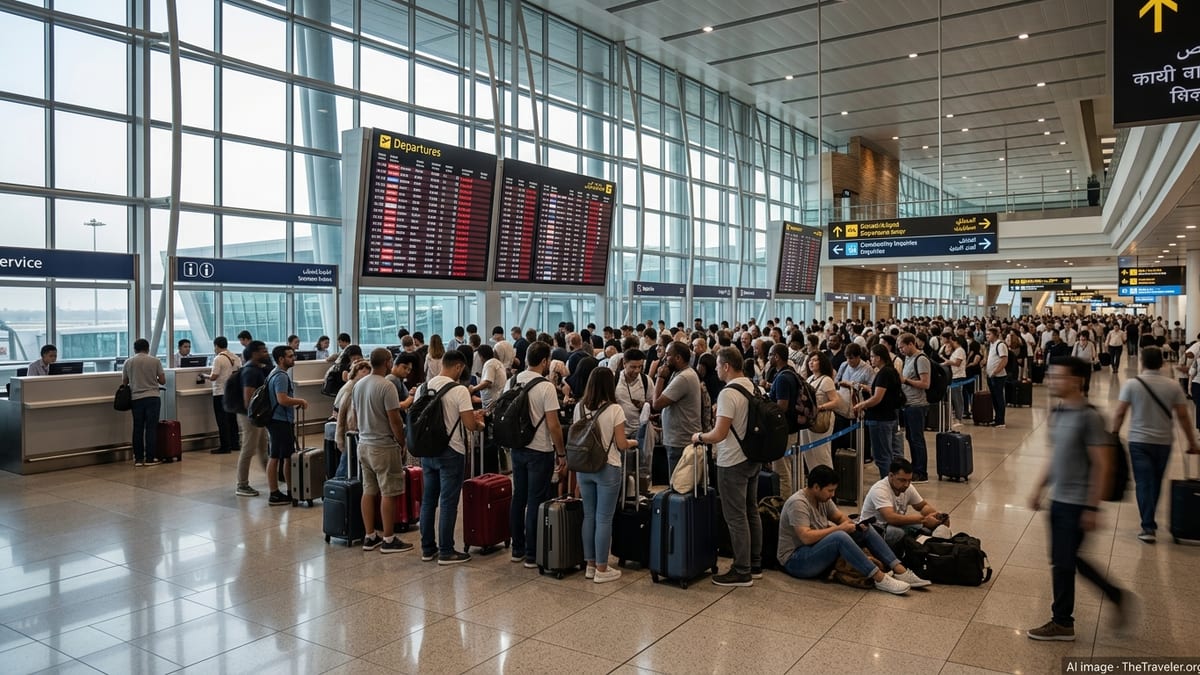
Overnight disruption as strike escalates at Kenya’s main hub
Reports from local media and passenger accounts indicate that the latest industrial action, led by members of the Kenya Aviation Workers Union, began on Sunday and quickly spread across key parts of airport operations at Jomo Kenyatta International Airport (JKIA). By late evening, departures and arrivals had slowed to a crawl, with some flights cancelled outright and others pushed back by several hours.
Coverage from Nairobi-based outlets describes scenes of travelers camping out on terminal floors and in seating areas as the night wore on, with families, business travelers and transit passengers all caught in the disruption. Many had already checked in and passed security when they learned their flights would be significantly delayed, limiting their options to leave the airport or rebook quickly.
The walkout and associated go-slows came only days after fresh warnings about possible industrial action in the sector, following earlier disputes over working conditions, staffing levels and a long-running collective bargaining agreement. Travel organizations had cautioned that any stoppage affecting air traffic control and airport ground staff at JKIA would have an immediate ripple effect across Kenya’s domestic and regional flight network.
JKIA is one of Africa’s busiest aviation hubs, handling millions of passengers a year and serving as a critical transit point for East and Central Africa. When operations slow at the Nairobi hub, connecting flights in neighboring countries often face knock-on delays, stranding passengers far from their final destinations.
Stranded passengers face missed connections and mounting costs
Local coverage from Nairobi highlights that many of those caught in the overnight disruption were transit passengers relying on JKIA as a connection point between regional flights and long-haul services. With flight schedules in flux, some travelers missed onward connections and were left to negotiate alternative arrangements hours after their original departure times.
Reports indicate that queues at airline service desks stretched across terminal halls as travelers sought information on rebooking, vouchers or hotel accommodation. Some passengers described spending more than 10 hours in the airport environment, either on planes waiting for departure clearance or in gate areas with little certainty about revised times.
Extended delays also raised concerns about additional out-of-pocket costs for stranded passengers, including last-minute hotel stays, meals and replacement tickets for missed onward journeys. Consumer advice shared online urged affected travelers to keep boarding passes, receipts and written confirmation of disruptions in case of future compensation or insurance claims.
As the night progressed, social media posts and local reporting documented growing frustration about sparse and often changing information on flight status. Travelers described relying on a mix of airline apps, departure boards and media updates to track the evolving situation, underscoring the communication challenges that accompany sudden industrial action in a major hub.
Nationwide impact as disruption spreads beyond Nairobi
While JKIA experienced the most visible disruption, published coverage notes that the strike and go-slow actions also affected other key airports in Kenya, including Mombasa’s Moi International Airport and several regional facilities. Delays to aircraft and crew positioning in Nairobi translated into schedule changes for domestic routes, stranding passengers in coastal and upcountry cities.
Travel industry bodies have warned that even relatively short aviation stoppages in Kenya can create lingering operational challenges. Aircraft and crew rosters often require several days to normalize after large numbers of flights are rescheduled or cancelled within a short window, particularly when disruption coincides with busy travel periods.
Kenya’s position as a regional aviation hub means the impact is not limited to passengers starting or ending their journeys in the country. International travelers connecting through Nairobi from other African countries or the Middle East report missed connections and extended layovers, with some airlines forced to adjust routing or frequency temporarily while the situation stabilizes.
Observers note that this latest strike comes on top of recent reports of long queues and processing delays at JKIA, raising questions about the resilience of the airport’s infrastructure and staffing levels amid growing passenger volumes. The combination of structural pressure and industrial unrest has heightened concern among tour operators and corporate travel planners who rely on predictable schedules.
Union grievances and history of aviation disputes
Publicly available documents and prior strike notices show that the Kenya Aviation Workers Union has repeatedly raised issues around pay, staffing, safety and implementation of collective bargaining agreements covering workers in air traffic control, airport operations and related services. In previous episodes of industrial action, the union has cited concerns about workload and working conditions in critical safety-sensitive roles.
In early 2026, a separate aviation workers strike led to significant disruption at JKIA and other airports before being suspended following negotiations brokered by government departments and aviation agencies. Statements issued at the time emphasized the economic importance of keeping Kenya’s airspace and major airports fully operational, particularly given the sector’s role in tourism, trade and investment.
Legal filings and past court rulings related to aviation strikes in Kenya underline the sensitivity of industrial action in critical transport infrastructure. Jomo Kenyatta International Airport is classified as a strategic national asset, and previous disputes have prompted litigation over whether certain categories of staff can legally withdraw their labor without endangering safety or paralyzing essential services.
The current strike appears to follow a familiar pattern, with union leaders highlighting unresolved grievances while travel organizations and business groups warn of the potential economic cost of prolonged disruption. Analysts observing the sector argue that the recurring nature of such disputes points to deeper structural tensions in how Kenya’s aviation system is funded, regulated and staffed.
What travelers passing through JKIA should do now
Airlines operating through JKIA have issued customer updates acknowledging ongoing delays into and out of Nairobi, attributing them to operational constraints within air traffic control and related services. Passengers with upcoming travel dates are being urged through public channels to monitor their flight status closely, arrive at the airport earlier than usual and be prepared for extended waits at check in and security.
Travel agents and industry groups recommend that passengers holding tickets in the coming days check directly with their airline or booking platform before heading to the airport, particularly if they are traveling on tight connections or have time-sensitive commitments at their destination. In some cases, carriers may offer voluntary rebooking or waiver options for those willing to shift to later dates.
For travelers already stranded at JKIA, available advice points to staying in close contact with the operating airline, retaining documentation of all delays and additional expenses, and keeping an eye on updates from airport and aviation authorities. Some airports provide basic assistance such as water and limited refreshments during severe disruptions, but the level of support can vary significantly between carriers and terminals.
Given JKIA’s importance as a regional gateway, travel analysts suggest that any move toward resolving the dispute will likely be communicated quickly through official channels and airline statements once a return to normal operations is in sight. Until then, passengers planning to transit through Nairobi are being encouraged to build extra time into itineraries and to remain flexible in case of further schedule changes.
Citizen Digital: Passengers spend night at JKIA as aviation workers strike persists
Kenya Association of Travel Agents: Aviation sector hit by fresh workers’ strike
Nairobi Lens: Aviation workers’ go-slow triggers massive flight delays at JKIA
Kenya Airways: Customer update on delays into and out of JKIA