


More news on this day
Europe–Africa air corridors are being dramatically reshaped as the closure of Niger’s skies, layered on top of long-running restrictions in Libya, Mali and Sudan, helps create what analysts describe as a 4,000-kilometre no-fly wall across the Sahel, pushing airlines into longer and more expensive detours.
Get the latest news straight to your inbox!
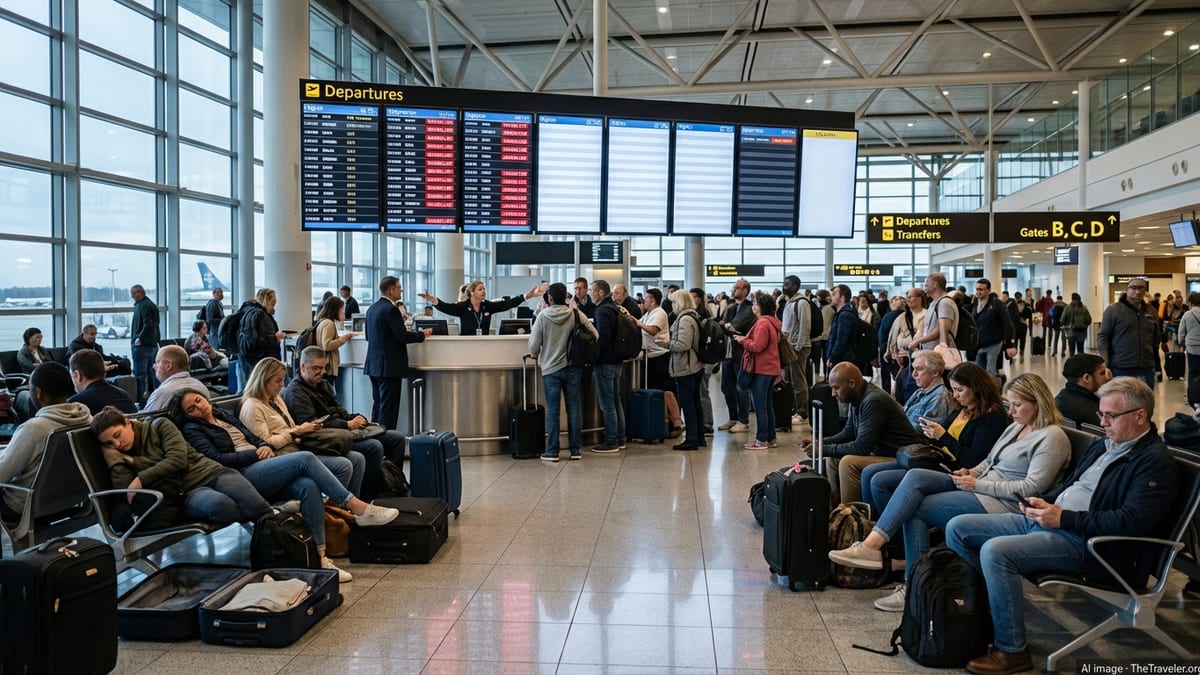
A Patchwork of Closures Becomes a Continuous Barrier
The disruption began in earnest in early August 2023, when Niger’s military authorities announced the closure of the country’s airspace to most commercial traffic following a coup in Niamey. Notices to air missions (NOTAMs) effectively barred overflights through the Niamey Flight Information Region, forcing immediate diversions on some of the busiest north–south corridors between Europe and southern Africa.
Flight-tracking platforms highlighted the impact in real time. Data compiled at the time showed aircraft between hubs such as Paris, London and Amsterdam and destinations including Johannesburg, Cape Town and Nairobi abruptly bending west over the Atlantic or east over the Red Sea, instead of crossing directly over the Sahara through Niger’s extensive territory. One tracking service described the closure as dramatically widening the zone that Europe–southern Africa flights could not use, with some detours extending routing by up to 1,000 kilometres.
These constraints did not occur in isolation. Libya has been subject to severe airspace limitations since its civil conflict, while Sudan maintains tight restrictions across the Khartoum Flight Information Region as fighting continues, with only limited humanitarian and approved traffic allowed along narrow corridors. Recent advisory reporting in July 2026 confirms that Sudan’s broad ban on non-military overflights remains in force, sustaining a major gap in north–south connectivity over the eastern Sahel.
Combined with security-driven route-avoidance over parts of Mali and Burkina Faso, the closure of Niger’s skies has helped stitch together an almost continuous belt of restricted or avoided airspace stretching roughly 4,000 kilometres from the Atlantic coast toward the Red Sea. The result is a structural rerouting of much long-haul traffic between Europe and large parts of sub-Saharan Africa.
Airlines Reroute and Trim Schedules
Airlines adjusted quickly in operational terms but at a significant cost. In the days following the Niger closure, major European carriers announced suspensions of direct services to Niamey and, in some cases, extended pauses on flights to neighbouring capitals such as Bamako and Ouagadougou, which were already affected by regional security concerns. Publicly available flight information and industry coverage from August 2023 document cancellations, diversions and last-minute returns to origin on routes linking France, the United Kingdom and Germany with West and Southern Africa.
On high-profile trunk routes such as London–Johannesburg, Paris–Johannesburg and Amsterdam–Cape Town, operators shifted flight plans to avoid Niger and, where applicable, Libya and Sudan. Reports in British and international media described long “flights to nowhere,” as aircraft that had already crossed the Mediterranean were forced to turn back or divert for fuel when the closure took effect overnight, illustrating how quickly airspace decisions can cascade through complex long-haul operations.
Since those early days, routings have largely stabilised around longer paths that skirt the Sahel, whether via the western Atlantic approaches over the Canary Islands and coastal West Africa, or via eastern tracks closer to the Red Sea and Arabian Peninsula. However, schedule data and airline statements indicate that some frequencies to secondary African cities have not returned to pre-crisis levels, with carriers citing a mix of operational complexity, higher costs and softer demand on certain segments.
The Niger disruption also interacts with a broader global picture in which conflict-related closures, including those over parts of Eastern Europe and the Middle East, continue to compress available airspace. Industry analysis from the International Air Transport Association notes that recurrent closures over conflict zones have become a defining operational challenge, constraining route flexibility and driving up planning costs for airlines worldwide.
Longer Routes Drive Up Costs and Fares
For airlines, the most immediate consequence of the Sahel no-fly wall is fuel. Each additional hour in the air adds tonnes of kerosene burned, as well as increased crew duty time and higher maintenance exposure. Early assessments after Niger’s closure estimated that some Europe–southern Africa flights were flying 600 to 1,000 kilometres farther than their traditional great-circle paths, depending on the chosen avoidance routing and winds.
Those extra miles have financial implications. Aviation economics specialists point out that long-haul fuel already accounts for a substantial share of operating costs, a burden magnified in recent years by volatile global energy prices. When combined with additional crew costs and potential schedule padding to protect on-time performance, the cumulative effect of detours can reach tens of thousands of dollars per rotation on the longest sectors.
Passengers feel the impact through longer block times and, gradually, in pricing. While fares are shaped by multiple factors, including demand swings and broader capacity decisions, higher structural operating costs typically filter through to ticket prices or ancillary fees. Analysts following European network carriers have linked part of the upward pressure on Africa fares to both fuel costs and the need to operate around multiple conflict-affected regions, including the Sahel.
Air cargo is similarly exposed. Longer routings reduce effective payload on some aircraft types, especially during hot-and-high departures in Africa or when strong headwinds prevail on northbound sectors. Freight forwarders serving African markets report tighter capacity on certain lanes and more complex planning to maintain time-sensitive supply chains when transit times lengthen and schedule reliability comes under strain.
Regional Connectivity and Humanitarian Access Under Strain
The Sahel no-fly wall affects more than premium intercontinental traffic. Regional connectivity within West and Central Africa has also been disrupted, particularly on routes that once used Niamey’s airspace as a central corridor. Some regional operators have been able to continue services into Niger under specific clearances, but wider prohibitions on overflight and bilateral flight bans between Niger and certain neighbours remain in place according to current aeronautical circulars.
Public information from Nigeria’s aviation authorities, for example, shows that restrictions on flights between the Kano and Niamey flight information regions have persisted well beyond the initial coup response. An aeronautical information circular issued in January 2024 reiterated the suspension of commercial services between the two countries and barred overflights between their respective airspaces, underscoring how political tensions can harden into long-term operational realities.
Humanitarian and relief operations are particularly sensitive to these constraints. Advisory reporting on Sudan’s airspace notes that most civilian flights into the Khartoum region remain prohibited, concentrating aid and logistics flows through secondary gateways such as Port Sudan or border staging points in Chad and South Sudan. The need to weave routes around restricted skies in both Sudan and the central Sahel can add hours to flights, raise costs for humanitarian agencies and complicate the last-mile delivery of food, medicine and personnel.
For African governments and regional organisations, the prolonged fragmentation of airspace threatens broader development goals tied to improved connectivity. The African Union’s Single African Air Transport Market initiative seeks to liberalise intra-African skies, but the Niger crisis and related security-driven closures highlight how geopolitical instability can override liberalisation efforts, leaving passengers and businesses with fewer, slower and more expensive options.
Search for Safer, More Predictable Skies
The Niger airspace crisis has sharpened attention on how civil aviation manages conflict risks. Industry bodies have called for more timely and transparent sharing of risk assessments so airlines can adjust routings before sudden closures force dramatic in-flight changes. International reports on conflict-zone overflights emphasise the need for harmonised guidance, given the patchwork of national advisories that airlines must currently reconcile when planning routes across hotspots like the Sahel.
In practice, most carriers now maintain detailed internal risk matrices for regions such as the Sahel, continuously updating them with intelligence from governments, international organisations and commercial providers. When risk thresholds are crossed, routes are modified or suspended, even if formal closures have not yet been declared. This conservative approach reflects both safety imperatives and heightened legal and reputational exposure if flights are operated over active conflict zones.
For travellers, the new reality is that Europe–Africa journeys routed near the Sahel are more vulnerable to disruption than they were a decade ago. Itineraries that once followed relatively direct tracks across the Sahara now depend on narrower corridors to the west and east, increasing the likelihood of congestion, weather-related re-routings and knock-on delays when incidents occur. Travel advisers increasingly recommend allowing additional buffer time for connections when itineraries involve overnight African sectors.
How long the 4,000-kilometre no-fly wall persists will depend largely on political outcomes in Niger, Mali, Sudan and Libya, as well as on broader security dynamics across the Sahel. For now, publicly available aviation data and on-the-ground reporting point to a prolonged period in which airlines must treat much of the region as off-limits, rewriting the map of Europe–Africa air travel one detour at a time.
Carriers face longer Africa flights as Niger closes airspace – VOA
Nigeria maintains flight ban with Niger – Radio Nigeria Lagos