


More news on this day
Months-long itineraries that link six continents, dozens of countries and many of the world’s most sought-after destinations are moving from niche product to a defining feature of the modern cruise market, as new data and newly announced voyages signal a sharp rise in demand for extended time at sea.
Get the latest news straight to your inbox!
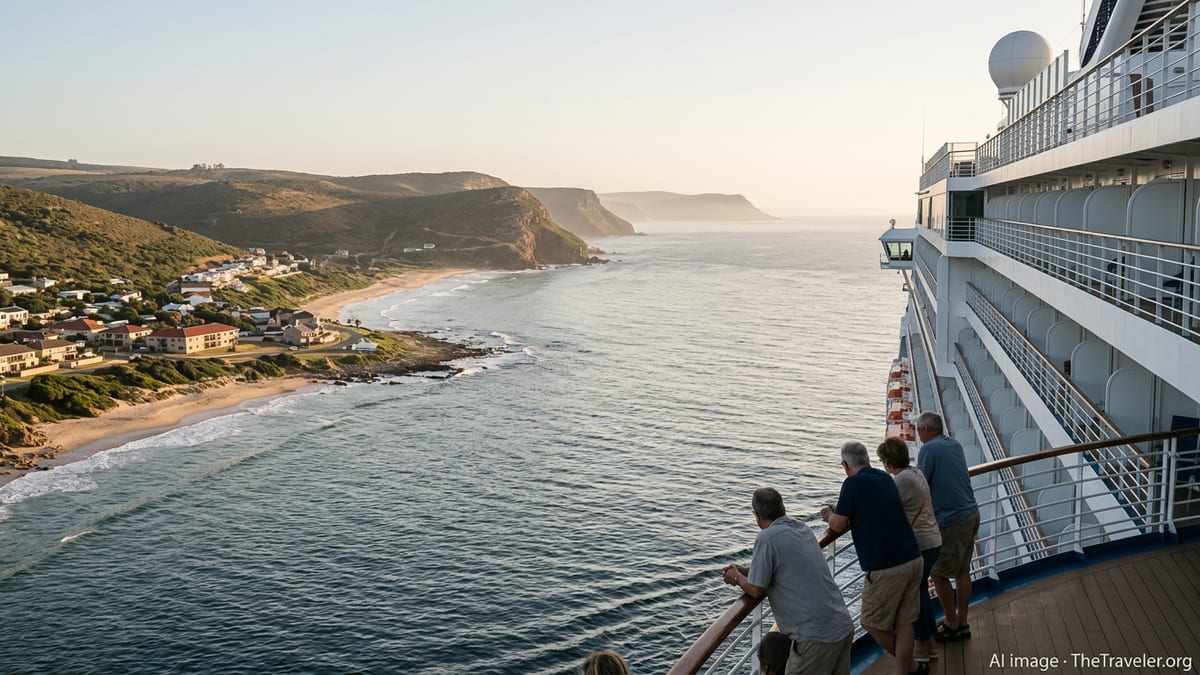
Record-Length Itineraries Connect Six Continents
Publicly available itineraries from premium and luxury cruise brands show a marked expansion in months-long sailings that span multiple oceans and continents. Oceania Cruises, long associated with destination-intensive routes, has placed itself at the center of this trend with a 2027 Around the World program that offers a 180-day voyage from Miami to London and an even longer 244-day “Epic Global Adventure” from Miami to New York. These itineraries visit more than 100 ports in over 40 countries across six continents, with segments that can also be booked separately for travelers who prefer shorter commitments.
Oceania’s 2026 world cruise aboard the ship Vista, scheduled as a 180-day journey visiting 43 countries on six continents, already illustrated the line’s shift toward extended exploration. The follow-up 2027 program further stretches the concept, adding weeks of in-depth time in the Mediterranean and Northern Europe while still linking the Americas, the South Pacific, Australia, Asia and the Middle East. Industry coverage notes that these itineraries are designed to weave together headline attractions with smaller, less visited ports, a mix that appeals to repeat cruisers and long-haul travelers alike.
Across the sector, cruise-focused publications catalog an expanding roster of world and “grand” cruises for 2026, 2027 and beyond. Cruise Critic’s recent roundup of top world voyages highlights not only Oceania but also extended itineraries by other operators, many in the 120- to 200-plus-night range, indicating that such ultra-long sailings are no longer limited to a handful of legacy lines.
Grand Voyages Cater to Deeper Regional Exploration
Alongside true around-the-world sailings, cruise lines are using “Grand Voyages” to capture travelers interested in extended trips that emphasize in-depth regional discovery rather than a complete global circumnavigation. Oceania’s 2026–2027 Tropics and Exotics collection illustrates the trend, offering nearly 30 Grand Voyages ranging from 17 to 68 days. According to a recent company release and supporting trade coverage, these itineraries often link multiple regions, such as the Caribbean and South America with the Pacific, or combine several segments to approximate a world cruise without requiring half a year away.
These Grand Voyages typically feature longer port calls, overnight stays and carefully sequenced routes, for example pairing the South Pacific with Australia and New Zealand, or connecting East and West Africa with the Indian Ocean and Arabian Gulf. Marketing materials emphasize that such itineraries are tailored to travelers who value slow travel and in-depth cultural immersion, but who may not be ready or able to commit to 180 days or more at sea.
Industry analysts also point to flexibility as a key selling point. Many of the longer voyages can be customized by joining or leaving the ship at select gateway ports, effectively allowing travelers to build a bespoke extended journey. This modular approach appears to be widening the audience for long cruises beyond traditional world-cruise loyalists.
Data Points to Rising Demand for Longer Cruises
While headline-grabbing itineraries highlight the supply side, recent industry data indicates that traveler appetite for longer and more immersive cruises is strengthening. The Cruise Lines International Association’s 2024 and 2025 State of the Cruise Industry reports show that intent to cruise remains high, with overall demand outpacing 2019 levels and expedition and exploration itineraries among the fastest-growing segments. These categories often involve extended sailings to remote regions, overlapping with the profile of guests attracted to multi-month voyages.
CLIA’s latest United States market analysis further notes that cruise ship passengers now account for a growing share of global international arrivals, and that deployment patterns have shifted to offer more destination-intensive itineraries. These include voyages with a higher number of port calls, longer days ashore and more overnight stays, all attributes that feature prominently in the new generation of world and Grand Voyages.
Trade publications tracking booking trends for long-haul itineraries report strong uptake. Coverage of Oceania’s upcoming world cruises, for instance, cites high proportions of guests booking the entire 180-day journey rather than just individual segments. For cruise lines, that level of commitment supports the continued development of complex, multi-continent routes that require significant advance planning and coordination with ports around the globe.
World’s Hottest Destinations Woven Into Extended Routes
The itineraries that underpin this boom are calibrated to include many of the world’s most in-demand destinations while also highlighting emerging ports. Oceania’s 2027 world cruise, for example, includes access to more than 150 UNESCO World Heritage sites according to company materials, incorporating perennial favorites such as the Panama Canal, the Great Barrier Reef and Mediterranean cultural capitals, alongside less frequented stops like Niue in the South Pacific or smaller islands in Southeast Asia.
Long-haul cruise overviews from consumer travel sites emphasize that world cruises in 2027 and beyond typically cross the Panama Canal, island-hop through French Polynesia, explore Australia and New Zealand, traverse Southeast and East Asia and then move on to the Middle East and Europe. Many routes add extended time in the Mediterranean or Northern Europe, responding to persistent demand for classic cultural and culinary destinations such as Italy, Greece, Spain and the Scandinavian fjords.
In parallel, Grand Voyages and other extended itineraries are bringing renewed focus to regions like Southern Africa, the Indian Ocean islands and lesser-visited parts of Latin America. By connecting these areas within one continuous sailing, cruise lines are effectively offering an alternative to multi-stop air itineraries, a proposition that is increasingly attractive to travelers looking to reduce the number of long-haul flights on a single trip.
What Longer Voyages Signal for Future Travel
The acceleration in multi-month sailings offers a window into how high-end travelers are reimagining long-distance trips. Reports suggest that a growing cohort of guests is willing to substitute several shorter holidays for one extended journey that covers multiple wish-list destinations at once. This aligns with broader trends in travel, where remote work options, flexible retirement timelines and a focus on “once-in-a-lifetime” experiences are reshaping how people allocate their vacation time and budgets.
For destinations, the shift carries both opportunities and challenges. Ports included on world or Grand Voyages can benefit from repeat calls across a season and from travelers who have the time and resources to book intensive shore excursions or longer stays before or after a cruise. At the same time, local authorities and tourism operators are working to manage flows in popular cities and environmentally sensitive areas, particularly as longer itineraries frequently include multiple marquee sites on a single voyage.
As cruise lines continue to publish schedules into the late 2020s, the pattern is becoming clearer: extended itineraries that connect six continents and a dense roster of high-profile destinations are likely to remain a central pillar of the industry’s premium and luxury segments. For travelers seeking to circle the globe in one extended arc, the options have never been more abundant, or more geographically ambitious.
Oceania Cruises 2026–2027 Tropics & Exotics Collection
Oceania 2027 Around the World Cruise overview