


More news on this day
Thousands of travelers were left stranded at Nairobi’s Jomo Kenyatta International Airport on August 31 as an aviation workers’ strike triggered widespread delays, cancellations, and overnight terminal crowding at Kenya’s main international gateway.
Get the latest news straight to your inbox!
Strike action disrupts operations at Kenya’s main hub
Publicly available coverage indicates that aviation workers began a go-slow and strike action on Sunday, August 30, at Jomo Kenyatta International Airport (JKIA), significantly slowing passenger processing and aircraft handling. The industrial action continued into Monday, with reports describing long queues at check-in and security, and departure boards showing multiple delayed or canceled flights.
Workers affiliated with the Kenya Aviation Workers Union (KAWU) are reported to be protesting over pay, benefits, staffing levels, and unresolved employment terms. Local and international outlets state that the action has affected not only JKIA but also Moi International Airport in Mombasa and several smaller Kenyan airports, although the most visible disruption has been in Nairobi, the country’s primary international hub.
International news agencies and regional media describe the current stoppage as the latest in a series of industrial disputes involving airport staff this year. A previous strike in February also disrupted traffic through JKIA, highlighting ongoing tensions between aviation workers and the agencies responsible for managing Kenya’s airports and air navigation services.
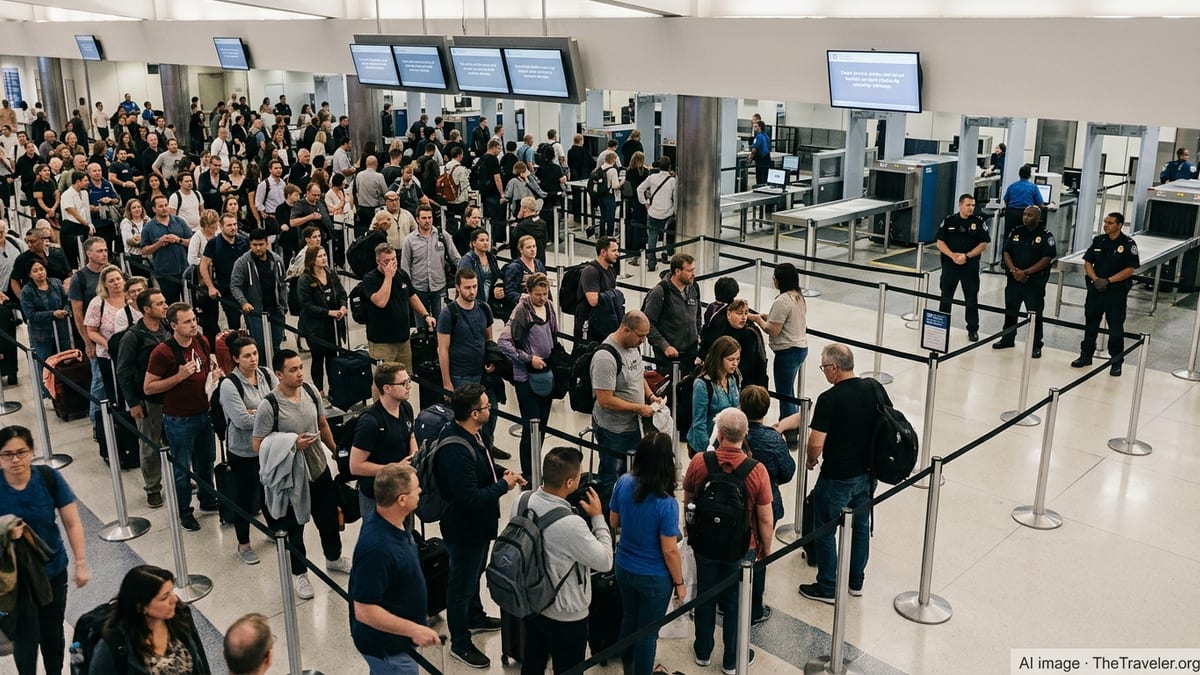
Photographs and footage circulating in news reports show crowded terminal halls, lines of passengers waiting with luggage, and airline staff working through backlogs as flight schedules are repeatedly revised. Some carriers have reportedly advised passengers not to travel to the airport until their flights have been reconfirmed.
Passengers face overnight waits and uncertain travel plans
Local media accounts describe hundreds of travelers bedding down on terminal seats and floors after flights were postponed late into the night or pushed to the following day. Some airlines reportedly began arranging hotel accommodation or rebooking options for those unable to depart as planned, while others advised travelers to return home and await updates through digital channels.
Coverage from Kenyan outlets notes that families, business travelers, and transit passengers on regional and long-haul itineraries were all caught up in the disruption. For travelers connecting through Nairobi to destinations across East and Central Africa, missed onward flights raised concerns about lost bookings, missed events, and additional costs.
Reports also highlight the knock-on impact beyond Kenya, as delays at JKIA affected flights arriving from and departing to major hubs in the Middle East, Europe, and other African countries. Some passengers reported being stranded at foreign airports awaiting clearance to travel onward to Nairobi while airlines reviewed schedules and crew availability.
Travel industry analysts quoted in public reporting suggest that even after the strike is resolved, it may take several days for normal operations to resume. Aircraft rotations, crew duty limits, and displaced passengers can keep schedules unstable, particularly on already busy regional routes.
Union grievances center on pay, staffing and job security
According to published strike notices and recent news coverage, KAWU has long raised concerns over pay scales, working conditions, and the absence of an updated collective bargaining agreement with key aviation employers. The union has also protested proposed changes in airport management structures and the use of temporary or volunteer labor in roles traditionally handled by trained staff.
Union representatives cited in previous and current media reports argue that staffing shortages and limited career progression are contributing to low morale among aviation workers. They contend that safety and service quality could be compromised if experienced personnel leave the sector or if operational roles are outsourced without clear safeguards.
Kenya’s aviation infrastructure, including JKIA, plays a critical role in regional connectivity, serving as a transit point for flights between Africa, the Middle East, Europe, and Asia. Industry observers note that repeated industrial disputes at such a strategic hub can undermine confidence among airlines and passengers, especially if travelers begin to perceive Nairobi as an unreliable transfer point.
Publicly available information from earlier this year shows that previous strike actions were suspended after negotiations, but several core issues, including long-term job security and compensation frameworks, remained unresolved. The current stoppage appears to reflect continuing frustration over the pace and substance of those talks.
Impact spreads across airlines and regional routes
Coverage from international and regional outlets indicates that both Kenyan and foreign carriers experienced disruptions as the strike entered its second day. Some airlines operating out of JKIA reportedly concentrated limited resources on priority long-haul services, while scaling back or rescheduling shorter regional flights.
Travel advisories shared through airline websites and social media platforms urged passengers to confirm flight status before heading to the airport, and in some cases encouraged travelers to consider voluntarily changing their dates without penalty. However, for those with tight schedules, including business travelers and students at the start of academic terms abroad, the sudden changes proved particularly challenging.
Air cargo operations were also affected, according to business-focused reporting, with perishable shipments and just-in-time deliveries facing delays. Logistics specialists note that JKIA is a key export channel for Kenyan horticultural products, so extended disruption can have financial consequences for exporters and their overseas buyers.
Neighboring countries that rely on Nairobi as a regional connection point may also feel the effects, as missed links disrupt itineraries involving multiple airlines. Travel commentators point out that such events can encourage some passengers to consider alternative routings through other African or Middle Eastern hubs, at least in the short term.
Advice for travelers with upcoming flights via Nairobi
Travel-focused publications and airline advisories emphasize that passengers scheduled to travel through JKIA in the coming days should closely monitor updates from their carriers and, where possible, manage bookings through official digital channels or accredited travel agents. Many airlines offer real-time status tools and allow free changes when disruption is caused by industrial action.
Travelers already in Nairobi are being encouraged, through public reporting, to allow additional time for airport formalities, and to be prepared for longer queues at check-in, security, and boarding gates. Flexible arrangements for airport transfers and accommodation are advisable until flight schedules stabilize.
Industry observers suggest that those with nonessential trips may wish to postpone travel or reroute through alternative hubs if feasible, particularly while negotiations between union representatives and aviation authorities continue. Travel insurance policies that cover delays and missed connections may offer some financial protection, although coverage terms vary.
For now, reports indicate that the situation at JKIA remains fluid, with airlines adjusting timetables and staffing plans day by day. How quickly full operations resume will depend on the outcome of discussions between aviation workers and the relevant agencies, and on how rapidly airlines can absorb the backlog of stranded passengers once normal staffing levels return.
Associated Press: Workers’ strike at Kenya’s main international airport strands passengers
DW: Kenya passengers stranded amid airport staff strike
Standard Media: Hundreds remain stranded as aviation workers’ strike enters day two
Pulse Kenya: KAWU strike causes flight disruptions at JKIA, Moi Airport
Malay Mail: Passengers stranded overnight by Kenya airport strike