


More news on this day
Major European and Asian airlines are widening suspensions and rerouting strategies across the Middle East, as ongoing conflict and rolling airspace restrictions continue to disrupt travel to the United Arab Emirates, Iraq, Saudi Arabia and Israel.
Get the latest news straight to your inbox!
Lufthansa Group Extends Middle East Suspensions While Phasing Partial Return
Lufthansa Group has emerged as one of the most heavily affected European airline conglomerates, with its latest operational notices outlining a patchwork of suspensions and gradual resumptions across the region. Publicly available information indicates that flights to Tel Aviv are scheduled to return in stages from June 2026, after being halted when Israel and multiple neighboring states closed portions of their airspace earlier this year.
At the same time, the group continues to hold back on services to key Gulf hubs. Lufthansa and Swiss have confirmed that flights to and from Dubai remain suspended for operational and security-related reasons until at least mid September 2026, extending a shutdown that began at the height of the crisis. Other Lufthansa Group brands, including Austrian Airlines and Brussels Airlines, are operating limited detours that avoid affected air corridors, often via extended routings over the eastern Mediterranean or Central Asia.
Industry briefings on the regional crisis describe a sharp rise in fuel costs and blockages along traditional Asia Europe corridors. The combination of volatile airspace access and higher kerosene prices has prompted Lufthansa to accelerate elements of its fleet and network restructuring, while emphasizing that passenger and crew safety remains the primary filter for any service restoration.
For travelers, the result is a fluid schedule in which some Lufthansa Group routes to the Middle East have disappeared entirely from booking systems, while others show bookable flights that remain subject to last minute cancellation or rerouting. Travel advisors are warning that even itineraries not touching the region may see longer flight times or narrow connection windows as aircraft are reallocated.
Cathay Pacific and Asian Carriers Pull Back from Gulf Gateways
In Asia, Hong Kong based Cathay Pacific has enacted some of the broadest regional suspensions, taking all passenger and cargo flights to Dubai and Riyadh off its schedule following the escalation of hostilities in late February 2026. Airline notices and regional media coverage show that Cathay initially grounded services in response to missile and drone risks, and has since extended the suspension several times as security assessments failed to improve.
Cathay has confirmed that flights between Hong Kong and Dubai, as well as Hong Kong and Riyadh, will remain suspended at least through the end of April 2026, with cargo operations to Dubai World Central also on hold. The carrier has instead redirected aircraft capacity to higher demand and lower risk long haul markets, including additional frequencies to London and select Asia Pacific destinations.
Other Asian airlines have adopted similar caution. Travel advisories compiled by aviation analysts indicate that carriers such as Singapore Airlines, Air India and several Gulf based operators have cancelled or curtailed services that traverse airspace over Iran, Iraq and Israel, opting for wide detours or temporary suspensions where reroutes prove impractical. Flight tracking data shows a dense flow of Asia Europe traffic shifting north through the Caucasus and Central Asia, avoiding the once standard corridors across the Gulf.
For passengers departing major Asian hubs, the impact can range from modest schedule changes to multi day delays. Travelers who previously relied on Hong Kong or Gulf hubs as fast bridges between Europe and Asia are now seeing journeys split across multiple intermediate stops, often with extended layovers as airlines reoptimize their networks.
European Networks Disrupted as Air France, Finnair, Swiss and ITA Adjust
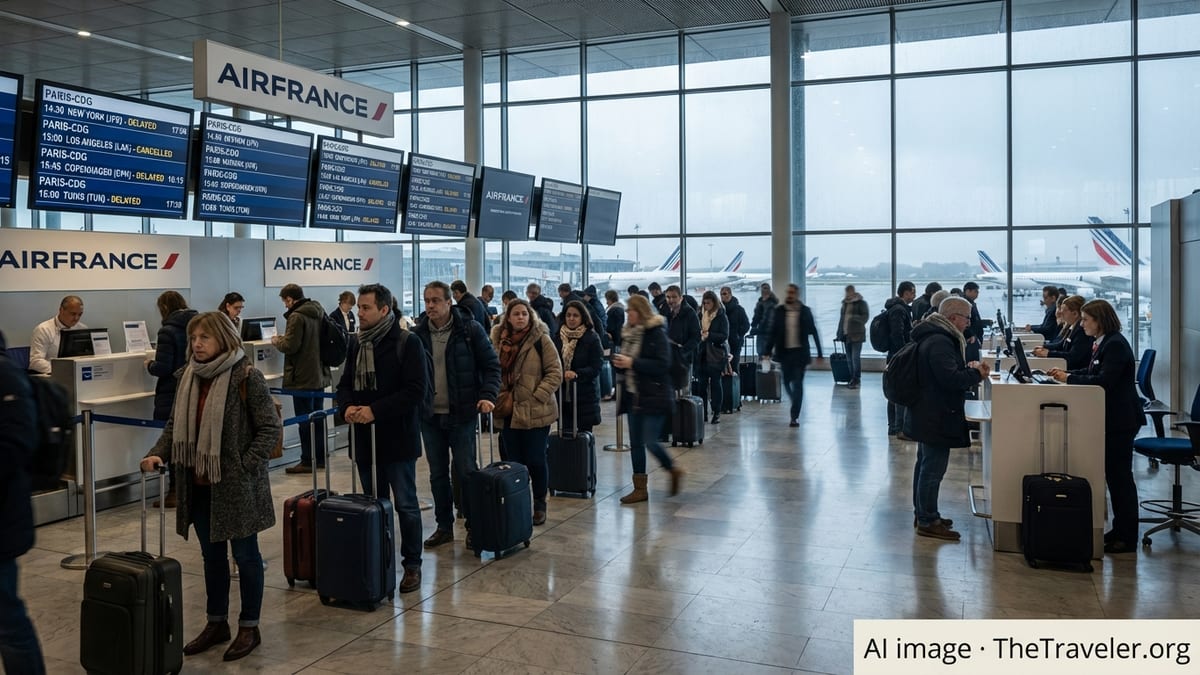
Across continental Europe, Air France, Finnair, Swiss and ITA Airways have each announced waves of suspensions, cancellations and reroutes affecting the broader Middle East. Operational updates in March and April show Air France suspending flights to Tel Aviv and Beirut and repeatedly postponing restart dates, as Israel and parts of neighboring airspace remain subject to intermittent closures and heightened risk advisories.
Finnair has temporarily halted flights to Dubai and Doha, with one internal bulletin citing suspensions at least until early March while the airline assesses the viability of operating long detours from its Helsinki hub. The carrier, which historically marketed efficient connections between northern Europe and Asian cities, has seen much of its traditional eastbound pattern reshaped by the need to avoid conflict zones in both Eastern Europe and the Middle East.
Swiss, part of the Lufthansa Group, mirrors its parent airline’s stance on the Gulf, having extended the suspension of Dubai flights in line with group wide policy. Italy’s ITA Airways, meanwhile, has halted services to Tel Aviv and temporarily paused flights to Dubai and Riyadh, while also announcing that its aircraft will avoid the airspace of Israel, Lebanon, Jordan, Iraq, Qatar, Kuwait, Bahrain and Iran for defined periods.
These combined measures are feeding into broader disruption across Europe’s aviation system. Schedules that once depended on reliable overflight permissions across the Levant and Gulf are being rewritten, with some secondary Middle Eastern destinations disappearing from timetables and others consolidated through still functioning hubs on the periphery of the conflict zone.
Royal Air Maroc and Regional Airlines Face Tough Choices
Airlines based closer to the region, including North African and Middle Eastern carriers, have been forced into complex balancing acts as they navigate evolving airspace rules and demand patterns. Public reports indicate that Royal Air Maroc has reduced or suspended some services into the Gulf and eastern Mediterranean, reflecting both safety concerns and a sharp decline in connecting traffic bound for the affected states.
Carriers in Jordan, Egypt and the Gulf have grappled with rolling closures and partial openings of airspace in countries such as Israel, Kuwait, Iran and Qatar. In several cases, airlines have shifted capacity toward alternative routes linking North Africa, Europe and relatively stable parts of the Arabian Peninsula, while maintaining only skeleton services into high risk areas or suspending them outright.
Operational summaries from humanitarian logistics and aviation organizations describe a patchwork of restrictions. Some airports, including major hubs in the United Arab Emirates and Saudi Arabia, have resumed limited operations but remain subject to sudden schedule changes when regional tensions flare. Elsewhere, such as in parts of Iraq and along key flight corridors near Iran, commercial overflights remain heavily constrained.
The pressures on these regional airlines are compounded by the broader economic impact of the crisis, with travel demand across the Gulf and Levant still well below pre conflict levels. Industry estimates point to significant losses in visitor spending and hotel occupancy, particularly in markets that previously relied on seamless air connectivity to Europe and Asia.
Travelers Confront Longer Journeys, Uncertain Itineraries and Higher Costs
For international travelers, the cumulative effect of suspensions by Lufthansa, Cathay Pacific, Air France, Finnair, Swiss, Royal Air Maroc, ITA and a growing list of other airlines is a landscape defined by uncertainty. Routes once served by multiple daily nonstops have been reduced to a handful of options, many of which involve circuitous routings that add several hours to total journey times.
Published coverage of the crisis notes that key Middle Eastern hubs previously handled a large share of Asia Europe connecting traffic. With airspace closures and operational limits now in place across parts of Iran, Iraq, Israel, Kuwait, Qatar and the United Arab Emirates, roughly a thousand flights per day are being rerouted, according to aviation and travel industry briefings. This has knock on effects for airport congestion, crew scheduling and aircraft availability on other continents.
Airlines have broadly responded with flexible rebooking and refund policies, but implementation varies by carrier and route. Travelers booked on suspended services to the UAE, Iraq, Saudi Arabia or Israel are often being offered alternative connections via remaining hubs or, in some cases, vouchers for future travel. Given the fluid security situation, experts recommend that passengers monitor their bookings frequently and leave extra time for transfers.
With no rapid resolution to the regional crisis yet in sight, aviation planners are preparing for a prolonged period in which Middle East airspace remains fragmented. The evolving network decisions by Lufthansa and its peers suggest that airlines are treating this not only as a short term disruption but as a structural challenge that could redefine long haul travel patterns between Europe, Asia and Africa for months to come.