


More news on this day
United Airlines has quietly become one of the standout performers in the travel sector, with its shares advancing roughly 35 percent over the past three months as investors respond to stronger profits, resilient travel demand and a more confident earnings outlook.
Get the latest news straight to your inbox!
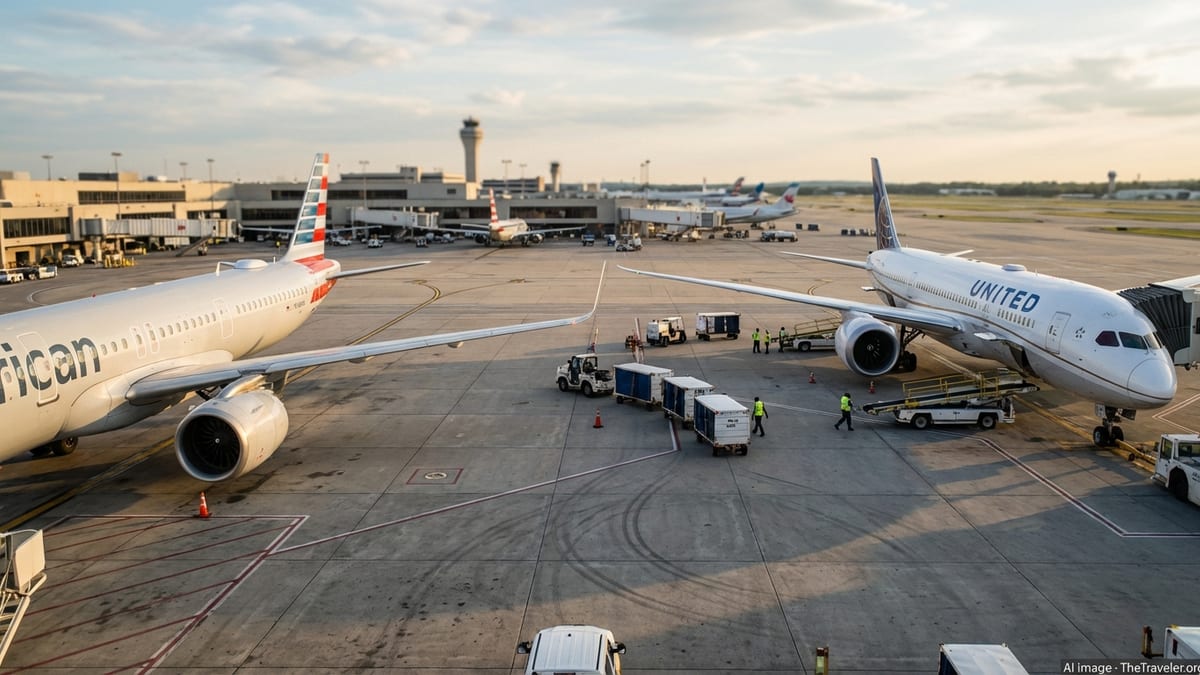
A Rapid Climb Fueled by Earnings Momentum
The latest leg of United’s rally has been closely tied to improving financial results. Public filings for the first quarter of 2026 showed revenue of about 14.6 billion dollars, up more than 10 percent year over year, alongside solid profitability and strong cash generation. That performance built on a record-setting 2025, when full year revenue reached more than 59 billion dollars and earnings per share moved higher compared with 2024.
In mid July 2026, the airline reported second quarter results that again topped market expectations, with total operating revenue rising at a double digit pace compared with the prior year. Management raised its full year adjusted earnings guidance to a range in the high single to low double digits per share, signaling confidence that robust demand and capacity growth can offset sharply higher fuel costs.
Analyst commentary indicates that this earnings backdrop has been central to the stock’s recent move. Research notes from equity houses describe United as one of the sector’s more resilient names, highlighting consistent cash flow, ample liquidity and an ability to pass a significant portion of fuel price increases on to customers through higher fares and surcharges.
With that mix of rising revenue, expanding margins and upgraded guidance, investors have been willing to pay more for each dollar of United’s expected profits, pushing the shares sharply higher in a short span.
Travel Demand and Network Strategy Support the Bull Case
Behind the numbers, the recovery and expansion of air travel has been a critical support for United’s stock. Industry data and company disclosures point to particularly strong trends in international and premium cabins, where higher fares and strong load factors help lift overall unit revenue.
United has leaned into that demand with a strategy that emphasizes large coastal hubs and long haul routes. Its network strength at airports such as Newark, San Francisco and Washington helps it capture both business and leisure traffic across the Atlantic and Pacific, while also feeding profitable domestic connections.
Reports also highlight the role of ancillary revenue and loyalty income. Mileage program earnings, co branded credit card partnerships and fees for services such as extra legroom seating and early boarding have become important profit drivers, reducing reliance on base fares alone. In recent quarters, these revenue streams have grown at a healthy pace, adding another layer of support for the share price.
At the same time, United continues to invest in cabin upgrades, new aircraft and inflight connectivity, including the rollout of high speed satellite internet across a growing portion of the fleet. Those investments are intended to differentiate the product in a competitive market, potentially justifying higher yields and deepening customer loyalty over time.
Valuation, Institutional Interest and Technical Levels
With the stock up about 35 percent in 90 days and significantly more over the past year, valuation has moved back into focus. Some research services now describe United as trading at a premium to its own recent history on metrics such as price to earnings based on near term forecasts, though the shares often still discount a lower multiple than many industrial and travel related peers.
Despite the rapid ascent, certain analysts maintain positive longer term ratings, arguing that earnings power remains underappreciated if travel demand stays firm and cost pressures can be contained. Forecasts cited in recent reports call for revenue growth in the low to mid teens for 2026, with the possibility of further gains in 2027 as capacity and international exposure continue to increase.
Institutional flows have reinforced that constructive view. Recent data show a measurable increase in institutional ownership over the past several months, suggesting that large investors have been adding exposure as fundamentals improved. Technical services also point to a series of higher highs and higher lows for the stock, with bullish chart patterns forming as it broke through earlier resistance levels.
However, after a move of this size, many traders are watching closely for signs of consolidation. Short term momentum indicators suggest the shares may be stretched, which could set the stage for a period of sideways trading or pullbacks if sentiment cools or macro headlines turn negative.
Risks That Could Disrupt the Rally
For all the optimism priced into United’s recent gains, the airline industry remains highly sensitive to external shocks. One of the most immediate risks is fuel. Company disclosures refer to an anticipated increase in full year fuel expense of nearly six billion dollars compared with prior expectations, a reminder that swings in oil prices can quickly erode margins if they outpace fare increases.
Economic conditions are another concern. While close in bookings and corporate travel indicators have remained relatively strong, a slowdown in consumer spending or business travel budgets could reduce demand for higher yield tickets. That could pressure unit revenue just as capacity and operating costs remain elevated.
Operational challenges also carry financial implications. Congestion in key hubs, weather disruptions and air traffic control constraints can lead to delays, cancellations and added expenses. Although United has recently reported some of its best on time departure performance in several years, maintaining that reliability as the network grows will be critical to protecting both brand reputation and profitability.
Regulatory developments and labor relations round out the risk picture. Airlines operate within a tightly regulated environment and face recurring negotiations with pilots, flight attendants and ground staff. Wage increases or new compliance requirements can raise structural costs and weigh on earnings projections, potentially limiting further upside for the shares.
Where United’s Stock Could Go Next
Looking ahead, the path for United’s stock will likely hinge on whether the company can deliver on its upgraded earnings guidance and sustain demand through the next several travel seasons. If revenue growth tracks close to current projections and management meets or exceeds its profit targets, analysts suggest that there may still be room for the shares to advance, particularly if the broader market remains supportive of cyclical and travel related names.
Potential catalysts include additional quarters of earnings beats, further progress toward an investment grade credit rating and any indication that free cash flow may support larger share repurchases or debt reduction. A more stable fuel price environment would also help underpin margins and reduce one of the main sources of volatility in the outlook.
On the other hand, the stock’s strong run leaves less margin for error. Disappointments on revenue, a sharp rise in costs or signs of weakening demand could prompt investors to reassess expectations, leading to sharper swings in the share price. For now, United stands out as one of the airline sector’s highest profile rebound stories, but future gains are likely to depend on the company’s ability to navigate a still complex operating and economic backdrop.