


More news on this day
Lufthansa Group is accelerating the rollout of artificial intelligence across its operations, joining Air France-KLM, Emirates, American Airlines and Delta Air Lines at the forefront of what analysts describe as the most far-reaching operational transformation in modern commercial aviation.
Get the latest news straight to your inbox!
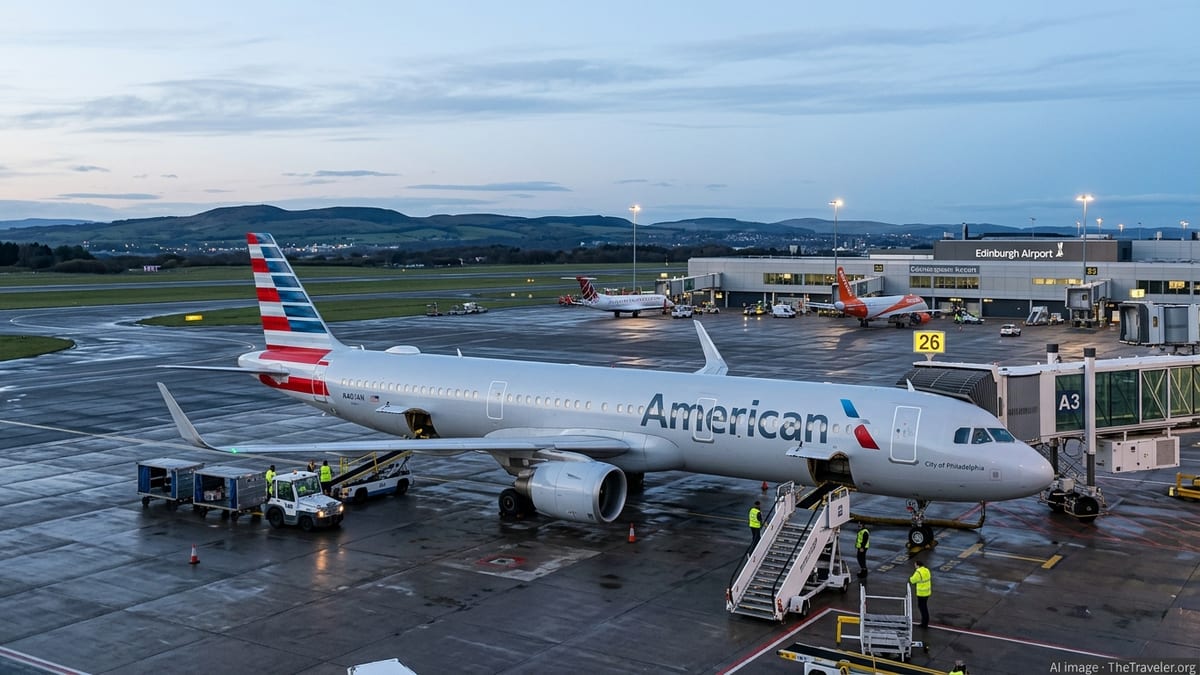
Lufthansa Group Moves From Pilots to Production-Scale AI
Recent corporate presentations and technology updates indicate that Lufthansa Group is shifting from scattered AI experiments to a coordinated, production-scale deployment that cuts across its airlines and support units. The company has framed 2025 and 2026 as pivotal years in which digital platforms and artificial intelligence begin underpinning day to day decision making in areas such as network planning, disruption management and aircraft turnarounds.
According to publicly available investor materials, Lufthansa is building a central AI powered technology layer designed to sit above individual airline brands and standardize core functions. The group has tied this digital push to its broader reorganization that will centralize activities across Lufthansa, Swiss, Austrian Airlines, Brussels Airlines and new subsidiaries, with the goal of faster decisions and higher asset utilization.
Separate reporting from Lufthansa Industry Solutions, the group’s IT and consulting arm, describes 2026 as an inflection point in which generative AI and data analytics are considered ready for full production use. The unit’s trend assessments highlight opportunities to integrate AI into predictive maintenance, crew and fleet planning, and fuel and route optimization, all areas that directly influence punctuality, unit costs and service reliability.
Lufthansa is also testing AI at the ground level. At Frankfurt Airport, the group has partnered with airport operator Fraport and technology unit zeroG on computer vision tools that monitor aircraft turnarounds in real time. The system is designed to flag delays in steps such as catering, refuelling or baggage loading, allowing ramp teams and controllers to intervene earlier and reduce knock on disruption.
European Peers Air France KLM Double Down on Generative AI
While Lufthansa accelerates its internal program, Air France-KLM has been positioning generative AI as a core lever in its ongoing cost and productivity drive. Publicly shared summaries of the group’s recent financial presentations point to AI and automation as contributors to hundreds of millions of euros in efficiency gains through its multi year “Back on Track” program, particularly at KLM.
Industry and technology press reports from mid 2025 outlined Air France-KLM’s collaboration with major cloud providers and consultancies to deploy generative AI tools. These initiatives target both customer facing interactions and back office processes, including revenue management, demand forecasting and disruption handling for connections across its hubs in Paris and Amsterdam.
Data driven optimization is becoming central to the Franco Dutch group’s efforts to navigate softening yields and higher infrastructure charges at key airports. By using AI to refine pricing, capacity allocation and maintenance planning, the airline group is seeking to protect margins while limiting additional fees for travelers already facing higher fares, surcharges and ancillary costs.
Observers note that the parallel AI pushes at Lufthansa Group and Air France-KLM mark a turning point for Europe’s legacy carriers. After years of fragmented digital projects, the two largest continental groups are now presenting AI roadmaps as headline elements of their strategy, placing them in closer alignment with the technology narratives long promoted by major US and Gulf competitors.
Emirates Bets on Enterprise-Wide AI Through OpenAI Partnership
In the Gulf, Emirates Group has signaled an ambition to embed AI across virtually every part of its business. In late 2025 the airline announced a strategic collaboration with OpenAI focused on enterprise wide use of generative models. Public information about the partnership describes the roll out of ChatGPT Enterprise to staff, extensive AI literacy programs and joint technical exploration to speed up prototyping and deployment of new tools.
Emirates has framed the initiative as a way to support complex commercial decisions, strengthen operational performance and redesign the end to end customer journey. The collaboration builds on the carrier’s broader ForsaTEK technology program, which has showcased applications such as autonomous security robots, AI supported cargo handling and augmented reality tools for maintenance and training.
The United Arab Emirates is positioning itself as a global hub for AI infrastructure and regulation, and Emirates’ moves are widely viewed as aligning with that national strategy. Analysts suggest that an airline headquartered in a region investing heavily in data centers and advanced connectivity is well placed to experiment with real time decision systems for everything from flight dispatch to flight deck support.
The combination of large scale infrastructure and an enterprise focused AI rollout gives Emirates a prominent role in the emerging competitive race to leverage data and algorithms in aviation. For passengers, the most visible changes may initially appear in personalized offers and smoother disruption recovery, but the underlying shift is toward an airline where most operational choices are augmented by machine intelligence.
American and Delta Use AI to Tackle Complex US Operations
Across the Atlantic, American Airlines and Delta Air Lines have been incorporating AI and advanced analytics into the nerve centers that run their vast US networks. Publicly available coverage of American’s Integrated Operations Center describes a highly centralized facility in which dozens of teams coordinate crew scheduling, airport operations, maintenance control and dispatch. Industry observers note that this type of hub provides fertile ground for AI tools that can simulate scenarios, predict bottlenecks and recommend contingency plans.
American has been exploring machine learning to support areas like flight rebooking, maintenance task allocation and crew pairing. With nearly one thousand mainline aircraft and a dense schedule across North America, the airline faces a continual challenge to balance efficiency with resilience. More accurate predictions of weather impacts, aircraft availability and crew duty limits can reduce cancellations and costly knock on delays.
Delta has similarly invested in decision support systems for operations, revenue management and customer experience. Trade publications and analyst notes over the last several years have pointed to Delta’s use of predictive analytics to anticipate maintenance issues, optimize spare parts positioning and adjust schedules ahead of disruption. Discussions in industry forums indicate growing interest in using AI to refine individualized pricing and loyalty offers, although airlines face regulatory and reputational scrutiny over algorithmic fare setting.
The US majors’ early adoption of analytics and AI has put pressure on peers worldwide to match their capabilities. With American and Delta already advancing in this area, Lufthansa Group’s latest moves can be seen as part of a wider effort among non US global carriers to avoid falling behind in operational technology.
From Isolated Use Cases to an AI-Defined Operating Model
Across Lufthansa Group, Air France-KLM, Emirates, American and Delta, a common pattern is emerging. Airlines that once treated AI as a set of isolated experiments are now reorganizing around the idea that core functions, from ground operations to long term fleet planning, should be built on data platforms and algorithmic decision engines.
In Europe, Lufthansa’s central AI powered digital layer and Air France-KLM’s generative AI deployments reflect a shift toward standardized processes and shared data across multiple airline brands. In the Gulf, Emirates is integrating AI literacy and tools into the daily workflow of thousands of employees, using a partnership model to accelerate innovation. In the United States, American and Delta are embedding AI in large operations centers that already function as the control rooms of their networks.
Industry analysts argue that this amounts to one of the most significant operational revolutions since the advent of computerized reservation systems and global alliances. The transition is still in progress and comes with clear risks, including cybersecurity exposure, workforce disruption and customer concerns about transparency and fairness in algorithmic decisions.
Yet the direction of travel is clear. As Lufthansa Group steps up its AI investments and aligns itself with peers that have already made bold commitments, the competitive landscape in global aviation is increasingly defined by which airlines can turn data into punctual flights, optimized fleets and resilient schedules. For travelers, the payoff will be measured not only in on time arrivals and smoother rebooking, but also in how responsibly airlines manage the power of the systems they are now racing to deploy.