


More news on this day
Lufthansa has become the latest major airline to slash flights and tighten fuel strategies as the Middle East conflict ripples through global energy markets, stoking concerns over aviation fuel shortages and volatile airfares from Europe to Asia and beyond.
Get the latest news straight to your inbox!
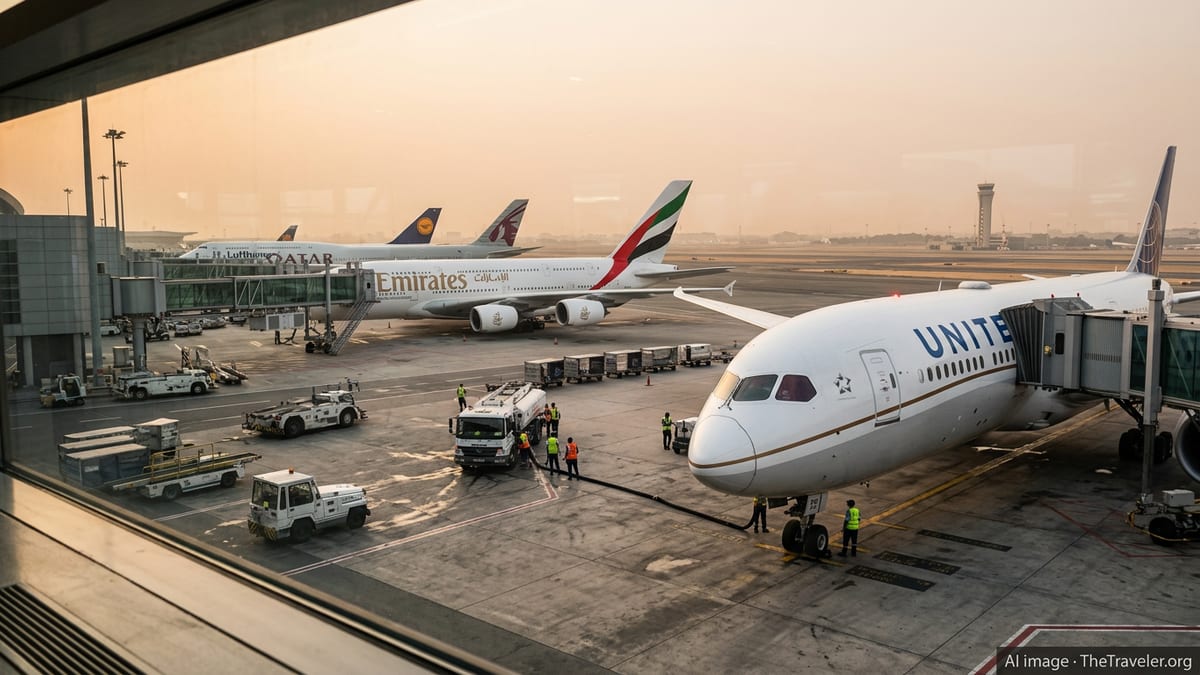
Lufthansa’s Flight Cuts Signal Escalating Fuel Pressures
Recent schedule changes at Lufthansa have highlighted the scale of the fuel shock confronting European aviation. Publicly available information indicates the German group plans to remove around 20,000 mostly short haul flights from May through October 2026 in an effort to conserve tens of thousands of tonnes of jet fuel at a time when regional supplies are tightening and prices have roughly doubled since late February.
The cancellations come even as Lufthansa maintains a relatively high level of fuel hedging, with recent investor materials pointing to more than three quarters of its 2026 jet fuel needs locked in at predefined prices. That protection is helping to buffer the group from the most extreme spot market moves, but it does not eliminate the physical risk of fuel shortages at key European hubs or the cost of rerouting aircraft around conflict zones.
Analysts following the carrier note that fuel remains one of Lufthansa’s largest single expenses and that higher prices tied to the Iran war and shipping disruptions near the Strait of Hormuz are likely to push the group’s annual fuel bill significantly higher, even after the latest cuts. The strategy now appears focused on striking a balance between protecting capacity on core long haul routes and trimming marginal short haul frequencies that consume fuel while generating lower yields.
Lufthansa’s move places it firmly in line with other European carriers that have already announced capacity reductions or pricing adjustments in response to the fuel squeeze, reinforcing a broader industry shift from post pandemic growth to damage limitation as geopolitical risks mount.
Low Cost and Legacy Rivals Brace for Volatile Summer
Lufthansa is far from alone. Airlines across Europe and beyond including easyJet, Ryanair, Scandinavian Airlines, Virgin Atlantic, TUI Airways, Air France KLM and Jet2 are confronting the same cocktail of surging jet fuel prices, restricted airspace and rising insurance costs stemming from the Middle East conflict.
For price sensitive low cost carriers such as Ryanair and easyJet, fuel hedging has provided important but incomplete relief. Industry data suggests many European budget airlines entered 2026 with a substantial portion of their fuel needs hedged, yet the doubling of jet fuel prices since the Iran war began is still squeezing margins on unhedged volumes and future periods. Public commentary from sector executives has stressed that if elevated prices persist through the peak summer season, weaker competitors could struggle to cope.
Legacy groups including Air France KLM and SAS are also adjusting. Network planners are rebalancing capacity away from the most fuel intensive or geopolitically exposed routes, selectively trimming frequencies while seeking to preserve connectivity on strategic long haul corridors. Some European carriers are reported to be evaluating the use of alternative jet fuel grades and diversified supply contracts to reduce dependence on Middle Eastern refineries.
Tourism focused operators such as TUI Airways and leisure specialists like Jet2 face a particular challenge as they try to keep package prices attractive while covering higher operating costs. Travel industry commentary indicates that many summer holiday fares were set before the latest fuel spike, limiting the ability to pass through costs immediately and putting pressure on yields if late season surcharges prove politically or commercially difficult.
Wide Global Impact From India to Transatlantic Hubs
The fuel shock is not confined to Europe. Publicly available information shows that major Asian and Middle Eastern linked carriers including IndiGo, Air India, SpiceJet and Cathay Pacific are contending with both higher fuel prices and logistical complications in sourcing jet fuel, particularly where supplies previously flowed via the Gulf and Red Sea shipping lanes.
Indian carriers, already operating on relatively thin margins, are reported to be especially exposed to swings in fuel costs because of the high share of fuel in their overall expenses and the importance of Middle Eastern supply routes. Capacity growth plans on popular international corridors are being reassessed, and domestic fare caps or political pressure to keep prices in check could further limit the ability to offset rising fuel outlays.
Cathay Pacific and other Asia based airlines are also feeling the strain. Rerouting around sensitive airspace adds flight time on some Europe and Middle East connections, increasing fuel burn at a time when each additional tonne of jet fuel is significantly more expensive. Industry data providers estimate that long haul detours to avoid conflict zones can add hundreds of nautical miles and tens of thousands of dollars in incremental fuel and operating costs per flight, magnifying the impact on already complex global networks.
Meanwhile, carriers with large transatlantic footprints such as Virgin Atlantic are navigating a different but related challenge. Their primary routes do not pass near the Middle East, yet they are still exposed to global jet fuel benchmarks that have been driven higher by the conflict. In public commentary, analysts have highlighted that transatlantic fares have already trended upward in early 2026, with fuel identified as a key driver alongside strong demand.
Jet Fuel Supply Chains Under Strain
Beneath the visible schedule cuts and fare changes lies a deeper concern about the resilience of jet fuel supply chains. Aviation fuel is a refined product with limited substitution options, and it relies on stable flows of crude oil and refined products through some of the world’s most geopolitically sensitive chokepoints, including the Strait of Hormuz and the Red Sea corridor.
Industry and energy market reports describe how attacks on shipping, higher war risk insurance premiums and the rerouting of tankers around Africa have increased voyage times and freight costs for refined products, including jet fuel. While large energy exporters have sought to maintain flows, refiners and traders are facing longer lead times and more complex logistics, raising the risk of localized shortages at airports that previously enjoyed steady supplies.
Recent economic analysis from aviation bodies underscores that jet fuel prices have climbed to multi year highs, with crack spreads and product premiums widening sharply as buyers compete for limited volumes. Even airlines with robust hedging programs are exposed to these dynamics when it comes to securing physical fuel at specific locations, especially smaller or more remote airports that depend heavily on a single supply route.
European policymakers have begun flagging the issue in guidance to transport and tourism operators, noting that the region’s partial dependence on imported jet fuel leaves airlines and airports vulnerable if the Middle East conflict disrupts flows for an extended period. Proposed responses range from encouraging more diversified sourcing to exploring contingency options for fuel sharing between carriers in the event of local shortages.
Passengers Face Higher Fares and Uncertain Schedules
For travelers, the combined effect of these pressures is already visible in booking screens. Publicly available fare data and travel industry reporting indicate that ticket prices on many European and long haul routes have risen since early March, with further increases likely if fuel prices remain elevated into the summer.
Capacity reductions by Lufthansa and other European carriers, together with more cautious growth plans at airlines in India and parts of Asia, are tightening seat supply just as peak travel demand builds. When fewer seats are available, especially on popular holiday and business routes, higher fuel costs are more easily passed on through dynamic pricing and surcharges, amplifying volatility.
At the same time, uncertainty around fuel deliveries and airspace restrictions is complicating flight planning. Carriers are publishing schedules further in advance to capture demand but retaining flexibility to consolidate or cancel services if operating conditions deteriorate or fuel constraints emerge at specific hubs. This increases the likelihood of last minute changes that can disrupt travel plans, even when overall networks remain intact.
With the trajectory of the Middle East conflict still unclear, airlines from Lufthansa and Air France KLM to IndiGo, Air India, SpiceJet and Cathay Pacific are preparing for a prolonged period of elevated fuel risk. For passengers, that likely translates into a travel environment defined by higher average fares, sharper price swings and a premium on flexibility for the foreseeable future.