


More news on this day
Pune’s long-discussed ambitions for stronger global air links are gaining fresh momentum as a new integrated terminal goes fully operational and plans progress for a longer runway, prompting renewed speculation that Lufthansa could one day restore non-stop flights to the German hub of Frankfurt.
Get the latest news straight to your inbox!
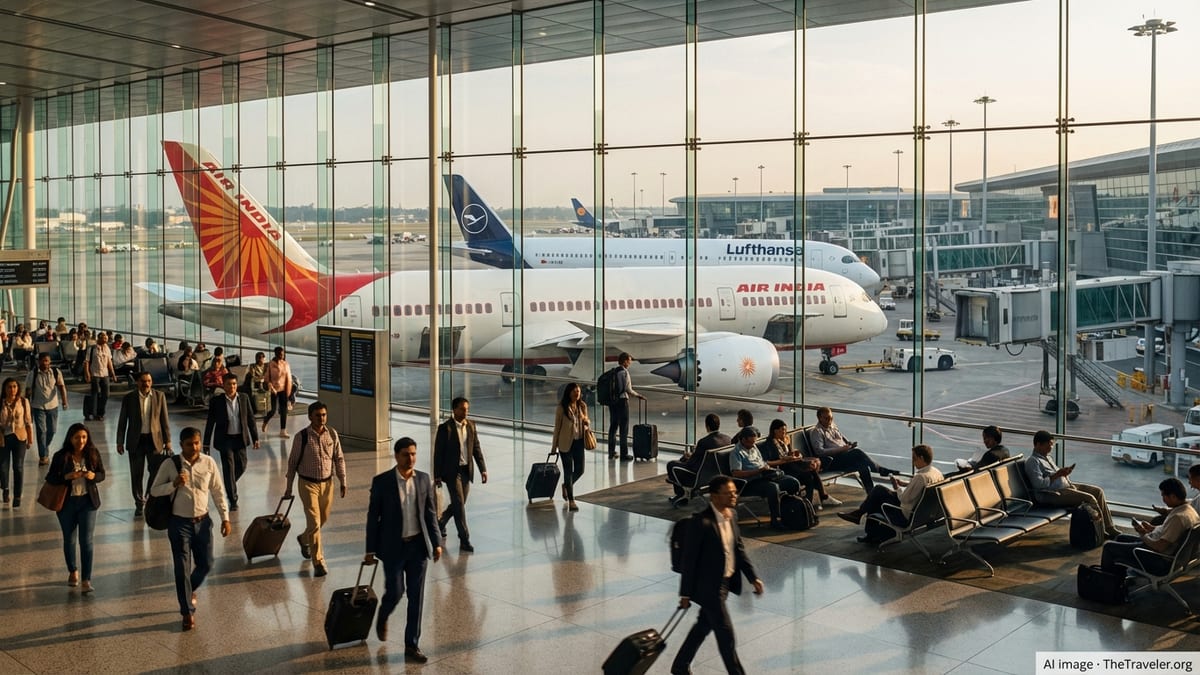
Pune’s New Terminal Brings International Operations Under One Roof
All international flight operations at Pune International Airport have now been consolidated into the New Integrated Terminal Building, marking a significant shift in how the city handles overseas travel. Recent coverage of the transition describes international passenger handling, baggage systems and security checks moving to the expanded facility, which was inaugurated in 2024 and brought into phased use from July that year.
The terminal was conceived to relieve pressure on the older building, which had long struggled with capacity constraints amid rapid growth in traffic from Pune’s technology and manufacturing sectors. Reports indicate that the new complex adds substantially more check-in counters, security lanes and baggage carousels, including dedicated infrastructure for international arrivals and departures.
Operationally, the move means that overseas carriers and Indian airlines flying abroad can now use upgraded passenger areas and more modern back-end systems. For travelers, the shift is expected to reduce congestion at peak times and provide a smoother experience on routes to destinations in the Middle East and Southeast Asia that currently dominate Pune’s limited international schedule.
While the new terminal alone does not resolve all of Pune’s aviation bottlenecks, it is widely viewed as a prerequisite for the next phase of growth in long-haul connectivity, including any potential restoration of direct services to Europe.
Runway Extension Plans Aim to Unlock Wider Aircraft Options
Alongside the terminal upgrade, work is advancing on the regulatory and planning steps needed to extend Pune’s single runway, an essential move if the airport is to attract additional long-haul flights. Publicly available information on recent technical meetings in New Delhi indicates that the obstacle limitation survey, a key safety and planning study, has received a favorable response, clearing the way for a proposed runway extension of several hundred meters.
At present, the airfield’s limited length and its location on an Indian Air Force base impose constraints on the size and payload of aircraft that can operate non-stop long-haul sectors, particularly during hot weather when performance margins shrink. These factors have historically weighed on the economics of widebody operations from Pune, even as passenger demand to Europe and North America has grown.
A longer runway would improve takeoff performance and give airlines greater flexibility in aircraft choice and routing, potentially making it easier to schedule flights that can carry both passengers and cargo efficiently over intercontinental distances. Industry commentary suggests that such upgrades, combined with terminal capacity, are critical to convincing global carriers that Pune can support sustainable widebody services rather than relying on connections via Mumbai, Delhi or Gulf hubs.
The runway project remains subject to land acquisition, coordination with defense authorities and detailed engineering work, so any direct impact on flight schedules is expected to be gradual. Nonetheless, the direction of travel points toward an airport that is structurally better positioned to handle more ambitious international operations.
Lufthansa’s India Strategy Creates Space for Secondary City Growth
Pune features prominently in discussions about Lufthansa’s past and potential future presence in India. The German airline previously used a specialized operator to run flights between Frankfurt and Pune, tailored to the city’s strong corporate traffic. Those services ended in early 2019 after the partner airline ceased operations, and Lufthansa has not since maintained its own non-stop link to Pune.
Since then, Lufthansa has steadily reinforced its broader India network. The carrier has added routes such as Hyderabad to Frankfurt and expanded capacity at other major Indian gateways, reflecting what company material describes as a robust and strategically important market. A growing codeshare partnership with Air India has deepened connectivity beyond these hubs, giving Lufthansa customers one-ticket access to domestic points including Pune via Indian partners.
Recent planning and investor presentations outline a strategy of selective expansion in high-growth regions and closer cooperation with partner airlines. While these documents do not announce a return to Pune, they underline a focus on markets with strong business demand and improving airport infrastructure, criteria that increasingly apply to the city’s expanding technology corridor.
Any decision to restart Frankfurt–Pune flights would likely weigh local demand, available aircraft, broader network priorities and the operational profile of Pune’s upgraded facilities. The existence of enhanced codeshare options in the meantime allows Lufthansa to serve Pune indirectly, even as speculation continues about the timing and form of any direct comeback.
Pune’s Business Profile Strengthens the Case for Direct Europe Links
Pune has emerged as one of India’s leading information technology and engineering centers, with a concentration of automotive, semiconductor, software and back-office operations spread across Hinjawadi, Kharadi and other rapidly growing corridors. This industrial and services base generates consistent premium traffic to Europe and North America, much of it currently routed through Mumbai, Delhi, Bengaluru or Gulf hubs.
Airport planning and civil aviation documents highlight steady growth in passenger numbers at Pune, placing it among India’s busiest airports in the 5 to 15 million passenger category. Analysts frequently point to a mismatch between this demand and the limited international schedule, noting that corporate travelers face longer door-to-door times and additional connection risks compared with cities that enjoy non-stop Europe services.
Improved airport capacity, better ground connectivity including metro feeder links, and an expanding portfolio of international carriers from within India and the Gulf region are gradually enhancing Pune’s appeal to global airlines. As these elements come together, the business case for at least one direct European service becomes more visible, particularly if runway enhancements allow for more flexible aircraft deployment.
In this context, Lufthansa’s historical familiarity with the market and strong corporate relationships in India make a renewed Frankfurt link a recurring subject of industry discussion, even if no formal plans have been placed in the public domain.
Outlook: From Infrastructure Upgrades to Airline Decisions
For now, there has been no official announcement from Lufthansa about reinstating Pune flights, and schedules published for upcoming seasons continue to prioritize major Indian metros such as Delhi, Mumbai, Bengaluru, Chennai and Hyderabad. The pathway from infrastructure readiness to actual route launches typically involves detailed traffic studies, slot coordination and aircraft availability assessments that can take several seasons to translate into new services.
What has changed in recent months is the foundation on which such decisions will be made. Pune’s international flights are now handled in a modern integrated terminal, work on runway-related clearances is moving forward, and local authorities have signaled an intention to strengthen the airport’s role as a gateway rather than a predominantly domestic outstation.
Industry observers expect Gulf and Southeast Asian carriers to be among the first to leverage the enhanced facilities with additional frequencies and destinations, given their hub-and-spoke models and existing presence in Pune. Over time, if sustained demand and operational improvements align, a direct European connection could follow, with Lufthansa among the airlines most closely watched for a potential announcement.
Until then, travelers from Pune will continue to rely on a mix of domestic and regional connections to reach Europe and beyond, even as the airport’s expanding infrastructure and the city’s economic growth keep the prospect of a Lufthansa return firmly on the horizon.