

More news on this day
A major incident response is under way in Bedfordshire after two passenger trains collided south of Bedford on Friday evening, closing a key rail corridor between London and the East Midlands and leaving dozens of travelers facing disruption and uncertainty.
Get the latest news straight to your inbox!
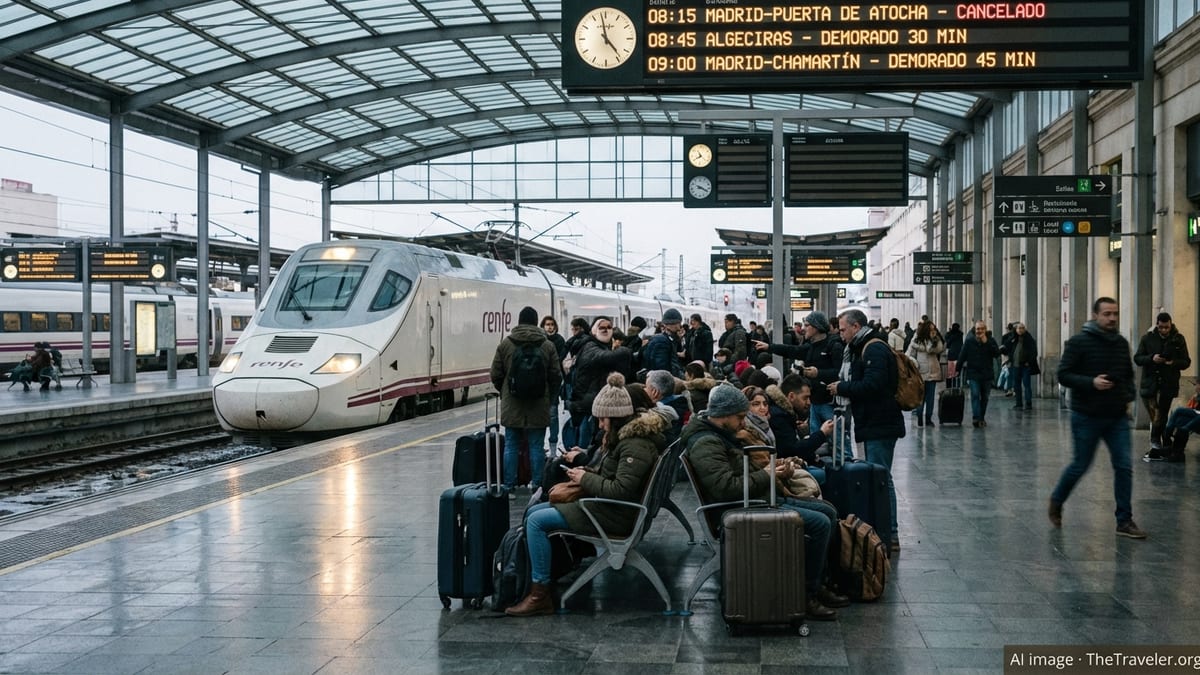
Collision on busy London to Midlands corridor
Publicly available information indicates that the collision occurred on Friday 19 June on the Midland Main Line, on tracks linking London St Pancras with towns and cities across central England. Early reports describe an incident involving two high speed services on the section of line between Bedford and Flitwick, one of the busiest intercity corridors in the United Kingdom.
Images shared on social media and in emerging news coverage show two damaged trains remaining upright on the tracks, with visible deformation to at least one driving cab and debris scattered along the ballast. Initial accounts from passengers suggest that one train was stationary or moving slowly when it was struck by a following service traveling in the same direction.
The impact triggered an immediate response from local emergency services, with fire, ambulance and police units attending the scene and a major incident protocol enacted in the Bedford area. Nearby roads have experienced congestion as responders and rail engineers access the railway, which runs through open countryside south of the town.
Rail industry bulletins and eyewitness reports point to a low probability of a head-on collision, with both trains believed to have been heading towards London at the time of impact. Safety specialists note that such circumstances, while serious, typically reduce the risk of large-scale fatalities compared with opposing-movement crashes.
Injuries reported as hospitals activate emergency plans
Early passenger accounts circulating online describe a violent jolt, shattered glass and a number of occupants being thrown from their seats. Photographs show individuals with bandages and visible cuts, while others are seen being assisted away from the trains along the trackside.
Local health services have moved to support the emergency response. Public messages from Bedford’s main hospital indicate that staff have been asked to prioritize critical cases and that members of the public are being encouraged to attend accident and emergency only in genuine emergencies to preserve capacity for potential casualties from the collision.
As of Friday evening, publicly available information does not yet provide confirmed figures for the number of injured, and there are no verified reports of fatalities. Rail safety commentators emphasize that the relatively modern rolling stock used on high speed routes, along with automatic braking and crumple-zone design, may have mitigated some of the worst potential consequences of the impact.
Specialist rail incident investigators are expected to document the condition of the tracks, signaling equipment and train interiors overnight, work that will inform both the medical response and the technical analysis of how the collision unfolded.
Severe disruption for London and East Midlands travellers
The collision has led to widespread disruption on the key north–south axis linking London with cities such as Nottingham, Derby and Sheffield. According to operator statements and travel alerts issued on Friday evening, services run by East Midlands Railway have been suspended on parts of the route, with no trains able to operate through the affected section for several hours.
Passengers heading into and out of London St Pancras have been advised to expect significant delays, cancellations and diversions. Social media posts from stranded travelers describe crowded platforms, extended journey times and confusion as evening peak services were abruptly halted or rerouted via alternative lines where capacity allows.
Other operators using the corridor, including airport and commuter services, are also experiencing knock-on effects as signalling blocks remain in place around the crash site. With trains and infrastructure requiring detailed examination, rail planners face the challenge of restoring a limited flow of traffic while ensuring that evidence for investigators is preserved.
Travel commentators note that the incident comes at a time of already high demand on the network, coinciding with summer travel, end-of-week commuting and leisure trips. Replacement buses and alternative rail routes are being promoted as options for passengers who still need to complete essential journeys on Friday night and into the weekend.
Focus turns to signalling, rolling stock and safety systems
Based on data shared by rail enthusiasts and preliminary reporting, attention is rapidly turning to the performance of signalling systems and onboard safety technology. Some industry watchers suggest that one of the trains may have come to a standstill due to a technical issue associated with an automatic warning or protection system, before being struck by a following service.
Investigators are expected to examine whether all relevant signals were displaying correctly, how the trains’ onboard computers recorded speed and braking in the moments before impact, and whether any communication issues occurred between drivers and control centres. The modern cab designs used on intercity trains are built to absorb energy in a collision, and close analysis of the damaged driving car will be central to understanding how well those design features performed.
Comparisons are already being drawn with previous near misses and low-speed collisions on the British network, where layers of protection are designed to prevent one train from entering an occupied section of track. Rail accident specialists indicate that any systemic issue identified on the Bedfordshire route could have implications for similar high speed corridors elsewhere in the country.
The Rail Accident Investigation Branch is expected to open a formal inquiry, publishing preliminary findings in the coming weeks and a full report at a later date. These documents typically address technical, human and organisational factors and may lead to recommendations on equipment upgrades, training or operational rules.
Implications for travellers and regional transport plans
The Bedfordshire collision has immediate consequences for thousands of passengers, but it is also likely to feed into longer-term discussions about rail capacity and resilience on the northern approaches to London. The section of line affected is a crucial artery not only for intercity services but also for regional trains and potential future links to new developments in the area.
Local authorities and transport planners have previously identified the corridor between Bedford and Luton as a pressure point where intensive passenger services share infrastructure with freight trains and ongoing infrastructure works. Friday’s incident is expected to renew scrutiny of how maintenance, signalling upgrades and new services are managed on an already busy railway.
Travel industry observers note that, in the short term, tour operators and business travellers relying on dependable links between the Midlands and London may need to review schedules, particularly for early departures over the weekend. Airlines serving East Midlands and London airports may also see a modest shift in demand if rail disruption persists.
For now, the priority remains the care of those on board the two trains and the safe clearance of the site. As services gradually resume, passengers are being urged to check live updates before setting out, build in extra journey time, and remain prepared for short-notice changes while the investigation and recovery operation continues.