


More news on this day
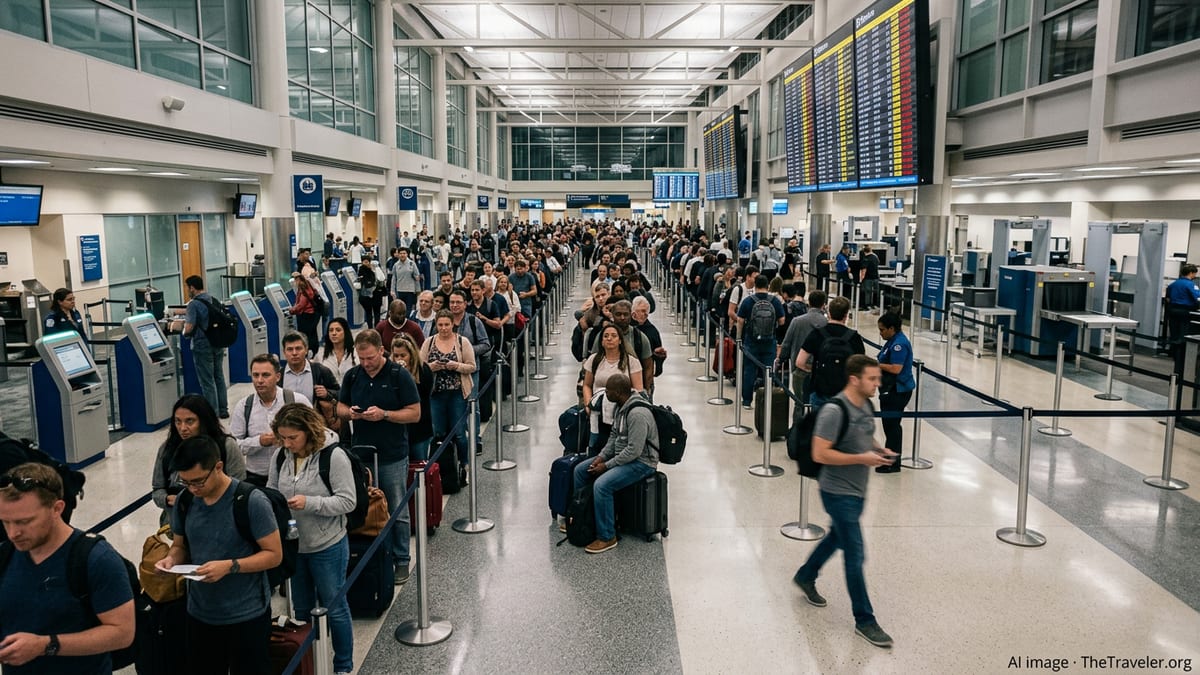
Travelers flying in and out of Northwest Arkansas National Airport on Friday, June 19, encountered an unusual wave of disruptions, as regional and mainline services operated by American Airlines, PSA Airlines and Envoy Air logged 26 delays and 13 cancellations affecting connections to Denver, Atlanta, Chicago and other major U.S. cities.
Get the latest news straight to your inbox!
Operational Strain at a Growing Regional Hub
Northwest Arkansas National Airport, a fast-growing regional gateway serving Bentonville, Fayetteville and the broader Ozarks region, has seen steady increases in passenger traffic in recent years. Publicly available data indicates that American Airlines and its regional partners, including Envoy Air and PSA Airlines, account for a substantial share of the airport’s departures and arrivals, tying the local market closely to the on-time performance of these carriers across the national network.
The latest disruption cycle, concentrated on June 19, highlights how sensitive a regional hub can be to operational strain elsewhere. When aircraft and crews are delayed or held at major connecting airports such as Denver, Atlanta or Chicago, those schedule problems ripple back into smaller airports, compounding delays and, in some cases, forcing cancellations.
Flight-tracking and schedule data reviewed for Friday’s operations show that 26 flights connected to the Northwest Arkansas market operated behind schedule, while 13 were canceled outright. The majority involved services marketed by American Airlines and flown either by the mainline carrier or by regional affiliates Envoy Air and PSA Airlines, which operate a large share of American-branded regional jets serving the central United States.
Under this pattern, even a single late inbound aircraft can trigger knock-on effects, as the same jet is often scheduled to operate multiple legs in and out of Northwest Arkansas throughout the day. Once an early flight is significantly delayed or canceled, it can become difficult for airlines to recover their schedules before the end of the operating day.
Key Routes to Denver, Atlanta and Chicago Affected
The disruptions were felt most acutely on routes connecting Northwest Arkansas with major network hubs, including flights to Denver, Atlanta and Chicago. These hubs serve as critical transfer points for both business and leisure travelers heading to the East Coast, West Coast and international destinations, making any disturbance particularly consequential for onward travel plans.
On Friday, multiple departures and arrivals on these corridors recorded extended ground holds, late gate departures or diversions that cascaded into missed connections for passengers. In some cases, flights were removed from the schedule entirely, forcing travelers to rebook on later services or reroute through alternative hubs.
Publicly available information suggests that weather and congestion in these hub cities likely played a significant role. When thunderstorms or low visibility strike large airports, air traffic control programs frequently slow the rate of arrivals and departures, compelling airlines to prioritize longer-haul and international operations. Short- and medium-haul regional flights to secondary markets, including Northwest Arkansas, are often among the first to face lengthy delays or cancellations under these conditions.
For travelers originating in Northwest Arkansas, this meant tight connection windows in Denver, Atlanta and Chicago became difficult to meet. Missed onward flights, extended layovers and unexpected overnight stays were common outcomes for passengers caught in the disruption cycle.
Impact on American, Envoy and PSA Operations
American Airlines relies heavily on its regional partners to feed passengers from smaller markets into its nationwide hub-and-spoke network. Envoy Air and PSA Airlines operate many of the American Eagle-branded flights that connect Northwest Arkansas with larger hubs, using smaller regional jets that are more economical on lower-density routes.
When mainline and regional operations are closely intertwined, irregular operations at one point in the network can quickly affect the others. A late-arriving mainline aircraft into a hub can delay transfer passengers and crew, while a regional jet that cannot depart on time from a spoke airport may miss its scheduled gate slot at a hub, further complicating the day’s operation.
Industry performance reports show that regional carriers typically experience similar delay and cancellation patterns to their major-airline partners, although the impacts may be more acutely felt on thin routes with only a handful of daily frequencies. For passengers in Northwest Arkansas, where a single daily or twice-daily service can be the only nonstop option to a given city, the loss of one flight can effectively erase same-day travel choices.
On June 19, the cluster of 26 delays and 13 cancellations across American, Envoy and PSA operations underscored that vulnerability. Once aircraft and crews fell out of sequence, opportunities to substitute equipment or reposition staff were limited, especially later in the day when spare capacity tends to shrink.
Travelers Confront Missed Connections and Rebookings
The immediate consequences for travelers ranged from missed business meetings to lost vacation time, as itineraries built around tight hub connections unraveled. Passengers booked through Denver, Atlanta and Chicago reported being offered rebooked flights through alternate hubs or on next-day services, while some opted to seek ground transportation rather than wait out extended delays.
Rebooking during widespread disruptions is often complicated by limited seat availability, particularly on peak travel days. Even when airlines identify alternative routes, those may involve additional stops, longer travel times or overnight layovers that were not part of the original plan.
For families and business travelers alike, the uncertainty surrounding departure times, gate changes and standby lists can add stress to already crowded terminals. Northwest Arkansas National Airport, though smaller than the large coastal hubs, has seen mounting passenger volumes that can strain seating, concessions and customer service desks when multiple flights are disrupted at once.
As travelers navigated the June 19 disruptions, many turned to airline mobile apps and airport display boards to track rolling schedule changes in real time, a process that can require repeated checks as conditions evolve across the national airspace system.
What the Disruptions Signal for Summer Travel
The latest wave of delays and cancellations at Northwest Arkansas National Airport arrives as the peak summer travel season intensifies across the United States. Industry forecasts point to record passenger volumes, with major carriers operating near or at capacity on many routes.
In this environment, any operational shock, such as severe weather or air traffic control constraints at a major hub, can quickly spill over into smaller markets that depend on regional connections. For airports like Northwest Arkansas, where American Airlines and its affiliates represent a sizable share of scheduled service, day-of-travel reliability will remain tightly linked to conditions in Denver, Atlanta, Chicago and other hub airports.
Analysts note that carriers have invested in schedule adjustments, additional spare aircraft and expanded staffing to improve resilience compared with prior years. Even so, high aircraft utilization and dense summer schedules can leave limited room to absorb disruptions once they begin.
For now, the June 19 operational difficulties serve as a reminder that travelers flying to and from Northwest Arkansas, and through major hubs across the country, may continue to encounter weather-related and congestion-driven disruptions during the busy months ahead.