

More news on this day
Malaysia Airlines is stepping into the global long-haul gap this week, rolling out extra flights from Kuala Lumpur to London and Paris to scoop up stranded travelers as disruption across Europe and the Middle East throws airline schedules into disarray.
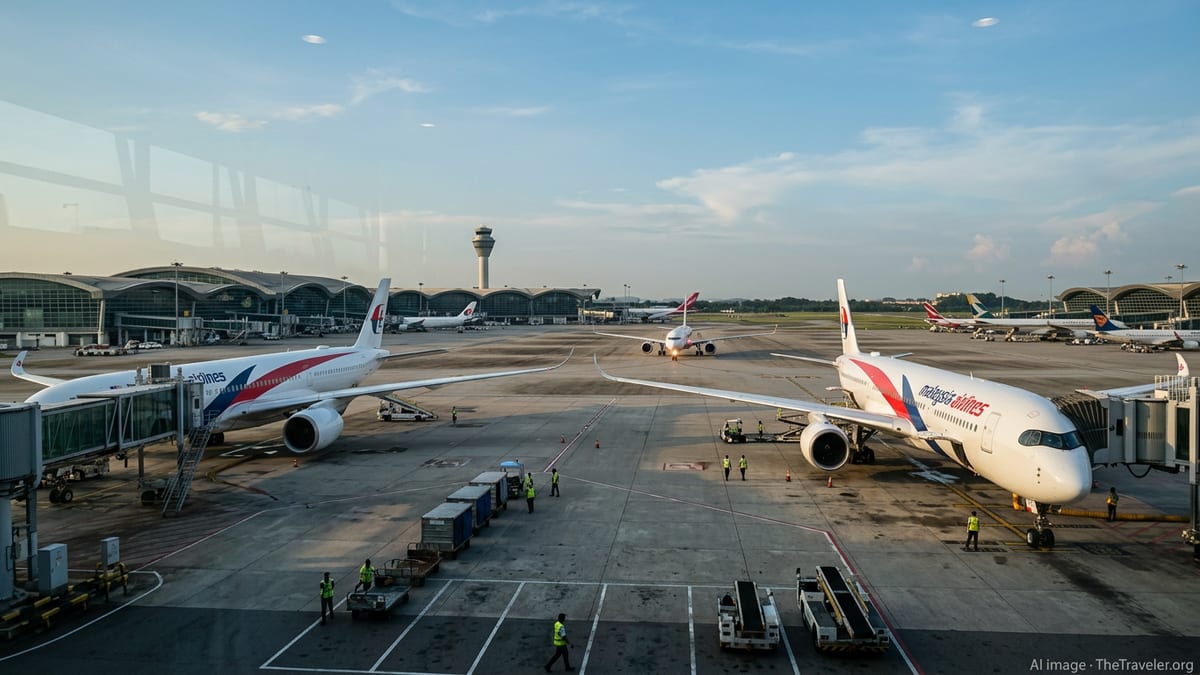
Extra Europe Flights Deployed at Short Notice
Malaysia Airlines has confirmed a series of additional services from Kuala Lumpur International Airport to London Heathrow and Paris Charles de Gaulle between March 6 and March 8, 2026, in a rapid response to mounting global travel chaos. The carrier is using spare widebody capacity to layer new departures on top of its regular schedule, giving passengers stuck by cancellations on other airlines an urgently needed way out of the region.
According to statements carried by local media in Kuala Lumpur, an extra Kuala Lumpur to Paris flight is operating on March 6, while additional Kuala Lumpur to London Heathrow rotations are set for March 7 and March 8. These temporary flights are designed to run alongside Malaysia Airlines’ existing daily services on both routes, effectively creating a short burst of near-shuttle frequencies between Malaysia and two of Europe’s most congested hubs.
The decision underscores how national and network carriers in Asia are increasingly being pulled into a wider capacity crunch triggered by airspace closures, rolling operational issues and the knock-on effect of timetable cuts by European and Middle Eastern rivals. For Malaysia Airlines, it is an opportunity to cement its position as a key bridge between Southeast Asia and Europe at a moment when reliability is at a premium.
Crucially, the airline says safety and regulatory compliance remain central, noting that all European services continue to operate with rerouted flight paths where necessary after earlier closures of Iranian airspace. That has meant longer flying times and higher operating costs, but it has allowed Kuala Lumpur to London and Kuala Lumpur to Paris flights to keep running when some competitors have opted to trim or pause services.
Why Global Disruption Is Hitting London and Paris So Hard
The scramble for capacity into London and Paris this week comes on top of a longer-running squeeze in intercontinental travel. A series of route cancellations, aircraft shortages and engine maintenance problems at major European carriers has left peak-season long-haul demand badly out of sync with the seats available, particularly on key Asia–Europe corridors.
London and Paris are at the epicentre of this imbalance. Both cities act as major hubs for onward connections to North America, Africa and the rest of Europe, which means any disruption there quickly cascades worldwide. Temporary airspace restrictions across parts of the Middle East have further complicated routing for flights between Southeast Asia and Western Europe, forcing airlines to fly longer tracks that reduce the number of rotations each aircraft can operate in a day.
Against that backdrop, even a small boost in capacity can have an outsized impact. Malaysia Airlines’ decision to mount extra departures from Kuala Lumpur is partly defensive, ensuring it can protect its own passengers, but it also reflects the reality that travelers displaced from other airlines are actively seeking alternative ways to reach or leave Europe. For many, Kuala Lumpur has become a practical connection point when traditional transit hubs are either full or operating reduced schedules.
The airline’s move also dovetails with a broader regional trend of carriers in Asia stepping up European connectivity. New nonstop services such as the forthcoming Kuala Lumpur to Frankfurt route by a European competitor, together with added flights to Doha and other Gulf hubs, are reshaping how passengers think about routing between Asia and Europe, pushing more flows through secondary or alternative gateways.
What This Means if You Are Flying Soon
For travelers, the immediate impact of Malaysia Airlines’ extra flights is a slightly wider window of options between March 6 and March 8, particularly if they are flexible about departure times or willing to rebook at short notice. Passengers already booked on Malaysia Airlines who experience missed connections or disruptions elsewhere in their journey may find themselves reprotected onto these additional services, especially on the busy Kuala Lumpur to London sector.
Seats, however, are unlikely to stay available for long. With global disruption still unfolding and other airlines trimming or consolidating long-haul schedules, any newly added capacity is being snapped up rapidly by both individual travelers and corporate travel managers looking to get staff home. Prospective passengers should be prepared for higher-than-usual fares on remaining inventory, a reflection of strong demand and elevated operating costs on rerouted long-haul sectors.
The airline is advising customers to monitor its official digital channels closely for the latest schedule information and any gate or timing changes, rather than relying on third-party booking sites. Same-day adjustments are still possible as the situation in key transit regions evolves, and real-time notifications will be critical for those with tight connections onward from London or Paris.
Travelers connecting beyond Europe should pay particular attention to minimum connection times and consider building in a wider buffer between flights than they might normally accept. While Malaysia Airlines is coordinating with partner carriers in Europe to smooth onward journeys, airport congestion and staffing constraints can mean that even on-time arrivals may be followed by slow transfers through immigration, security and terminal changes.
How Malaysia Airlines Is Positioning Itself Globally
The decision to add last-minute Europe flights is consistent with Malaysia Airlines’ broader strategy to rebuild and expand its long-haul footprint. Having restored direct services to Paris in 2025 and maintained a strong presence at London Heathrow, the carrier has been steadily marketing itself as a reliable one-stop option between Europe, Southeast Asia and Australia, using Kuala Lumpur as a quieter alternative to some of the region’s mega-hubs.
Recent network moves, including extra daily frequencies to Doha and promotional campaigns targeting European travelers, indicate that the airline is looking to capture a larger share of premium and connecting traffic. By moving quickly during moments of industry stress, such as this week’s disruption, Malaysia Airlines can showcase its operational resilience and service standards to passengers who may be trying the carrier for the first time.
Fleet renewal plans and a tightening partnership strategy also play into this positioning. Widebody aircraft on the London and Paris routes allow the airline to offer competitive cabin products and cargo capacity, both of which are critical to the economics of long-haul flying. At the same time, strategic alliances with regional partners in Asia and Europe give travelers more one-ticket, through-checked options, an increasingly important consideration when volatility makes self-connecting itineraries riskier.
Industry analysts note that while Malaysia Airlines alone cannot solve the global capacity crunch, its assertive approach shows how nimble, mid-sized carriers can punch above their weight during periods of disruption. By leaning into its strengths on specific trunk routes, the airline is not only helping to move stranded passengers, but also reasserting Kuala Lumpur’s role on the world aviation map.
Practical Tips for Passengers Caught in the Turbulence
For anyone currently affected by cancellations or schedule changes in Europe or the Middle East, Malaysia Airlines’ temporary boost to London and Paris offers a potential lifeline, but success will depend on acting quickly and being flexible. Travelers should gather all booking references, original ticket details and any written notifications from disrupted airlines before approaching Malaysia Airlines or their travel agent to discuss rebooking options.
Where possible, passengers may benefit from considering alternative dates within the March 6 to March 8 window, as well as nearby airports for their final leg in Europe once they reach London or Paris. The added Kuala Lumpur departures are most useful as a trunk connection; onward rail and short-haul flights within Europe can then complete the journey, spreading risk across multiple modes rather than relying on a single long-haul itinerary.
Those yet to start their trips should factor in the possibility of sudden schedule changes and build contingency into their plans. Travel insurance that covers missed connections and involuntary re-routing is increasingly valuable in the current environment, as is the habit of traveling with essential medications and a change of clothes in carry-on baggage in case of overnight delays.
Ultimately, Malaysia Airlines’ move to add capacity on the Kuala Lumpur to London and Kuala Lumpur to Paris routes is a reminder that in today’s aviation landscape, flexibility and preparedness are as important as price when choosing how to cross continents. For travelers willing to look beyond their usual carriers, the Malaysian flag carrier’s expanded options this week could make the difference between being stuck in limbo and finally getting home.