


More news on this day
Passengers traveling through Manchester Airport today are seeing a high volume of delayed flights and a small number of cancellations, according to live flight-tracking and airport departure and arrival boards, with disruption varying by destination, airline, and terminal.
Get the latest news straight to your inbox!
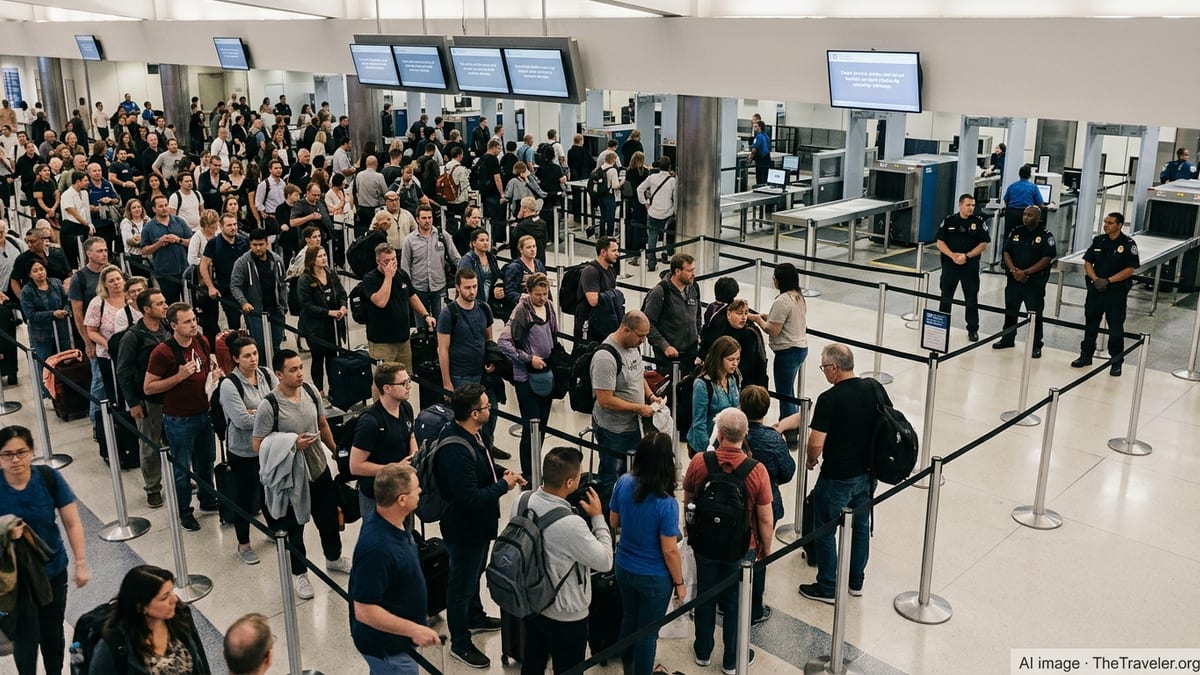
What the live data shows at Manchester Airport today
Publicly available flight-tracking data indicates an elevated disruption picture at Manchester (MAN) today, with Flightradar24 showing an average delay of about 35 minutes and a disruption index listed as elevated and rising. The same snapshot indicates a high share of flights delayed and a low number of cancellations recorded for the day.
Because flight status can change minute by minute, travelers are typically best served by checking multiple sources: the official Manchester Airport departures page (which provides a last-updated time and flight-by-flight status), the airline’s own app for gate and operational messages, and a live tracker such as Flightradar24 for updated estimated times.
Manchester Airport’s official flight information pages are organized by terminal and date, allowing passengers to filter for Terminal 2 and Terminal 3 services and search by flight number or destination. The airport also notes that its on-site information screens in check-in, departures, and arrivals areas reflect the latest timings available.
Examples of delays appearing on departure and arrival boards
On today’s publicly accessible departure listings, some flights are shown operating on time while others are marked delayed, even within the same mid-day window. That mixed pattern is typical on disruption days when aircraft rotation, crew availability, and inbound delays can ripple unevenly across the schedule.
For instance, on the departures board view available today, a Dublin service operated by Aer Lingus appears with a delayed status at one point in the schedule, while other nearby departures show on-time indications. Long-haul and short-haul services can both be affected, but the practical impact for passengers often differs: short-haul delays may compress turnaround time later in the day, while long-haul delays can shift baggage and connection timing at the destination.
Arrivals into Manchester show a similar split between on-time and delayed statuses. A sample of today’s arrivals board includes some flights listed as landed on time while others show landed delayed, suggesting that inbound congestion or upstream disruption is affecting certain routes more heavily than others.
Why delays can cascade quickly at a hub like Manchester
Even when the root cause of a delay begins elsewhere, Manchester’s role as a major UK hub means it can feel the knock-on effects through arriving aircraft being late, crews timing out, or late gate availability during busier periods. Live tracking platforms often reflect this as a large share of delayed departures with relatively few outright cancellations.
Terminal assignment can also shape the passenger experience on disruption days. Manchester has been operating with a two-terminal layout after Terminal 1’s closure in March 2026, with the airport describing Terminal 2 as transformed and Terminal 3 continuing to undergo its own revamp. In practical terms, that means travelers should double-check terminal information alongside flight status, particularly if they have not flown through Manchester recently.
For passengers watching for explanations, it is worth noting that flight boards typically do not provide a standardized, detailed cause for every delay. Travelers trying to understand what is happening with a specific service often get the most clarity by following the airline’s app notifications and operational messages tied to their booking, alongside the airport’s live boards.
Ground transport considerations for affected passengers
Disruption at the airport does not always end at the runway. If a flight delay pushes a departure or arrival later into the day, onward transport can become the next pinch point, especially for passengers planning to use rail connections from Manchester Airport station.
National Rail’s live departures tools allow travelers to monitor real-time train running and platform updates, while its disruption pages summarize broader network issues and provide guidance on compensation routes such as Delay Repay when services are delayed or cancelled. For passengers rebooking flights or shifting travel plans, it can help to keep rail options flexible and to check live trains shortly before leaving for the station.
Manchester Airport station is directly linked to the airport complex and is used by multiple train operators, so rail disruption on any one part of the wider network can affect airport access. Travelers with tight check-in windows may want to build in extra time if their flight has been retimed or if they are arriving at the airport later than originally planned.
What travelers can do now to verify their specific delay or cancellation
For anyone trying to confirm whether their flight is delayed or cancelled today, the most reliable workflow is to start with Manchester Airport’s official arrivals and departures boards (filtered by terminal), then cross-check the airline’s app or booking management page for rebooking options and operational notices.
Flight-tracking services can add useful context, including estimated off-block and takeoff times, inbound aircraft status, and an overall disruption snapshot for the airport. However, even major trackers include their own disclaimers that data is compiled from multiple sources and may change, so the airline’s operational messaging remains the key reference point for passenger actions such as rebooking or compensation requests.
Finally, if a delay means spending longer than expected in the terminal, travelers may also want to monitor security throughput. Manchester Airport publishes guidance about its updated security setup under the current two-terminal layout, and third-party queue dashboards that report “data from airport” can offer an additional real-time signal, though the airport’s own guidance and on-site screens remain the primary reference for passengers already in the building.