


Marriott Vacation Club and Hilton Grand Vacations are two of the most recognized names in vacation ownership. Both promise condo-style space, predictable quality, and long-term savings compared with booking cash hotel stays year after year. Yet the details of how each system works are different enough that choosing the right one can have a big impact on both your travel experiences and your wallet. This guide breaks down how each club is structured, what real owners actually pay, the kinds of trips you can take, and which membership tends to offer more value for different types of travelers.
Get the latest updates straight to your inbox!
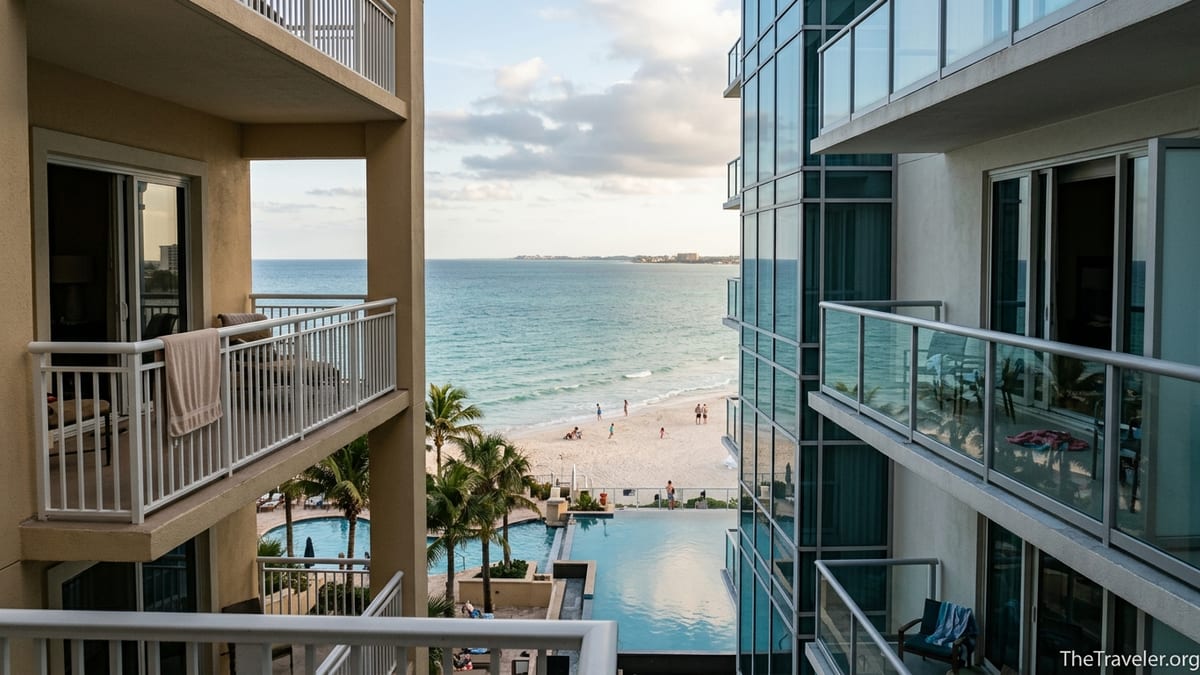
How Each Club Works in Practice
Both Marriott Vacation Club and Hilton Grand Vacations use points-based systems, but the way those points are packaged and spent will shape your travel patterns. With Marriott Vacation Club, most new owners today buy an allotment of Vacation Club Points tied to a “home” resort. You can then redeem those points across a network that includes beachfront resorts in places like Marco Island and Singer Island in Florida, mountain favorites such as Marriott’s Timber Lodge at South Lake Tahoe, and city properties including Marriott Vacation Club Pulse locations in San Diego, New York City, and South Beach. In day-to-day use, it feels like having a private currency that you spend on nights in studios through multi-bedroom villas.
Hilton Grand Vacations members also buy points, but those points are associated with a deeded interest or trust interest in a resort such as Elara, a Hilton Grand Vacations Club property right off the Las Vegas Strip, or The Bay Club at Waikoloa Beach on Hawaii’s Big Island. Once you own, you receive an annual bucket of ClubPoints that can be used across roughly 200 resorts by Hilton Grand Vacations and its affiliated brands. In practice, a family might use 7,800 points for a one-week, two-bedroom stay at a Hawaii resort in August, then save or borrow points for a shorter winter escape in Orlando.
Functionally, both systems aim to let you book condo-style units with kitchens, living areas, and separate bedrooms at predictable point costs. Where they diverge is in the details: Marriott’s ecosystem leans heavily on traditional vacation ownership resorts plus its city‑centric Pulse properties, while Hilton’s has expanded through acquisitions into a large portfolio including many former Diamond Resorts, with a growing global footprint and access programs like HGV Max that connect to additional brands.
For everyday travelers, this means your experience will depend less on abstract program rules and more on whether you see yourself most often at a Marriott Vacation Club villa in Orlando overlooking the golf course, or in a Hilton Grand Vacations tower attached to a major casino in Las Vegas, or at one of their beachfront resorts in Maui or Myrtle Beach.
Upfront Purchase Price and Ongoing Costs
When people talk about “value” with vacation clubs, they often focus first on the sticker price. For Marriott Vacation Club, independent reporting from recent years suggests developer pricing in the ballpark of the high teens per point. For example, at Marriott’s Timber Lodge in Lake Tahoe, a price of roughly 17 to 18 dollars per point has been described, which would put a 2,000‑point purchase around mid-five figures before closing costs and financing. Maintenance fees at Marriott vary by home resort, but many fall in a range that, when divided by your annual points, often works out to a per‑point carrying cost in the low to mid tens of cents per year.
Hilton Grand Vacations publishes less point-by-point pricing, but the company itself notes that a “typical” new membership purchase averages in the low twenty-thousand dollar range. Real-world examples shared by recent buyers show offers around 15,000 to 18,000 dollars for packages under 10,000 points, with annual maintenance fees around 900 to 1,100 dollars and separate club dues in the low to mid 300‑dollar range once HGV Max is active. Taken together, many owners calculate their annual cost per point in the neighborhood of 9 to 11 cents before factoring in the original purchase price.
Viewed over a 10 to 20‑year horizon, both programs assume you will vacation consistently, and that your cost per night in a one‑ or two‑bedroom villa ends up lower than booking similar rooms for cash. For example, if a Hilton Grand Vacations owner spends roughly 1,300 dollars per year in maintenance and dues for enough points to book a two‑bedroom week in Hawaii each summer, they might be paying an equivalent of perhaps 180 to 220 dollars per night for a family-sized villa that could cost substantially more when booked with cash in peak season.
In value terms, neither system is inherently cheaper across the board. Marriott’s developer pricing often runs higher per point, but its portfolio includes particularly strong resort destinations and city properties where cash rates can be steep. Hilton’s entry packages sometimes look more affordable, especially when bundled with bonus points, but club dues and the need for higher point totals at in-demand resorts can narrow the gap. Buyers looking purely at dollars and cents often end up exploring resale options for both brands, where the upfront price can be a fraction of developer cost, though with limited perks compared with buying direct.
Where You Can Actually Go
Location diversity is one of the biggest drivers of perceived value. Marriott Vacation Club has a footprint that stretches across the United States, the Caribbean, Europe, and parts of Asia. In Florida alone, The Marriott Vacation Clubs promote resorts in Orlando, Marco Island, Singer Island, Miami, and Panama City Beach, giving owners multiple ways to design a week in the Sunshine State, from theme park marathons to Gulf Coast beach time. Marriott’s city-focused Pulse properties in New York City, San Diego, Washington DC, and South Beach give owners a way to use points for long weekend urban getaways without hunting for a traditional hotel.
Hilton Grand Vacations, similarly, has grown into a network of around 200 properties worldwide, and its recent integration of former Diamond Resorts locations and the developing HGV Max program means members can tap a wide range of destinations. In practical terms, that could mean booking a high‑rise suite at Elara in Las Vegas one year, a beachfront apartment at a resort on Oahu or the Big Island the next, and then a European city stay via affiliated properties. Owners also point to strong coverage in perennial favorites like Orlando and Myrtle Beach, along with ski access in locations such as Park City.
Both systems also connect into broader exchange networks and hotel loyalty programs. Marriott Vacation Club points can be leveraged toward other brands within the Marriott family through various pathways, including select Ritz‑Carlton and luxury hotel stays at higher ownership tiers. Hilton Grand Vacations allows certain members to convert ClubPoints into Hilton Honors points or trade into exchange networks where they can book non‑Hilton resorts or even cruises, though conversion ratios and fees mean careful math is needed to ensure value.
In real life, this all adds up to a simple question: when you sketch out the next decade of trips, which brand’s map lines up best? If you imagine annual family trips to Orlando plus city weekends in places like Boston or San Diego, Marriott’s mix of villa resorts and Pulse properties can be compelling. If your dream board is filled with Vegas, Hawaii, and a variety of beach destinations around the US and Europe, Hilton’s portfolio and its integrations through HGV Max may feel more aligned.
Flexibility, Point Strategy, and Booking Windows
The true test of a vacation club often shows up not in glossy brochures but when you sit down to book. Marriott Vacation Club structures its ownership into levels that start with standard Owners under 4,000 points and run up through Select, Executive, Presidential, and Chairman’s Club tiers. As you move up, you gain longer or more favorable booking windows, last‑minute point discounts, and enhanced access to high‑end options like luxury cruises and Ritz‑Carlton stays. An Executive level owner with between 7,000 and 9,999 points, for instance, can often secure reservations up to 13 months in advance for many stays and may receive discounts on certain last‑minute bookings.
On the Hilton Grand Vacations side, members play a similar game of banking, borrowing, and stretching points. Owners commonly describe strategies such as combining multiple years’ worth of points to splurge on a bucket‑list trip, for example a multi‑week stay in Italy or an upgraded villa in Hawaii. Hilton allows for banking points into future years and occasionally offers point‑stretching tools that let you use a slightly reduced allotment for less sought‑after dates. However, expanded access tiers like HGV Max come with higher club dues, and the most desirable weeks at flagship properties can still require substantial point totals and early planning.
Both programs reward planners. If you know your school holiday schedule a year out, booking 12 to 13 months in advance can secure peak weeks at popular destinations like Orlando during spring break or coastal Florida over Christmas. If you are more spontaneous, value becomes much harder to capture, since the best inventory is often gone and you may end up using points inefficiently or facing availability limits. Owners in both systems report that understanding the point charts, seasonal calendars, and cancellation rules is as important as the raw number of points you own.
From a flexibility standpoint, Marriott’s tiered benefits can tilt the scales for heavy users who reach higher point levels and gain longer booking windows plus enhanced exchange options. Hilton’s structure is somewhat flatter, but with HGV Max and access to multiple vacation ownership brands, the network of possibilities is broad. In either case, the traveler who invests time in learning how to work the system tends to unlock significantly better value than a casual user who books late and takes whatever is left.
Perks, Elite Benefits, and Owner Experience
Beyond the villas themselves, much of the perceived value comes from the ecosystem of perks surrounding ownership. Marriott Vacation Club owners at higher tiers receive benefits that can include preferred access to guided tours, adventure cruises, and premier events, as well as the option to use points toward Ritz‑Carlton hotel stays and select luxury experiences. The brand’s alignment with Marriott’s broader hotel portfolio means that even a standard owner who occasionally converts usage may find opportunities to enjoy stays at high‑end hotels when they decide not to use their points for villa weeks.
Hilton Grand Vacations has built its own perk structure, anchored by Hilton Honors integration and, for qualifying owners, HGV Max. Members may have the ability to convert ClubPoints into Hilton Honors points for stays at thousands of Hilton hotels worldwide, although conversion ratios typically favor using ClubPoints directly within the core vacation club network when maximum value is the goal. As the portfolio has expanded to include more resorts and partnership options, owners increasingly talk about constructing hybrid itineraries that combine a week at a Hilton Grand Vacations resort with a few cash or Hilton Honors nights in a nearby city hotel.
Owner experience also matters. Many Marriott Vacation Club resorts function like upscale condo communities, with family-friendly amenities such as multiple pools, kids’ clubs, and on-site activities, but generally a quieter feel than a large themed hotel. For example, an Orlando Marriott Vacation Club villa with a full kitchen and screened balcony can be ideal for multigenerational groups that appreciate space and the ability to cook. Hilton Grand Vacations properties often lean slightly more toward a resort‑hotel hybrid feel, especially in Las Vegas where towers like Elara connect directly to shopping and entertainment complexes.
In terms of day-to-day perks, neither system is universally superior. Marriott’s edge is its direct tie-in with a vast hotel portfolio and high‑touch experiences at upper tiers. Hilton’s edge is the reach of Hilton Honors and the sheer variety created by integrating multiple vacation ownership brands. For a traveler who values luxury add-ons and curated events, Marriott’s upper tiers may feel more rewarding. For a traveler who wants the option to sprinkle Hilton hotel nights around their condo stays, Hilton Grand Vacations can present a strong proposition.
Resale, Exit Strategy, and Long-Term Value
No conversation about value is complete without acknowledging that vacation ownership is a long-term commitment, and exiting is not as simple as canceling a hotel loyalty account. Both Marriott Vacation Club and Hilton Grand Vacations have developed owner assistance or transition programs that, under certain conditions, may allow owners to give back or surrender interests after loans are paid off and accounts are in good standing. These programs are not guaranteed, but their existence offers some reassurance compared with smaller operators where owners may feel locked in indefinitely.
On the resale market, both brands have active secondary trading. Buyers can often purchase interests at a significant discount compared with developer pricing. For instance, Hilton Grand Vacations owners report acquiring over 30,000 points on the resale market for amounts in the mid-four figures, far below what an equivalent bundle might cost from Hilton direct. Similar stories appear around Marriott Vacation Club, where legacy week ownership or points tied to certain resorts can be purchased through third-party brokers for far less than current retail prices.
The catch is that resale buyers typically give up some benefits. In the Hilton ecosystem, resale purchases may not qualify for programs like HGV Max, may have reduced booking priorities, or may incur certain fees that direct purchasers do not. In Marriott’s system, resale owners might face limitations on converting to hotel points or accessing certain high-tier experiences. As a result, the pure financial value of a resale purchase can be excellent for someone who wants straightforward access to a favorite resort every year, while a traveler seeking maximum flexibility and top-tier perks might find more long-term value in a carefully chosen direct purchase.
Prospective buyers should also consider what happens if travel patterns change. A young family that plans to use every point for trips to Orlando and Hawaii might someday find that school schedules, health, or work obligations reduce their ability to travel. In that scenario, a system with more robust internal rental options, or a brand that offers structured exit pathways, can preserve value over time by preventing points from going unused and fees from feeling like a burden.
Which Membership Delivers More Value for Different Travelers
When you strip away brand loyalty and marketing, the question of Marriott Vacation Club versus Hilton Grand Vacations comes down to your personal travel patterns and how actively you intend to use the system. For a traveler who loves the feel of residential-style resorts, frequently visits destinations where Marriott has a strong villa presence, and appreciates the possibility of upgrading into experiences like luxury cruises or Ritz‑Carlton stays at higher tiers, Marriott Vacation Club often delivers strong perceived value. A couple who spends a week every summer at a Marriott beachfront resort in Florida, plus a long weekend each year at a Marriott Vacation Club Pulse property in a major city, can easily justify the ongoing costs if they would otherwise book similar accommodations for cash.
Hilton Grand Vacations may edge ahead for travelers drawn to Las Vegas, Hawaii, and a broad set of beach and golf destinations, especially those who already hold or value Hilton Honors status. A family that wants an annual summer week in a two‑bedroom villa in Hawaii, combined with occasional long weekends at Hilton city hotels booked via Honors points, might find that a carefully sized Hilton Grand Vacations purchase integrates smoothly with the rest of their travel strategy. The ability, in some cases, to leverage points across multiple vacation ownership brands within HGV Max can also tilt the scale for those who crave variety.
For budget-conscious buyers, resale is where both systems can shine. A resale Marriott week in Orlando used every year during school holidays can lock in family vacation accommodations at a cost per night that is difficult to match. Similarly, a resale Hilton Grand Vacations contract providing a moderate annual point allowance, paired with disciplined planning to book high-value weeks like shoulder-season trips to Hawaii or Florida, can create a pattern of vacations that feel far richer than their ongoing maintenance costs.
Ultimately, value is less about which logo is on the sign and more about whether you will use what you buy. If you realistically see yourself traveling every year, booking early, and enjoying condo-style accommodations in the same brand family, either system can work. The better membership for you is the one whose destinations excite you most, whose rules you are willing to master, and whose long-term costs fit comfortably within your travel budget.
The Takeaway
Both Marriott Vacation Club and Hilton Grand Vacations offer sophisticated points-based vacation ownership systems designed for travelers who prefer the comfort of condo-style stays and the predictability of a branded experience. Marriott shines with a particularly strong resort presence in Florida, the Caribbean, and key US cities through its Pulse properties, along with aspirational options at higher ownership tiers. Hilton counters with robust coverage in Las Vegas and Hawaii, an expanding portfolio through acquisitions, and integration with Hilton Honors that appeals to brand‑loyal hotel guests.
If your idea of the perfect ownership is a comfortable villa near theme parks or beaches, backed by a familiar hotel brand, and you are ready to plan trips well in advance, both clubs can produce meaningful long-term value. The difference often lies in the details: point pricing, maintenance fees at your chosen home resort, the destinations you prioritize, and the perks you care about most. Doing the math on a few sample trips you know you will take, like an annual week in Orlando or a recurring Hawaii vacation, can quickly reveal which program stretches your dollars and points further.
For many travelers, the most pragmatic approach is to treat vacation ownership as a lifestyle decision rather than a pure investment. Choose the club whose resorts feel like places you genuinely want to return to, whose rules you understand, and whose costs still make sense even if you occasionally skip a year. Whether you end up watching the sunset from a Marriott balcony on Marco Island or from a Hilton Grand Vacations lanai on Waikoloa Beach, the greatest value comes from consistently using what you own to create the vacations you actually dream about.
FAQ
Q1. Is Marriott Vacation Club or Hilton Grand Vacations cheaper to buy into initially? In general, Hilton Grand Vacations often shows slightly lower average upfront purchase prices, while Marriott Vacation Club points can carry a higher per‑point retail cost. However, incentives, bonus points, and resort-specific pricing mean the cheaper option will vary by offer and location.
Q2. Which club has lower maintenance fees over time? Maintenance fees depend on the specific resort you own at, not just the brand. Some Hilton Grand Vacations owners report per‑point annual costs around the low‑to‑mid tens of cents, and many Marriott owners see similar ranges. Comparing fees for the exact resort and unit you are considering is more accurate than relying solely on brand averages.
Q3. Which program offers better flexibility for changing vacation dates and destinations? Both clubs allow you to bank, borrow, and reallocate points, but Marriott’s tiered system can provide longer booking windows and certain last‑minute discounts at higher levels. Hilton offers flexibility through banking options and, in some cases, expanded access via HGV Max. The better fit depends on how far in advance you like to plan and how often you change destinations.
Q4. Can I use Marriott Vacation Club or Hilton Grand Vacations points at regular hotels? Yes, both programs provide pathways to use ownership for hotel stays, but value can vary. Marriott owners at certain levels can direct points toward stays at hotels within the Marriott portfolio, while Hilton Grand Vacations members may convert ClubPoints into Hilton Honors points. These options are convenient but often provide less value per point than using points at core vacation club resorts.
Q5. Which brand has better coverage in Hawaii and beach destinations? Hilton Grand Vacations has a particularly strong presence in Hawaii and several coastal markets, while Marriott Vacation Club also offers attractive beachfront resorts in Florida, Hawaii, and the Caribbean. If Hawaii and certain US beaches are your top priorities, Hilton may offer more variety, while Marriott provides excellent options in Florida, the Caribbean, and select Hawaiian islands.
Q6. Are resale contracts worth considering for either brand? Resale contracts can deliver substantial savings on upfront cost for both Marriott Vacation Club and Hilton Grand Vacations, especially if you mainly want consistent access to one or two favorite resorts. The trade‑off is that resale buyers often miss out on some elite perks, special programs, or extended exchange options available to direct purchasers.
Q7. How hard is it to get out of a Marriott or Hilton timeshare later? Exiting can be complex, but both brands now operate owner assistance or transition programs that may allow qualified owners to surrender interests under specific conditions once loans are fully paid. Resale is another potential exit path, though prices on the secondary market can be much lower than what you originally paid.
Q8. Which is better for a family that travels mostly to Orlando and Florida beaches? Both brands have strong coverage in Florida, but Marriott Vacation Club’s dense network of villa resorts around Orlando and multiple coastal properties can offer excellent convenience and variety for a Florida‑focused family. Hilton Grand Vacations also has appealing Florida resorts, especially if you like pairing those trips with visits to Hilton hotels elsewhere.
Q9. Which membership is better if I also travel a lot for work? If you are already loyal to either Marriott Bonvoy or Hilton Honors for business travel, it often makes sense to choose the corresponding vacation club. Owning with the same brand lets you consolidate earning and redemptions, and you can sometimes blend work trips and vacation stays more easily within one loyalty ecosystem.
Q10. How can I tell if a vacation club purchase is really a good deal for me? Start by modeling three to five realistic trips you know you will take over the next decade, such as annual weeks in Orlando, Hawaii, or a favorite beach town. Compare the all‑in cost per night using ownership (including financing and maintenance fees) to what similar accommodations would cost if you booked them with cash or hotel points. If the ownership scenario saves money or delivers significantly better space and comfort at a comparable cost, and you are confident you will use it consistently, the deal is more likely to be worthwhile.