


More news on this day
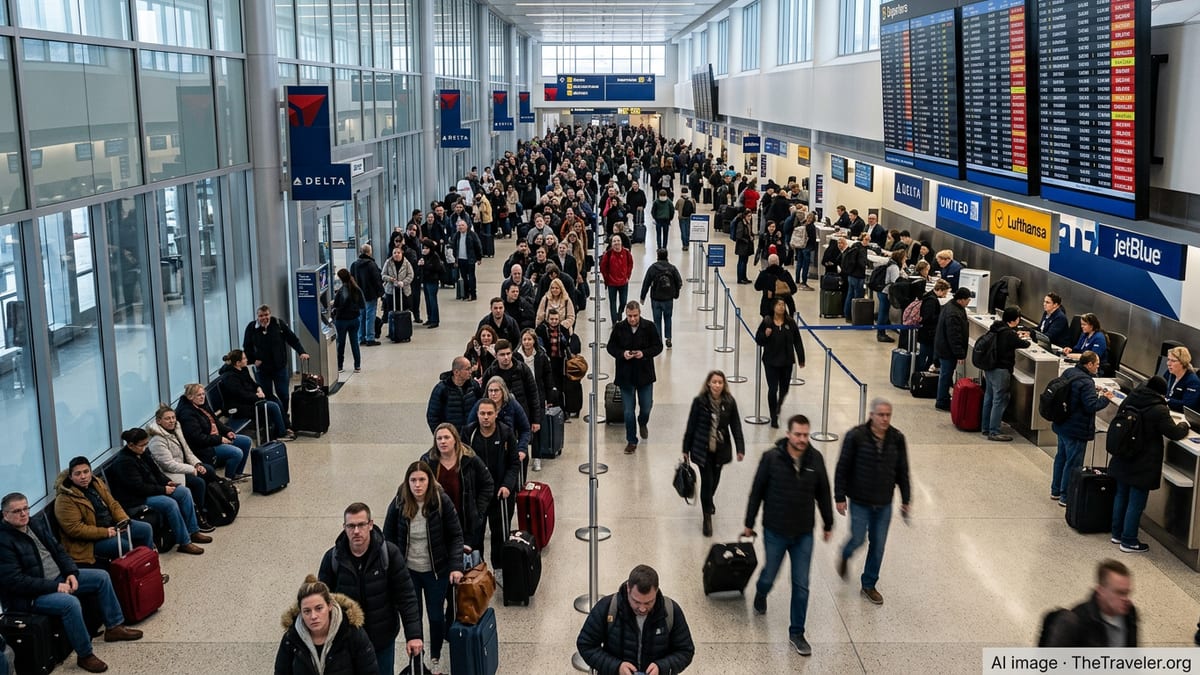
Travelers at Ben Gurion International Airport near Tel Aviv faced extensive disruption as airport data showed 207 flights delayed and four canceled, snarling operations for Israeli and foreign airlines on key domestic and international routes.
Get the latest news straight to your inbox!
Wide-Ranging Disruptions for Israeli and Foreign Carriers
According to publicly available flight-tracking boards and schedule data, the latest disruption at Ben Gurion has hit a broad mix of carriers, including Israeli airlines El Al, Arkia and Israir alongside international operators such as Lufthansa and Emirates. The delays span early-morning departures through late-night arrivals, creating rolling knock-on effects across multiple hubs.
Reports indicate that departures and arrivals on heavily traveled routes between Tel Aviv and New York, London, Paris, Dubai and Rome have been among the most affected. Additional European connections, including services to Athens and other Mediterranean and central European cities, also showed extended ground holds or pushed-back departure times as airlines tried to reset their operations.
Publicly accessible aviation data suggests that the imbalance between available slots, aircraft parking and staffing at Ben Gurion has magnified the impact of even relatively small schedule disruptions. With most airlines already operating on tight turnarounds, delays on departure from Tel Aviv have cascaded into late arrivals at onward destinations and subsequent rotations.
Passenger traffic at Ben Gurion has been climbing ahead of the busy summer period, leaving carriers with limited room to absorb irregular operations. The result has been crowded departure halls, lengthy check-in and security lines, and aircraft waiting for gates or ground services after landing.
Summer Traffic Surge Meets Constrained Airport Capacity
Ben Gurion is entering one of its busiest periods of the year as Israeli schools break for summer and inbound tourism slowly rebuilds. Forecasts cited in local aviation coverage project millions of passengers moving through the airport in July alone, a level that already stretches terminal capacity and ground infrastructure during peak hours.
Recent analysis of Ben Gurion’s passenger statistics shows that El Al, Arkia and Israir together carry a significant share of international travelers, while foreign carriers such as Lufthansa and Emirates add substantial long-haul and regional capacity. When flights on these airlines are delayed simultaneously, pressure quickly builds across check-in counters, security checkpoints and apron operations.
Industry reports note that the airport has been gradually reopening and expanding its use of terminals after earlier conflict-related restrictions, including the recent resumption of more operations at Terminal 1. However, the combination of renewed demand, evolving security requirements and limited overnight aircraft parking space continues to leave Ben Gurion vulnerable to congestion.
For airlines, these operational constraints translate into tighter scheduling windows, constraints on ground handling resources and fewer options to reposition aircraft. When several departures in a short time frame are delayed, recovery can take much of the day, particularly for long-haul flights that are difficult to retime.
Ongoing Regional Tensions and Operational Complexity
The latest wave of delays occurs against a backdrop of continued regional instability that has repeatedly complicated airline planning at Ben Gurion. Over the past year, various carriers have adjusted flight times, rerouted services or temporarily suspended operations in response to shifting risk assessments and insurance requirements for flying to Israel.
Publicly available airline statements and regulatory documents from recent months describe how heightened military activity, restricted airspace corridors and occasional technical incidents have each contributed to a more fragile operating environment. Even when the airport is formally open and classified as operational, airlines must navigate dynamic security guidance, crew duty-time constraints and potential airspace diversions.
Israeli carriers have at times relaxed change and cancellation rules in response to passenger concerns about possible escalations, while foreign airlines have taken a more cautious approach, ramping back up only gradually. That uneven return has left local airlines carrying a larger share of demand on some days, making them more exposed when delays intensify.
Aviation analysts note that the combination of high demand, complex security protocols and intermittent regional flare-ups has turned Ben Gurion into a challenging hub to manage. When disruptions do occur, they can quickly ripple across airline networks, particularly on long-haul links to North America and key European capitals.
Impact on Passengers Bound for New York, London, Paris and Beyond
The disruption has been particularly acute for passengers traveling on flagship long-haul and European routes. Flights connecting Tel Aviv with New York, London and Paris serve a mix of business travelers, tourists and visiting friends and relatives, many of whom are booked on tightly timed itineraries that include onward connections.
With 207 flights delayed and four canceled in the current episode, publicly visible schedules show that travelers on both Israeli and foreign carriers have faced missed connections, extended layovers and last-minute rebookings. For some passengers, overnight stays or substantial itinerary changes have been required when missed long-haul flights could not be re-accommodated the same day.
Services to Dubai and Rome, important for both leisure travel and onward connectivity to Asia and the Americas, have also seen knock-on delays. For passengers connecting via major hubs in the Gulf or Europe, even a moderate late departure from Tel Aviv can result in missed long-haul connections, especially during crowded summer travel periods when alternate seats are scarce.
Travel advisories and publicly circulated guidance from airlines emphasize the importance of monitoring flight status closely, arriving early at the airport and allowing extra time for connections when routing via Ben Gurion. Some carriers have encouraged customers to make use of digital check-in tools and mobile notifications to receive real-time updates as schedules remain fluid.
Airlines Adjust Schedules as Recovery Efforts Continue
In response to the disruption, schedule data shows that airlines have begun implementing ad hoc measures to restore regular operations. These include retiming certain departures from Tel Aviv, swapping aircraft types to increase capacity where possible, and consolidating some lightly loaded services in order to free up slots for heavily affected routes.
Israeli airlines appear to be focusing on stabilizing core routes to major cities such as New York, London and Paris, where demand is strongest and passenger disruption is most visible. Foreign carriers, including Lufthansa and Emirates, are working within their own network constraints, balancing Tel Aviv operations with the needs of their global hubs in Frankfurt, Dubai and other cities.
Operational databases and airport dashboards indicate that as delayed aircraft complete their rotations and reposition, the number of heavily delayed flights may gradually decline. However, with the summer peak only beginning, analysts caution that Ben Gurion is likely to remain sensitive to further shocks, whether from weather, technical issues or renewed regional tensions.
For travelers planning to pass through Ben Gurion in the coming days, publicly available information suggests that flexibility remains essential. Allowing generous connection times, checking for schedule changes frequently and being prepared for possible extended waits on the ground will be key to navigating one of the Middle East’s most operationally complex hubs during a period of heightened strain.