


More news on this day
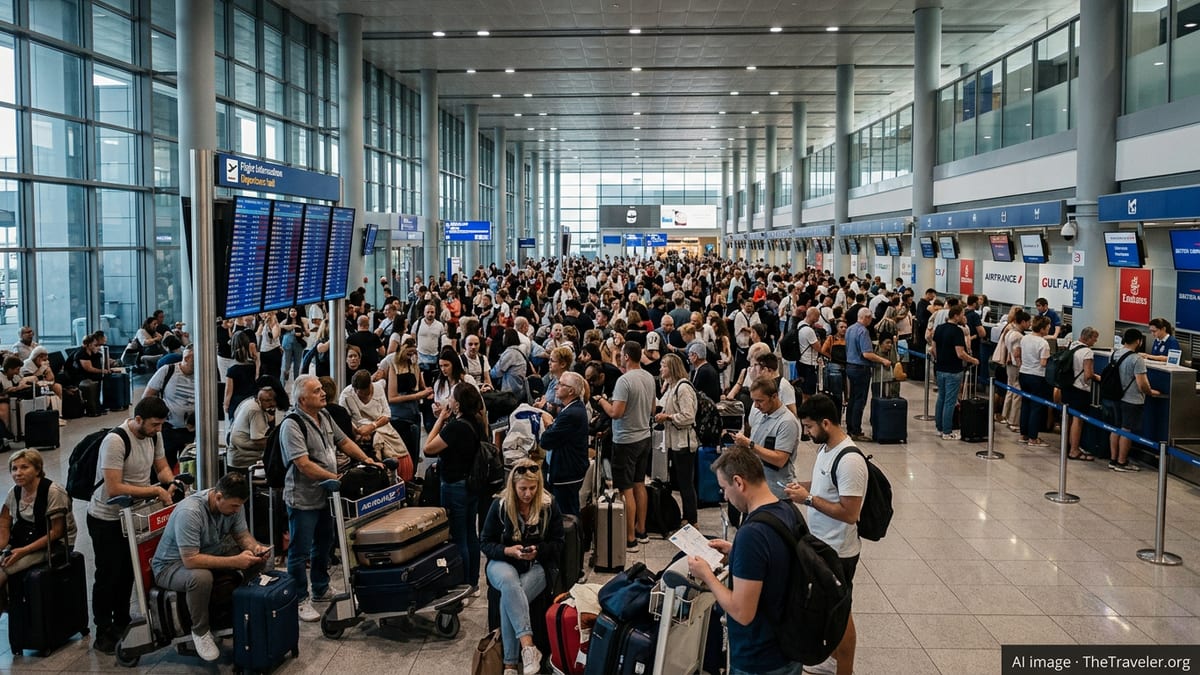
Hundreds of travelers were left stranded at Athens International Airport on Tuesday as live flight-tracking data showed 351 flights delayed and three canceled, disrupting a wide range of domestic and international services operated by Aegean Airlines, Sky Express, Ryanair, Lufthansa, Emirates and other major carriers.
Get the latest news straight to your inbox!
Widespread Disruption Hits Key European and Middle Eastern Routes
The disruption at Athens affected a dense web of connections linking Greece with major European hubs, including London, Paris and Rome, as well as popular regional destinations such as Frankfurt and other German cities. Publicly available airport statistics show that Athens International Airport handles tens of thousands of domestic and international flights each quarter, meaning a high share of the day’s schedule was impacted by delays.
Domestic links to islands like Santorini, Rhodes and Crete, primarily served by Aegean Airlines and Sky Express, experienced knock-on delays as aircraft and crews cycled late through the network. Data from independent flight-tracking platforms indicated pushed-back departure times of 30 minutes to more than two hours on some routes, putting pressure on travelers with tight onward connections.
International services operated by Aegean Airlines, Ryanair and Lufthansa toward Western Europe were also affected, with services to London, Paris and Rome among those showing delayed departure or arrival times. Long-haul passengers connecting in Athens to flights on Emirates and other global carriers reported missed connections and extended time in the terminal as schedules slipped throughout the afternoon and evening.
The disruption added new strain to Europe’s already stretched aviation system, where airlines and airports have been contending with airspace constraints, weather-related rerouting and infrastructure works at major hubs. For passengers in Athens, the result was a prolonged period of uncertainty as departure boards filled with yellow “delayed” indicators across multiple airlines.
Operational Bottlenecks Amplify Existing Capacity Challenges
While a precise trigger for Tuesday’s high volume of delays in Athens was not immediately clear from publicly available information, analysts note that the airport has been operating close to capacity, particularly during peak travel periods. Airport filings and recent operating updates describe rising passenger volumes and increasing flight numbers in early 2026, alongside continuing construction and modernization projects on terminal and apron infrastructure.
Previous incidents in Greece have highlighted how quickly operational issues can cascade. Earlier this year, a communications problem within Greek airspace led to a significant reduction in capacity and widespread disruptions, and in 2025 Athens International Airport experienced delays after air traffic controllers limited the number of flights that could be handled per hour. Although Tuesday’s situation developed under different circumstances, the resulting pattern of rolling delays appeared similar to those earlier events.
Aegean Airlines, Sky Express, Ryanair, Lufthansa and Emirates each operate substantial schedules into and out of Athens, using the airport as either a primary hub or an important connecting point in their wider networks. When an airport’s throughput slows, aircraft can be forced into longer ground times, while crews may reach duty limits before operating all planned sectors, introducing further cancellations or rerouting.
Given the complexity of modern airline scheduling, even a relatively small number of immediate cancellations can lead to a much larger number of delayed or re-timed flights. That dynamic was visible in Athens as only three outright cancellations were recorded alongside more than three hundred delays, reflecting carriers’ efforts to operate services, albeit behind schedule, rather than remove them from the timetable altogether.
Impact on Travelers: Missed Connections, Overnight Stays and Rebookings
For travelers, the disruption translated into long queues at check-in counters, service desks and boarding gates, as well as heavy use of airline mobile apps and websites. Social media posts and travel forums began to fill with reports of passengers missing onward connections from Athens to other European capitals and long-haul destinations, with some detailing overnight stays or forced itinerary changes.
Passengers transiting through Athens on separate tickets were particularly exposed. Those arriving on delayed domestic or intra-European flights and connecting onward with different carriers such as Ryanair or Emirates often faced limited rebooking options and, in some cases, the need to purchase entirely new tickets when minimum connection times were breached.
Families heading to island holidays, business travelers bound for financial centers like Frankfurt and London, and long-haul passengers linking to flights toward the Middle East and Asia all reported disrupted plans. Some noted that by the time they reached the airport, departure times had shifted multiple times, complicating transport arrangements to and from the city and adding to overall travel stress.
Travel advisors frequently recommend that passengers with time-sensitive commitments build in additional buffer time when connecting through major hubs such as Athens, especially during the busy summer season, when both schedules and ground facilities operate near their limits. Tuesday’s events are likely to reinforce that guidance among frequent travelers to and from Greece.
EU Passenger Rights and Airline Response Options
The scale of delays at Athens once again brought European passenger rights regulations into focus. Under EU rules, travelers departing from an EU airport such as Athens, or flying into the bloc on an EU carrier like Aegean Airlines or Lufthansa, may be entitled to care and assistance in the event of long delays or cancellations. This can include meals, refreshments, communication access and, where necessary, hotel accommodation.
Compensation eligibility, however, depends on a range of factors, including the length of delay, flight distance and the root cause of the disruption. If delays result from circumstances considered outside an airline’s control, such as certain forms of air traffic control restrictions or unforeseen safety issues, compensation payments may not apply, although basic assistance obligations typically remain.
Travel rights organizations consistently advise passengers caught in major airport disruptions to keep receipts for essential expenses, preserve boarding passes and document delays through screenshots of airline messages or departure boards. Such records can support later claims with airlines or, if needed, complaints to national enforcement bodies.
In the immediate term, airlines affected by the Athens disruption focused on rebooking passengers on later services, utilizing any remaining seats on still-operating flights and adjusting aircraft assignments where possible. With only three cancellations recorded but hundreds of delayed departures and arrivals, carriers appeared to prioritize operating a high percentage of the planned schedule, even at the cost of significant lateness.
Ongoing Monitoring as Operations Gradually Stabilize
By late evening, monitoring services indicated that delays at Athens International Airport were beginning to shorten, although pockets of disruption remained on both domestic and international routes. Some evening flights were still operating well behind schedule, suggesting that residual knock-on effects could persist into the overnight period and into early departures the following day.
Travelers scheduled to pass through Athens in the next 24 hours were urged by airlines and airport information channels to check their flight status frequently and allow additional time for check-in, security and transfer procedures. With Athens functioning as a critical gateway between Europe, the Middle East and popular Greek island destinations, the impact of even a single day of disruption can ripple through the network.
Analysts following the Greek aviation market note that demand for travel to and from Greece remains strong in 2026, buoyed by tourism and increasing year-round connectivity. At the same time, infrastructure upgrades, evolving airspace constraints and staffing challenges across the European aviation sector continue to pose risks for punctuality.
For now, the scene at Athens International Airport offers a stark reminder of how quickly conditions can change for travelers, turning routine journeys to London, Paris, Rome, Frankfurt and beyond into lengthy ordeals marked by uncertainty, crowded terminals and the scramble for scarce alternative seats.