

More news on this day
Travelers at San Francisco International Airport faced widespread disruption on June 21, as publicly available tracking boards showed more than 225 delayed departures and eight cancellations affecting United Airlines, Frontier Airlines, SkyWest, Air Canada and other carriers, with knock-on effects for passengers bound for major cities including Chicago, Montreal, New York City, Las Vegas and Rome.
Get the latest news straight to your inbox!
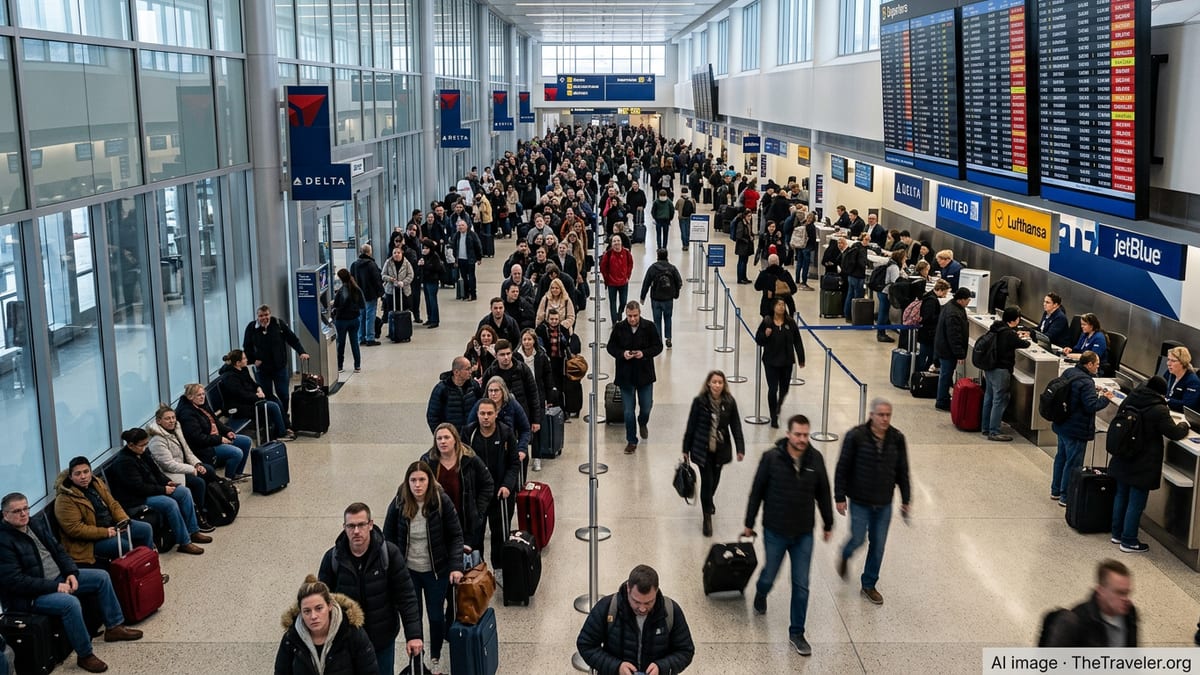
Ripple Effects Across Major U.S. and International Routes
Flight-status dashboards tracking San Francisco International on Sunday indicated an elevated level of disruption, with delays concentrated in the afternoon and evening departure banks. Services operated by United Airlines and its regional partner SkyWest, along with low cost carrier Frontier and Air Canada, accounted for a substantial share of the affected schedule.
Among the most impacted corridors were transcontinental and key domestic business routes linking the Bay Area with Chicago, New York City and Las Vegas. These markets typically see dense schedules and high passenger volumes, so even modest timetable changes can quickly cascade into missed connections and crowded gate areas for U.S. passengers.
International flights were not spared. Monitoring of long haul departures from San Francisco showed delays on services headed toward Europe and Canada, including itineraries connecting through hubs used by travelers bound for Rome and Montreal. Longer flight times and fixed arrival slots at overseas airports mean that disruptions departing San Francisco can echo throughout the following day’s operations.
While the number of outright cancellations remained limited compared with the total schedule, each of the eight canceled flights represented hundreds of disrupted journeys once onward connections and rebookings were taken into account. Publicly accessible tools tracking historical performance show that such events can take several operating cycles to fully unwind.
Operational Pressures Behind the Numbers
San Francisco International has long been considered a challenging airfield from an operational standpoint, particularly during periods of reduced visibility or strong winds. Aviation-focused commentary in recent weeks has highlighted how the airport’s runway configuration, combined with air traffic control arrival spacing, can constrain the number of flights permitted to land or depart in a given hour when conditions deteriorate.
Airlines with a significant presence at San Francisco, notably United and its regional operators, often rely on tightly timed aircraft and crew rotations. When inbound flights encounter ground delays or extended taxi times, later departures can be pushed back or, in some cases, dropped altogether if crews approach duty-time limits. Public discussions by former ramp and operations staff describing typical ground delay programs at San Francisco provide context for why such ripple effects can be difficult to avoid once they begin.
Frontier and Air Canada, which operate smaller schedules at the airport compared with the dominant carriers, may face an additional constraint: fewer spare aircraft and crews positioned locally to absorb shocks. Industry analyses of low cost and point-to-point operators note that these networks can be more exposed when a single delay breaks the planned sequence of turns for an aircraft.
In this latest episode of disruption, flight-tracking portals indicated a familiar pattern in which moderate early delays gradually compounded into longer waits by late afternoon. Passengers reported pushing back later than scheduled even on flights that ultimately arrived, suggesting a mix of air traffic control programs, congestion on the ground and aircraft or crew availability issues.
Passengers Confront Missed Connections and Rebooking Hurdles
The impact for travelers extended well beyond the departure boards at San Francisco. With Chicago, New York City and Las Vegas all functioning as connection points for domestic and international itineraries, delayed departures from the Bay Area translated into tight or missed inbound connections across the country.
Travel forums and social media posts from recent disruption days at San Francisco illustrate what many passengers likely faced on June 21: long lines at customer service counters, crowded gate areas while waiting for updated departure times and the challenge of securing scarce alternative seats once cancellations are announced. Prior episodes involving United, Frontier and SkyWest operations have led to similar scenes, according to those public accounts.
Travel advice circulating from consumer advocates and airline-focused publications emphasizes proactive steps during such events. Recommendations typically include monitoring airline apps and independent flight-tracking tools in parallel, exploring rerouting options through less congested hubs when possible, and acting quickly when rebooking opportunities appear, as available seats can disappear within minutes during widespread disruptions.
Passengers heading for long haul destinations such as Rome or Montreal often face an added layer of complexity. Missed transatlantic or transborder departures can mean overnight stays, a full-day delay in arrival and the need to re-coordinate hotels, tours and ground transport at the destination, particularly during peak summer travel periods.
What Airlines and Travelers Can Expect Next
Once same-day disruptions at a hub or major spoke airport reach the scale reported at San Francisco, the effects commonly linger into subsequent days. Aircraft and crews end up out of position, maintenance windows are compressed and early-morning departures can inherit residual delays from the prior night’s late arrivals. Schedule data from previous operational challenges at San Francisco and other large U.S. airports show that it can take 24 to 48 hours to fully restore normal patterns, depending on weather and traffic volumes.
For United, Frontier, SkyWest and Air Canada, the immediate priority is typically to protect the core of the next day’s schedule by consolidating lightly booked flights, prioritizing key business and international routes, and making targeted use of spare aircraft where available. Observers who track airline performance note that carriers also adjust by temporarily thinning out frequencies on short-haul services to rebuild resilience into their networks.
Travelers departing San Francisco in the aftermath of a heavily disrupted day are generally advised, by publicly available guidance, to plan for additional buffer time at the airport, especially if connecting onward in Chicago, New York City, Las Vegas or other busy hubs. Even if their own flights appear on time, residual congestion at security checkpoints, check-in counters and boarding gates can add unexpected delays.
With the summer travel season underway and demand at or near record levels across many U.S. airports, the episode underscores the vulnerability of tightly scheduled airline networks to local constraints at a few critical nodes such as San Francisco. For passengers, it is another reminder that flexible itineraries, travel insurance that covers delays, and real-time monitoring tools can help mitigate the consequences when large-scale disruptions emerge with little warning.