


More news on this day
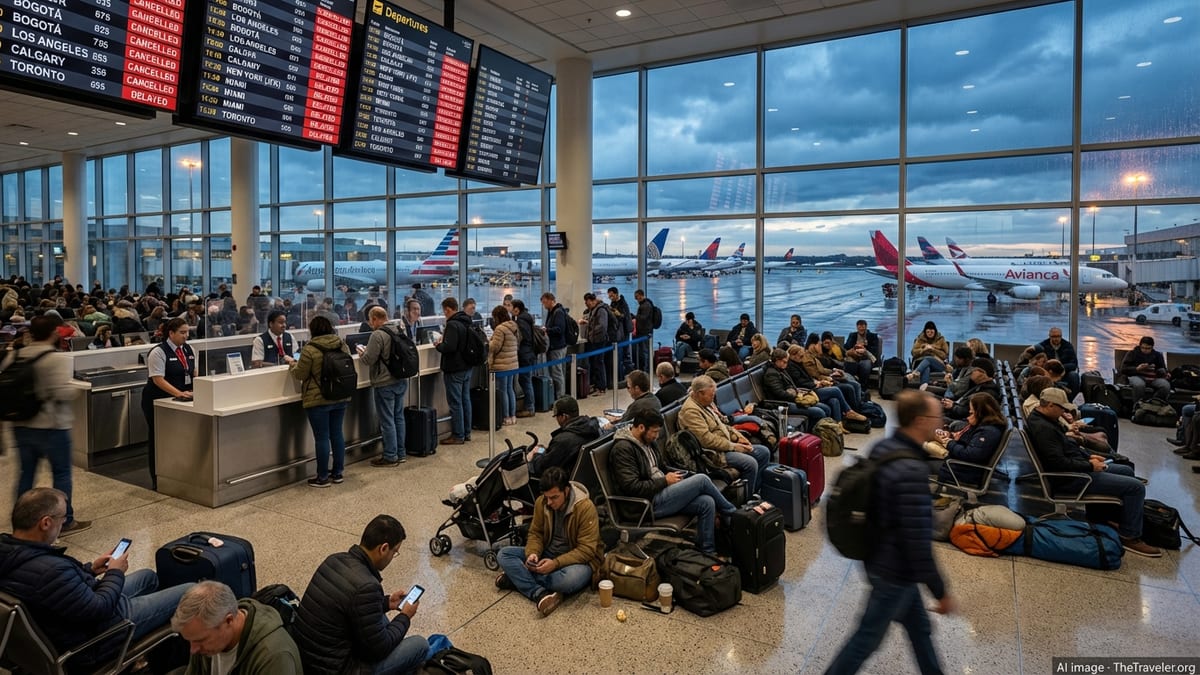
Passengers traveling through Boston Logan International Airport on June 21 faced a difficult start to the weekend as publicly available flight-status data showed at least five cancellations and 137 delays tied to operations by Jazz, Delta Air Lines and Porter Airlines, disrupting major routes to Europe and key hubs across North America.
Get the latest news straight to your inbox!
Broad Disruptions Across Logan’s Flight Schedule
Tracking services that compile data from airline and airport feeds indicated that the latest wave of operational disruption at Logan affected a relatively small number of outright cancellations but a far larger pool of delayed flights. While only five departures and arrivals on the schedules of regional carrier Jazz, U.S. major Delta Air Lines and Canadian carrier Porter Airlines were listed as cancelled, well over a hundred additional services were marked as delayed, in many cases by more than an hour.
The imbalance between cancellations and delays reflects a wider trend seen across major U.S. hubs this year, where carriers have tried to preserve as much of the schedule as possible even when aircraft and crews are out of position. Industry analyses released in early June highlighted that tarmac waits and late departures have climbed to some of their worst levels in years at busy airports, with Boston frequently cited among the facilities experiencing below-average on-time performance.
Weather, air traffic control flow programs in the Northeast corridor and knock-on effects from earlier disruptions at other hubs often converge at Logan, leaving airlines with limited flexibility. When multiple carriers are building out their networks at the same airport, as Delta and Porter have been doing in Boston, any constraint in runway capacity or staffing can ripple quickly through the day’s timetable.
Transatlantic Links to London, Frankfurt, Zurich and Barcelona Hit
The disruption was particularly visible on Boston’s transatlantic map. Flights serving London, Frankfurt, Zurich and Barcelona, which together form a core part of Logan’s summer long-haul portfolio, showed a mix of extended delays and schedule adjustments. Publicly accessible timetables for the 2026 summer season list Boston as a nonstop gateway to all four European cities, with Delta and its partners operating many of the frequencies alongside other transatlantic airlines.
On Saturday’s boards, departures from Boston to London and Frankfurt, traditionally timed to leave in the late afternoon and evening, were among those displaying revised departure times. Services linking Boston with Zurich and Barcelona also showed delayed operations, compressing turnaround times for aircraft and crews already working at the limits of a busy peak-season roster. Even when these flights ultimately departed, longer ground holds in Boston or at downstream hubs increased the likelihood of missed onward connections.
For travelers, the impact was measured in missed hotel check-ins, rescheduled meetings and rebooked itineraries. Passengers hoping to connect through European hubs for onward travel to the Middle East, Africa or secondary European cities faced especially complex re-routing, as delayed departure from Boston could mean missing tightly timed overnight connections on the far side of the Atlantic.
North American Hubs From New York to Seattle Affected
Within North America, the cascade of delays extended to high-demand routes linking Boston with New York, San Francisco and Seattle. These corridors are heavily used by business travelers and form part of larger domestic and international networks for Delta and its codeshare partners. When an early-morning or midday departure slipped behind schedule, aircraft and crews were often no longer in the right place for subsequent legs later in the day.
New York’s congested airspace frequently plays a role in Boston’s operational reliability, and reports from previous weather and traffic events show that ground stops or volume restrictions at New York-area airports can quickly be felt at Logan. Delays on short-haul Boston–New York sectors can, in turn, affect transcontinental services when aircraft or crew rotations depend on those feeder flights arriving on time.
On the West Coast, flights between Boston and San Francisco or Seattle rely on long block times and tight aircraft utilization. When a Boston departure to either city leaves late, the aircraft often arrives after curfew-sensitive windows or faces crew duty limits that constrain its next assignment. This dynamic, which has been highlighted in accounts of extended delays into Boston during periods of construction and strong winds, means that a single late transcontinental segment can create follow-on schedule issues for hours.
Airlines Balance Cancellations, Delays and Network Growth
Jazz, Delta and Porter are all in the midst of refining their Boston strategies, and the latest disruptions illustrate the complexity of maintaining reliability while expanding service. Delta has increasingly positioned Boston as a key transatlantic and domestic hub, adding new seasonal destinations and reinforcing competition with other major carriers. Porter, meanwhile, has been steadily growing its U.S. footprint, including additional service to Logan from Canadian cities using a mix of regional jets and narrowbody aircraft.
According to published route maps and schedule summaries for the 2026 summer season, Boston is now embedded in a dense web of daily links to major European and West Coast markets, with Delta’s network connecting it directly to cities such as London, Frankfurt, Zurich, Barcelona, San Francisco and Seattle. That growth offers travelers more nonstop options but also means that any disruption at Logan can affect a larger share of the carrier’s global operation.
Recent experiences shared by travelers and industry observers point to a shift in how some airlines manage irregular operations. Several major carriers have, in previous months, racked up triple-digit daily cancellation counts during systemwide disruptions but have also been criticized when long rolling delays left passengers in limbo late into the night. On comparatively smaller days like this one at Logan, a balance of a handful of cancellations and a higher number of late departures appears to be the current compromise.
What Passengers Can Expect in the Weeks Ahead
With the peak summer travel season under way, passengers flying into or out of Boston Logan on Jazz, Delta, Porter and their partners can expect continued pressure on the schedule, especially during late afternoon and evening bank times when transatlantic and transcontinental flights converge. Historical performance data for June shows that weather systems in the Northeast, combined with strong Atlantic jet streams and crowded terminal airspace, tend to produce clusters of delays even on otherwise clear days.
Consumer advocates and travel analysts have consistently recommended that passengers build additional buffer time into their itineraries when flying through Logan and other busy hubs. Early-morning departures, where available, are often less vulnerable to the knock-on effects of earlier disruptions, while nonstop routes can reduce the risk of missed connections caused by late inbound flights.
For those already booked on affected carriers, regularly checking flight status on airline apps or airport displays remains essential, particularly on days when weather or traffic advisories are in effect. Publicly available information also shows that many airlines, including the carriers involved in the latest Boston disruptions, may issue travel waivers during larger operational events, allowing customers to rebook without additional fees when delays or cancellations become widespread.