


More news on this day
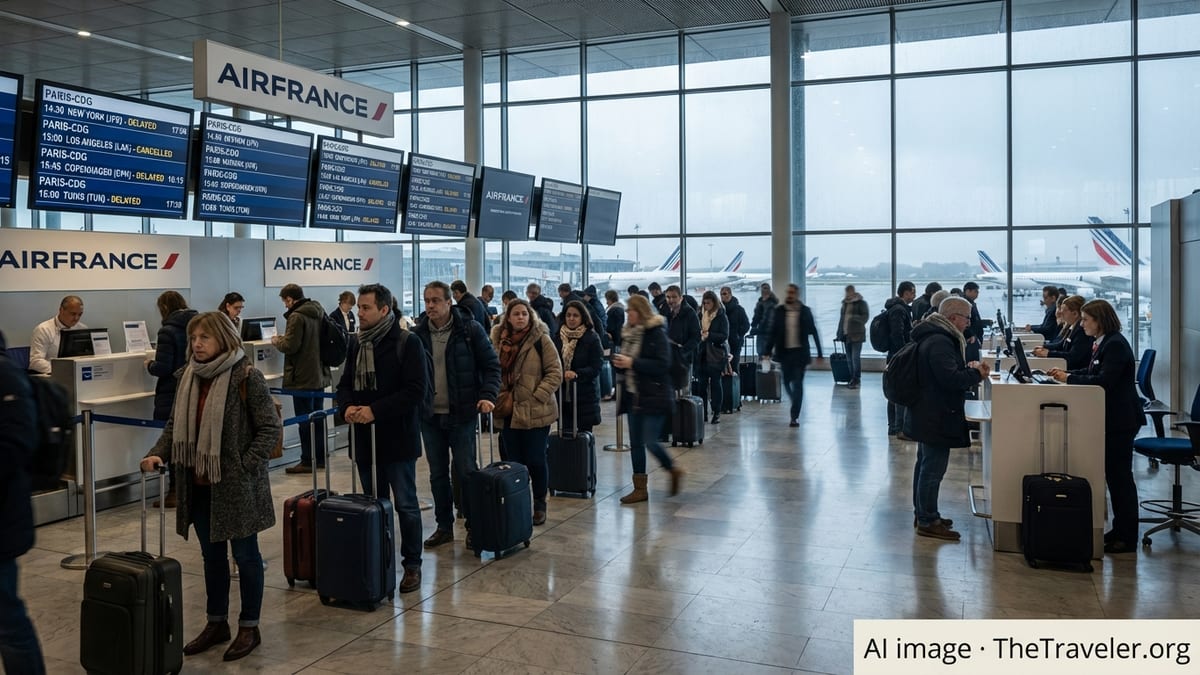
Thousands of travelers across France faced long queues, missed connections, and abrupt itinerary changes on Saturday as Paris Charles de Gaulle, Paris Orly, Nice Côte d’Azur, and Marseille Provence airports collectively recorded hundreds of disrupted flights, including 849 delays and 56 cancellations, affecting major carriers such as Air France, British Airways, Emirates, Lufthansa, easyJet and others.
Get the latest news straight to your inbox!
Widespread Disruptions Across France’s Busiest Hubs
According to publicly available flight-tracking and airport statistics, operations at France’s four key gateways were heavily affected throughout June 27, with delays building from early morning and rippling across the day’s schedule. The combined tally of 849 delayed departures and arrivals and 56 outright cancellations translated into several thousand disrupted journeys during one of the busiest periods of the European summer.
At Paris Charles de Gaulle, the country’s largest international hub, data showed a dense bank of late-running services across both short-haul and long-haul routes. Airlines including Air France, British Airways, Emirates and Lufthansa all appeared among those experiencing delayed rotations, compounding pressure on already crowded terminals and transit points.
Paris Orly, which handles a high volume of domestic and European leisure traffic, also reported elevated disruption levels compared with a typical day. Live statistics indicated significantly reduced punctuality, highlighting a sharp uptick in late departures and arrivals that forced passengers to wait in packed gate areas and security lines while updated boarding times were posted.
Further south, Nice Côte d’Azur and Marseille Provence airports reported knock-on effects, particularly on trunk routes linking the Mediterranean with Paris. Domestic and intra-European services operated by Air France, easyJet and other carriers showed rolling delays, with some flights rescheduled or canceled outright as the day progressed.
Impact on Airlines and Passengers
The disruption affected a broad cross section of airlines. Air France, which maintains a major hub at Charles de Gaulle and a sizeable presence at other French airports, saw delays on multiple domestic and European services, including connections between Paris and coastal cities such as Nice and Marseille. Low-cost carriers such as easyJet, which operate dense point-to-point networks to and from France, also featured prominently in delay statistics.
International airlines including British Airways, Emirates and Lufthansa were drawn into the disruption through their Paris operations, with late inbound aircraft in some cases triggering outbound delays. For long-haul passengers connecting via Charles de Gaulle, even relatively short holdups on feeder flights raised the risk of missed onward journeys and last-minute rebooking.
Travelers reported extended waits at departure gates, busy customer-service desks and uncertainty over revised itineraries as schedules were updated throughout the day. In major hubs, the knock-on effect of a delayed arrival could be seen in subsequent services using the same aircraft, resulting in rolling delays that stretched into the evening peak.
Publicly available information from aviation data providers indicated that, while a majority of flights eventually operated, the cumulative effect of nearly 900 delayed movements and dozens of cancellations placed heavy strain on airline and airport operations at the height of the summer getaway.
Possible Causes Behind the Surge in Delays
Official explanations for the disruption were not immediately consolidated into a single cause, and early information pointed instead to a combination of factors. Published coverage and operational data suggested that busy summer traffic levels, congestion in European airspace and local operational constraints at individual airports all contributed to the scale of the delays.
French air traffic control capacity has periodically been under pressure during peak travel periods, and previous summers have seen bottlenecks build quickly when weather or staffing issues disrupted the planned flow of flights. Aviation analysts often point out that in such conditions, delays at one major hub can quickly propagate across the network, particularly when aircraft are scheduled for multiple back-to-back rotations.
Weather patterns along key corridors also play a role, with thunderstorms or strong winds capable of forcing temporary ground stops or reduced arrival rates that quickly translate into extended holding, gate unavailability and missed slots. Even when conditions improve, airports and airlines can need several hours to absorb the backlog of aircraft waiting to depart or land.
Industry observers note that tight turnarounds, high aircraft utilization and crowded terminal infrastructure during peak season leave limited margin to recover from early-morning disruption. By late in the day, this can result in a cluster of cancellations as carriers reset their fleets and crews to protect the following day’s schedule.
What Stranded Travelers Are Facing on the Ground
For stranded travelers at Charles de Gaulle, Orly, Nice and Marseille, the disruption translated into a series of practical challenges. Families heading to holiday destinations, business travelers returning home and long-haul passengers in transit all faced extended time in terminal buildings, frequent gate changes and uncertainty over accommodation if they were unable to depart as planned.
Reports from passenger forums and social media posts showed travelers searching for alternative connections, sometimes via different European hubs, as they tried to salvage itineraries disrupted by cancellations. Others turned to high-speed rail and long-distance coach services where available, particularly on busy domestic routes such as Paris to Marseille or Nice, to bypass congested flight schedules.
Travel advisers generally recommend that passengers caught in large-scale disruption remain attentive to airline notifications, monitor flight status tools and keep boarding passes and receipts for any additional expenses. Under European passenger-protection rules, many travelers on affected flights may be eligible for assistance at the airport and, in some cases, financial compensation, depending on the circumstances behind the delay or cancellation.
However, travel-rights organizations frequently point out that claiming compensation can be a lengthy process, particularly when disruptions are attributed to extraordinary circumstances. As a result, many passengers focus first on securing new travel arrangements before pursuing any potential reimbursement.
What Travelers Should Know for Upcoming Trips
The spike in delays and cancellations across France’s main airports comes at a time when international visitor numbers are strong and major events are drawing additional traffic to the country. Aviation analysts suggest that travelers with upcoming trips through Charles de Gaulle, Orly, Nice or Marseille should factor in the possibility of longer processing times and occasional schedule changes during peak hours.
Passenger advocates advise building extra buffer time into itineraries, especially for tight connections or when transferring between airports in the Paris region. Booking earlier arrivals for same-day onward journeys, avoiding the last flight of the day where possible and allowing flexibility in hotel and ground-transport reservations can help reduce the impact of unexpected disruption.
Travelers are also encouraged to verify contact details with airlines and to use official apps or online accounts so that rebooking options and gate changes appear promptly. In a fast-moving operational environment, early access to re-route options can make the difference between securing a same-day alternative and waiting until the next morning.
With summer demand expected to remain high, industry observers note that similar waves of disruption could recur, even on days without a clearly identifiable single cause. For now, Saturday’s tally of 849 delays and 56 cancellations offers a stark reminder of how quickly Europe’s crowded skies and terminals can translate into real-world headaches for travelers on the ground.