


More news on this day
Vancouver International Airport is contending with a fresh wave of disruption, with publicly available tracking data indicating 117 delayed flights and 8 total cancellations affecting Air Canada, Jazz, WestJet and Lufthansa services across domestic, transborder and long-haul international routes.
Get the latest news straight to your inbox!
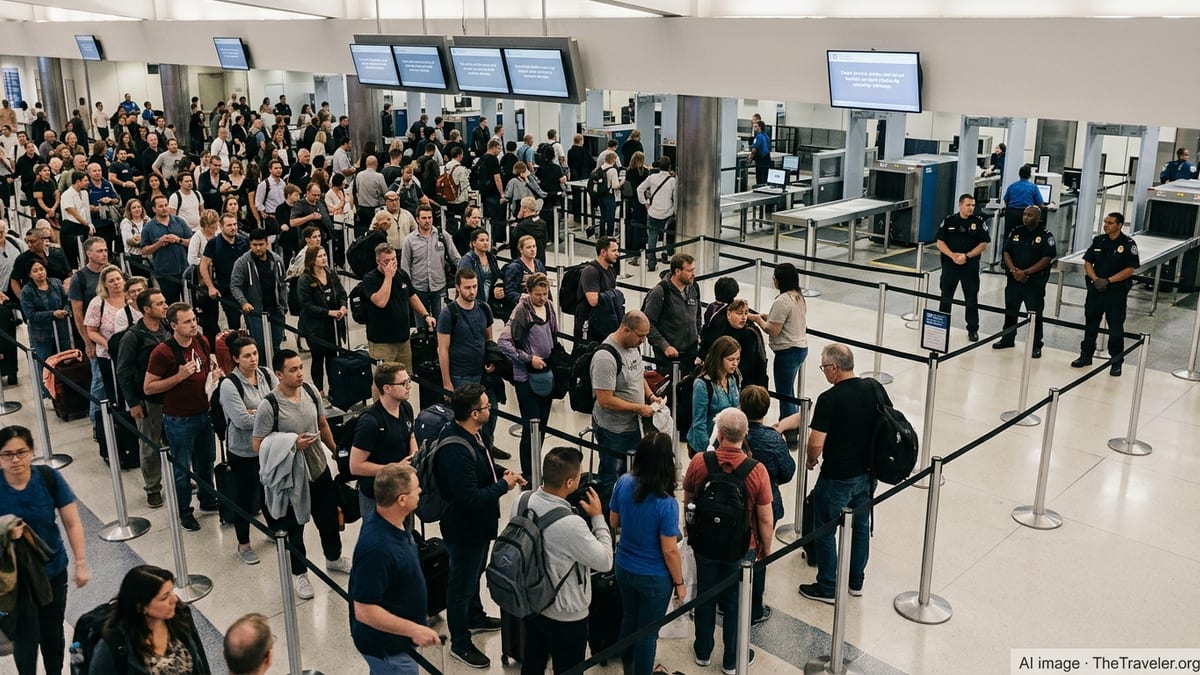
Operational Snarls Across Key Carriers at YVR
The latest disruption figures at Vancouver International Airport point to a complex operational picture in which delays far outnumber outright cancellations. Monitoring services show 117 flights running late alongside 8 cancellations, underscoring how tightly wound airline schedules are at one of Canada’s busiest hubs.
Air Canada and its regional affiliate Jazz account for a significant share of movements at Vancouver, and the current pattern of delays highlights the sensitivity of their interconnected domestic and transborder network. Even modest holdups on short-haul routes to cities such as Calgary, Edmonton or Victoria can reverberate into long-haul departures to Asia Pacific and Europe when aircraft and crews are required for onward legs.
WestJet, which lists Vancouver as one of its primary hubs, is also navigating knock-on effects as it balances regional routes within Western Canada with key services to major U.S. gateways. Lufthansa’s transatlantic flights add a further layer of complexity, as late arriving feeder services or congested departure banks can compress already tight turnaround windows for widebody aircraft.
While the number of outright cancellations remains limited compared with the tally of delays, the imbalance reflects an effort by airlines to keep as much of the schedule operating as possible, even if many flights are leaving or arriving behind plan.
Network Ripple Effects Across Canada, the United States and Europe
The disruption at Vancouver International Airport is not confined to British Columbia. Because YVR functions as a connecting gateway for both domestic and international travel, delays and cancellations there quickly ripple into broader networks that span Canada, the United States and Europe.
Publicly available flight data and recent disruption analyses for Canada show that when major hubs encounter operational strain, aircraft often fall out of position, forcing airlines to reshuffle equipment and crews. When this occurs in Vancouver, it can limit capacity on eastbound services toward Toronto and Montreal, while also constraining regional links to cities such as Saskatoon, Winnipeg and smaller Western Canadian communities served by Jazz and other feeders.
Transborder operations are particularly exposed. WestJet and Air Canada both rely on Vancouver for services to large U.S. markets including Los Angeles, San Francisco, Seattle and several inland hubs. Any extended delay window at YVR risks missed onward connections for passengers heading into domestic U.S. networks on partner carriers, and can contribute to congestion at American airports already managing their own local weather or air traffic constraints.
On the European side, long-haul flights from Vancouver to cities such as Frankfurt and Dublin, operated by Air Canada and Lufthansa among others, are sensitive to even small upstream irregularities. Late departures from YVR can undermine tightly timed arrival waves in Europe, where connecting banks are scheduled to feed passengers onward to regional cities across the continent.
Asia Pacific and Long-Haul Operations Under Pressure
Vancouver’s role as a western gateway for Asia Pacific means that irregular operations have consequences well beyond North America and Europe. Published schedules list nonstop flights from YVR to major Asian hubs such as Hong Kong, Tokyo, Manila and Singapore, many of them operated by Air Canada in coordination with alliance and codeshare partners.
These long-haul flights typically depart in carefully planned evening or late-night windows, relying on earlier domestic and transborder arrivals to provide connecting traffic. When earlier waves experience widespread delays, airlines face a difficult choice between holding long-haul departures for inbound passengers or sending flights close to schedule with empty seats and disrupted connections.
Extended ground delays in Vancouver can also affect aircraft rotation plans when the same widebody jets are scheduled to operate multiple long sectors within a 24 to 48 hour period. A late departure to Asia, followed by a delayed return, can compress maintenance windows and crew duty times, at times forcing schedule adjustments days after the original disruption.
As a result, even a relatively modest number of same-day cancellations at YVR can translate into longer term timetable changes on long-haul routes, as airlines seek to rebuild operational resilience and avoid cascading knock-on effects across the Pacific corridor.
Weather, Airspace Congestion and Operational Constraints
Recent Canadian aviation disruption reports point to a blend of factors behind the current spate of delays at Vancouver International Airport. Periodic storms across Western Canada, episodes of low visibility and high winds in coastal areas, and seasonal airspace congestion are all cited as recurring contributors to schedule instability.
Weather systems moving across the Prairies and into British Columbia can steadily erode on-time performance throughout the day. Aircraft arriving late from Edmonton, Calgary or Winnipeg may face further sequencing delays as they join already busy approach patterns into Vancouver. Once on the ground, turnarounds can be slowed by ramp congestion and ground handling bottlenecks if multiple aircraft arrive outside their allotted time slots.
International operations add their own vulnerability. European and Asia Pacific arrivals often converge on YVR within narrow time windows that are coordinated with overseas air traffic control and airport slot regimes. Any restrictions in foreign airspace, or staffing and capacity constraints at partner airports, can contribute to late departures that propagate forward into Vancouver’s arrival banks.
In this environment, even well-prepared carriers such as Air Canada, Jazz, WestJet and Lufthansa face operational headwinds that are only partially within their control, especially when several adverse factors appear on the same operating day.
What the Disruptions Mean for Travelers
For passengers using Vancouver International Airport, today’s tally of 117 delays and 8 cancellations translates into longer waits at gates, missed connections and a greater need to monitor changing schedules. Travel advisory pages and real-time flight status tools highlight how quickly conditions can shift, with flight statuses sometimes moving from on time to delayed within minutes as operational constraints evolve.
Consumer-facing guidance from passenger rights advocates and travel assistance services emphasizes the importance of checking flight status before leaving for the airport, allowing additional time for check-in and security, and being prepared with alternative routing options if cancellations occur. Travelers with complex itineraries that rely on tight connections in Vancouver or onward in Europe and Asia are particularly encouraged to build in longer layovers when possible.
The pattern of high delays relative to cancellations suggests airlines are trying to maintain connectivity where feasible, even when performance metrics suffer. For passengers, this can mean flights will often still operate, but at times significantly behind schedule, with rebookings required for missed onward legs.
As airlines and airports continue to adjust schedules, staffing and contingency plans, Vancouver International Airport remains a barometer of broader aviation resilience in Canada, with the current figures offering a snapshot of how quickly local operational challenges can echo across transborder, transatlantic and transpacific networks.