


More news on this day
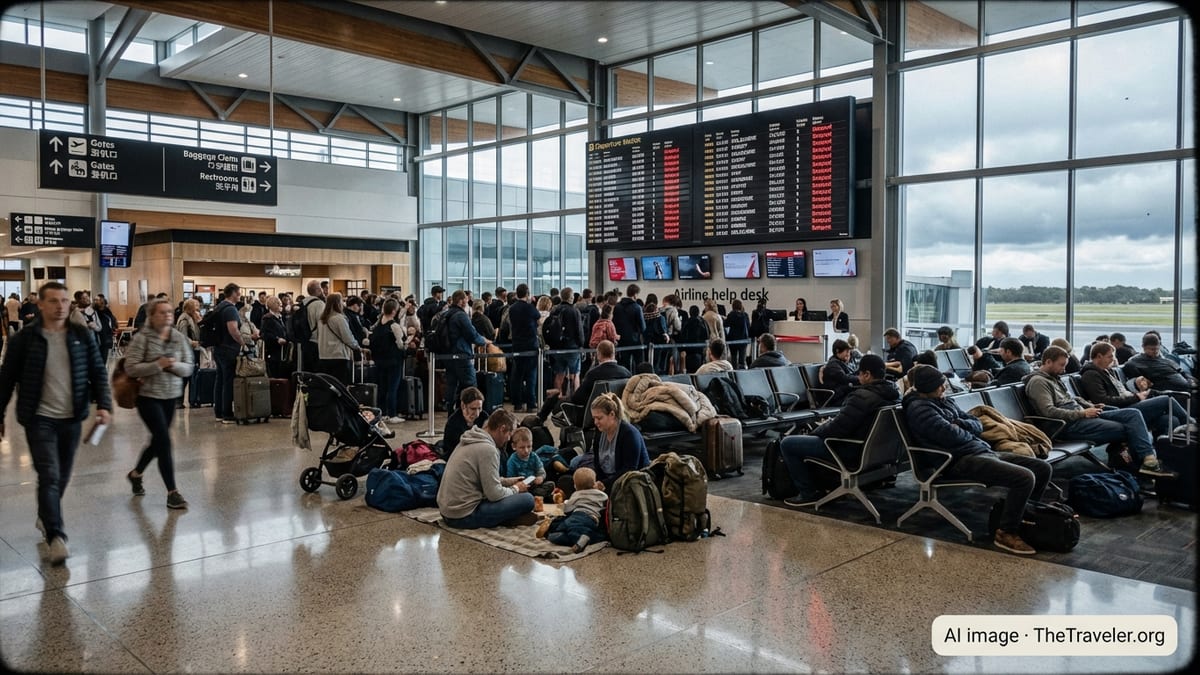
Travelers at Houston’s George Bush Intercontinental Airport faced significant disruption today as 219 flights were reported delayed and six canceled, creating widespread knock-on effects for major U.S. airlines and their domestic and international networks.
Get the latest news straight to your inbox!
Heavy Disruptions Hit a Major U.S. Hub
George Bush Intercontinental Airport in Houston is one of the country’s busiest hubs, with extensive connections across North America and to Europe, Latin America, and beyond. Publicly available flight tracking data on May 11 indicate that operations at the airport came under strain as more than two hundred departures and arrivals were pushed off schedule and a small number of services were canceled outright.
The volume of delayed flights placed particular pressure on airlines that rely on Houston as a connecting point. United Airlines, which uses Bush Intercontinental as a primary hub in its national and international network, appeared especially exposed, while schedules for American Airlines and Delta Air Lines also showed disruptions on key routes. Reports indicate that delays ranged from modest schedule slips to multi-hour waits.
Recent analysis of airline capacity has already highlighted that major U.S. carriers were tightening schedules for the 2026 peak travel season, trimming some frequencies while maintaining strong presence at their core hubs. In this context, a concentrated period of delays at Houston can quickly ripple outward as late arriving aircraft and crews affect subsequent departures across the country.
George Bush Intercontinental has in recent months drawn attention for operational strains, including longer lines and congestion in some terminals. The latest wave of delays fits into a broader pattern in which busy hub airports experience compounding challenges when traffic, staffing, construction, and weather pressures align.
Key Routes to New York, Chicago, Los Angeles, San Francisco, and Miami Affected
The impact in Houston was magnified because many of the delayed flights serve other cornerstone airports in the U.S. air travel system. Flight schedules show that Houston is linked by multiple daily services to New York area airports, Chicago O’Hare, Los Angeles International, San Francisco International, and Miami International, with United, American, and Delta all operating on some of these corridors.
When departures on these trunk routes are held on the ground in Houston, disruption often spreads far beyond Texas. Late arriving aircraft can lead to missed connections for passengers traveling onward to secondary markets, while crews may reach duty time limits, requiring further schedule adjustments. According to published coverage examining recent airline performance, even relatively small schedule shocks at major hubs can lead to a domino effect of rolling delays over the course of a day.
Travel demand for summer 2026 has been building, with leisure and business travel combining to keep load factors high on many domestic flights. Industry reporting has noted that carriers like United, American, and Delta are managing tight turn times and high aircraft utilization in order to meet demand while containing costs. In such conditions, there is limited slack in the system to absorb a wave of disruptions at a single hub.
Houston’s role as a connecting point for flights to Latin America and transatlantic destinations means that international itineraries were also vulnerable. Delays or cancellations on feeder flights from Houston to coastal gateways such as New York, Chicago, Los Angeles, San Francisco, and Miami can jeopardize passenger connections to long haul services, adding complexity for both airlines and travelers.
Recent Strains at Bush Intercontinental Add to Traveler Frustration
The latest operational difficulties come against a backdrop of heightened scrutiny on conditions at Houston’s main airport. In recent months, travelers and aviation observers have circulated reports of extended security checkpoint waits and congestion in some terminals, describing early morning queues and crowded corridors as passenger volumes recovered strongly.
Industry forums and local discussion channels have highlighted that George Bush Intercontinental has seen some of the longest reported security wait times among major U.S. airports at points in early 2026. While those reports focus on checkpoint operations rather than flight performance, they illustrate how multiple stress points at a large hub can converge to create a more challenging experience for travelers.
Federal planning documents and airport master plan materials show that Bush Intercontinental is in the midst of a multiyear program of upgrades and airfield improvements. These projects are intended to expand capacity and modernize facilities but can also temporarily constrain operations and contribute to scheduling sensitivities, especially when combined with high traffic levels and occasional severe weather in the region.
Travel publications have also noted that Houston’s position as a major transfer point for United and a key station for other airlines means any change in staffing, ground handling efficiency, or infrastructure availability can have an outsized impact on national on time performance metrics.
Knock-on Effects for Airlines and Passengers
When a hub encounters more than two hundred delays in a short period, airlines must manage not only the immediate operation of aircraft but also the complex logistics of rebooking passengers and repositioning crews. According to recent analyses of airline reliability, carriers increasingly rely on sophisticated scheduling tools to prioritize which flights to operate on time, which to delay, and which to cancel in order to stabilize the broader network.
Publicly available information from aviation data providers shows that on busy travel days, carriers often choose to preserve long haul and high-demand trunk routes while accepting delays on regional or lower-frequency services. In a hub such as Houston, this can leave some travelers bound for smaller cities facing extended waits or unexpected overnight stays, even if flights on marquee routes eventually operate.
For passengers, the experience of a disruption of this scale can involve missed connections, long lines at customer service desks, and competition for scarce seats on alternative flights. Consumer travel advisories in recent weeks have encouraged passengers flying through congested hubs like Houston to build additional time into itineraries, book earlier departures where possible, and monitor flight status closely via airline and third party tools.
The situation at Bush Intercontinental on May 11 underscores how quickly operations can deteriorate when delays accumulate. While only a small number of flights were outright canceled compared with the large tally of delays, the cumulative effect on traveler confidence and trip reliability is significant, especially for those connecting through multiple hubs on the same journey.
What Travelers Should Watch in the Coming Days
With the busy summer travel period approaching, aviation analysts have been cautioning that infrastructure constraints, tight airline staffing, and robust demand could combine to produce more frequent disruption episodes at major hubs. Recent reporting has emphasized that carriers such as United, American, and Delta are fine tuning their schedules and trimming some services in an effort to improve reliability, even as they maintain high levels of overall capacity.
For Houston, the latest delays may serve as a test of how resilient Bush Intercontinental and its tenant airlines are after a period marked by reports of long security waits and congestion. Travelers with upcoming itineraries through the airport may pay closer attention to peak travel times and connection windows, particularly on routes linking Houston to other large hubs including New York, Chicago, Los Angeles, San Francisco, and Miami.
Consumer advocates often recommend that passengers traveling through hubs with recent reliability challenges consider options such as booking longer layovers, traveling with carry on baggage only when feasible, and enrolling in programs that can expedite security screening. These measures do not eliminate the risk of disruption but can reduce some of the most stressful pinch points during irregular operations.
As airlines, airport operators, and federal agencies continue to adjust to evolving demand patterns in 2026, operational episodes like the one at Houston’s George Bush Intercontinental Airport highlight the delicate balance required to keep complex hub networks running on time. Travelers and industry observers alike are likely to watch closely how quickly schedules normalize and whether further strains emerge as peak season draws nearer.