


More news on this day
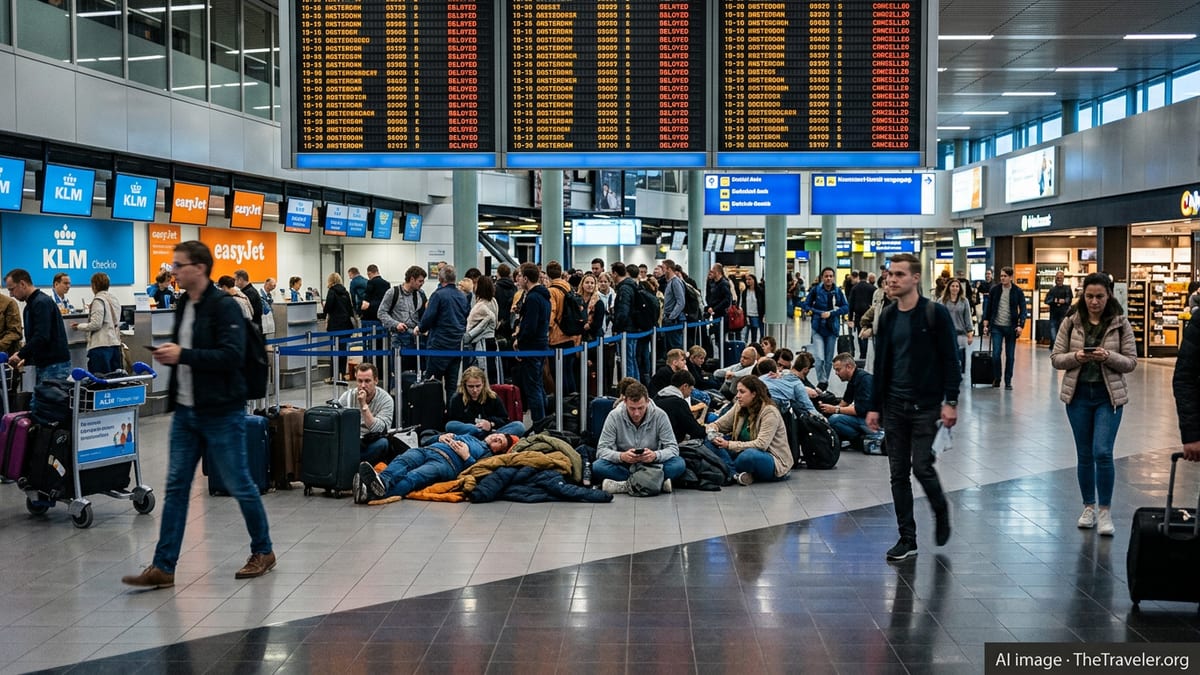
Hundreds of passengers were left waiting in crowded terminals at Vienna International Airport on Monday as more than one hundred flights were delayed and several canceled, disrupting services by Austrian Airlines, Ryanair, Lufthansa, Wizz Air, Turkish Airlines and other carriers on key routes across Europe.
Get the latest news straight to your inbox!
Operational Disruptions Hit Vienna Hub
Vienna International Airport, the primary aviation gateway for Austria and a major hub in Central Europe, experienced a sharp spike in flight disruptions, with publicly available tracking data indicating around 106 delays and at least six cancellations within a single operating window. The irregularities affected both departing and arriving services, compounding congestion in terminal areas and on airport aprons as aircraft and crews fell out of position.
The concentration of delays at one of the region’s busiest airports had an outsized impact on connecting traffic. Vienna serves as the main base for Austrian Airlines and a significant station for low cost operators such as Ryanair and Wizz Air, as well as a key stop for network carriers including Lufthansa and Turkish Airlines. When operations slow at such a hub, missed connections can cascade through airline schedules throughout the day.
According to airport and airline operational updates, the day’s disruptions mainly took the form of late departures and arrivals rather than a wholesale shutdown. However, even modest cancelation numbers can cause knock on effects once aircraft rotations are altered, especially on short haul routes that rely on quick turnarounds between flights.
Recent airport briefings and investor material have highlighted Vienna’s growing role as a transfer point, noting the mix of network and low cost carriers now operating from the airport. That growth has increased the system’s sensitivity to any operational disturbance, as more passengers depend on tightly timed onward connections through the hub.
Key Routes to Frankfurt, London and Paris Affected
The wave of delays had a particular impact on high demand European trunk routes linking Vienna with Frankfurt, London and Paris. These city pairs are among the busiest in the region, serving a mix of business travelers, tourists and transfer passengers connecting onwards to long haul destinations in North America, Asia and the Middle East.
Frankfurt, a major base for Lufthansa and an important partner hub for Austrian Airlines, relies on frequent Vienna services to feed long haul banks throughout the day. When departures from Vienna run late, passengers risk missing onward flights at Frankfurt, which can in turn force rebookings and overnight stays. Publicly available route data show multiple daily frequencies on this sector, so delays quickly accumulate across the schedule.
Services between Vienna and London, operated by a combination of full service and low cost airlines, also faced knock on disruption. London is served from Vienna by several carriers using different airports in the UK capital, and even a small number of delayed or canceled rotations can strain capacity on alternative services, particularly during busy summer and holiday periods.
Flights to and from Paris experienced similar issues, as the route connects not only point to point travelers but also large numbers of transfer passengers using France’s capital as a gateway. Any irregularity on this corridor can therefore affect itineraries that extend far beyond Western and Central Europe.
Multiple Airlines Confront Knock On Delays
Austrian Airlines, the largest carrier at Vienna and part of the Lufthansa Group, was among the most exposed to the day’s operational challenges. As the home airline with a dense network of European services and long haul departures, it depends on tightly coordinated waves of inbound and outbound flights. When one bank of flights is disrupted, aircraft and crew availability for later rotations can be thrown off balance.
Low cost carriers such as Ryanair and Wizz Air, both active at Vienna, were also drawn into the disruption. These airlines typically schedule aircraft for intensive daily utilization, with quick turnarounds and limited slack in the system. Delays at a hub like Vienna can therefore ripple through the rest of the day’s program, affecting services to secondary and leisure destinations as well as major capitals.
Lufthansa and Turkish Airlines, which connect Vienna to their respective hubs in Frankfurt, Munich and Istanbul, likewise saw schedules impacted as Vienna related delays fed into their wider networks. Flight status tools and airport information pages showed a pattern of late departures and arrivals on several regional and medium haul routes, reflecting the strain of managing aircraft and crew rotations once the morning’s program had slipped.
Publicly available punctuality data for European carriers underscore how quickly performance metrics can deteriorate on days with significant irregular operations. Even airlines with generally strong on time records can experience substantial average delays when adverse weather, air traffic restrictions or ground handling bottlenecks converge at a major airport.
Passengers Face Long Queues and Rebooking Challenges
For travelers on the ground, the operational issues translated into long queues at check in counters, transfer desks and boarding gates, as well as crowded seating areas near the main piers. With so many flights running late, departure boards at Vienna showed clusters of services marked as delayed, while the handful of outright cancellations forced some passengers to seek same day alternatives or overnight accommodation.
Consumer advisory services and passenger rights organizations noted that travelers affected by significant delays or cancellations within Europe may be entitled to care, such as meals and hotel accommodation, and in some cases financial compensation, depending on the cause of the disruption and the length of delay. However, accessing those rights often requires persistence, accurate documentation and, in some situations, formal claims processes after the journey.
Rebooking options were shaped by the capacity of Vienna’s busy route network. On popular routes to Frankfurt, London and Paris, some passengers were able to shift to later flights operated by the same or partner airlines, while those heading to smaller destinations sometimes had to connect via alternative hubs or wait for the next available service on the original route.
Travel industry commentary has repeatedly stressed the importance of monitoring flight status through airline apps and airport information channels, particularly during periods of unstable weather or high traffic volumes. On days like this, when more than a hundred flights at a single airport are reported delayed, early awareness of schedule changes can make the difference between catching a backup option and facing an unplanned overnight stay.
Wider Context of Recent Disruptions at Vienna
The latest wave of delays and cancellations comes in a year when Vienna International Airport has already contended with several high profile disruptions. Earlier in 2026, severe winter weather and freezing rain led to large scale shutdowns and cancellations, demonstrating how vulnerable even modern, well equipped hubs can be to sudden shifts in conditions.
Airport reports and recent financial disclosures have highlighted both the recovery in passenger numbers and the operational challenges that accompany rapid growth. Vienna has attracted a growing presence from low cost carriers at the same time as its traditional network airlines rebuild schedules, leading to busier runways, terminals and ground handling operations.
Industry analysts note that this combination of strong demand and tight capacity can leave little margin for error. When irregular operations occur, the system may struggle to absorb the shock without generating widespread delays. The experience of travelers stranded or heavily delayed at Vienna illustrates how quickly a localized problem at a single hub can reverberate across airline networks and national borders.
As the summer peak approaches, the episode serves as a reminder for travelers using Vienna and other major European airports to allow extra connection time where possible, keep digital boarding passes and contact details up to date, and remain prepared for short notice schedule changes that can affect even routine flights between major cities.