


More news on this day
Erbil International Airport experienced a new round of disruption as 12 flights were canceled within a matter of hours, underscoring how regional security tensions continue to unsettle air travel across northern Iraq.
Get the latest news straight to your inbox!
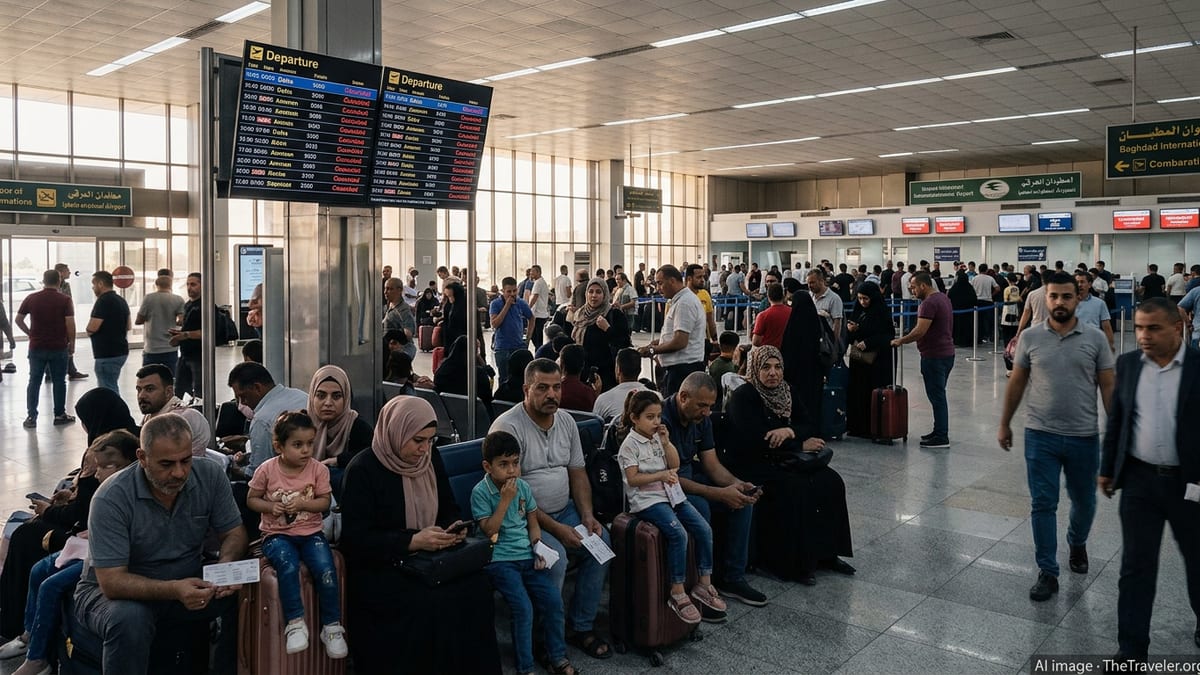
Cluster of Cancellations Hits Key Kurdish Gateway
Reports from aviation tracking platforms and regional media indicate that Erbil International Airport saw 12 scheduled flights canceled over a short period, affecting both departures and arrivals on key regional routes. The cancellations were concentrated in a single operational window rather than spread across the day, amplifying the impact on travelers and airlines.
The affected flights were primarily regional services linking Erbil with hubs such as Istanbul, Dubai, and other Middle Eastern destinations. These routes constitute some of the airport’s highest-frequency connections and are critical for both business and diaspora travel, meaning any disruption quickly ripples beyond the Kurdistan Region.
Publicly available data show that overall cancellation levels at Erbil remain relatively low over the longer term, but concentrated suspensions like this episode stand out against the airport’s usual pattern of steady operations. For many passengers, the sudden loss of multiple services translated into missed onward connections and unexpected overnight stays.
Airport communications pointed to broader regional factors rather than local technical problems as the main driver behind the cancellations, reflecting how external conditions can rapidly alter the status of an otherwise stable gateway.
Regional Airspace Volatility Drives Airline Decisions
The latest cluster of cancellations is closely linked to ongoing volatility in Middle Eastern airspace, where periodic closures and restrictions have followed security incidents and cross-border tensions. In recent months, Iraqi airspace has been temporarily shut and later reopened, with Erbil’s operations fluctuating between full suspension and gradual normalization.
According to published coverage from regional outlets, previous airspace closures have at times halted all movements at Erbil International Airport for hours or days, before flights resumed in phases as aviation authorities assessed risk levels. While the current episode is more limited in scope, the backdrop of intermittent restrictions continues to shape airline scheduling and contingency planning.
Carriers serving Erbil are increasingly cautious about dispatching aircraft into corridors that could be affected at short notice by new security developments. Even when airports remain technically open, airlines may preemptively cancel rotations if routing options narrow or if operational buffers for diversions and holding patterns are reduced.
This risk-based decision making explains why Erbil can experience several cancellations in quick succession, even as nearby airports maintain partial or near-normal service. For passengers, the practical outcome is the same: uncertainty over whether a booked flight will operate as planned.
Impact on Passengers and the Wider Travel Market
The loss of 12 flights in a limited timeframe had immediate consequences for travelers, particularly those relying on same-day connections to Europe and the Gulf. Erbil functions as a critical node for Kurdish communities traveling abroad for work, education, medical treatment, and family visits, so abrupt schedule changes can have outsized personal and financial effects.
Travel industry reports indicate that some passengers were rebooked onto later flights, while others had to rearrange their itineraries through alternative airports in Turkey or federal Iraq. For those with time-sensitive travel, such as visa appointments or medical consultations, the cascading delays added logistical and emotional strain.
The cancellations also highlight the vulnerability of Kurdistan’s growing tourism and business travel sectors to shocks in regional aviation. Tour operators and corporate travel planners have increasingly promoted Erbil as a convenient access point to northern Iraq, but repeated episodes of disruption can dampen confidence and force more conservative planning.
Local businesses that depend on predictable air links for cargo, specialist staff, and investor visits may face additional costs as they build in extra margins for potential schedule changes or route traffic through more distant hubs.
Operational Resilience and Recovery at Erbil Airport
Recent experience suggests that Erbil International Airport can return to regular schedules relatively quickly once regional conditions stabilize. Previous airspace closures were followed by phased resumptions, with published reports noting that traffic levels gradually approached normal as airlines reinstated flights and passengers regained confidence.
Available flight statistics show that Erbil’s overall cancellation rate across a typical month remains modest compared with the short bursts of disruption that receive media attention. This pattern points to an underlying operational resilience at the airport itself, even as it remains exposed to factors beyond its control.
Aviation analysts note that the airport’s ability to coordinate closely with carriers, adjust ground handling operations, and communicate schedule changes is crucial to limiting knock-on effects when cancellations occur. Once airspace constraints ease, airlines often move quickly to restore frequencies, particularly on high-demand routes linking Erbil with Istanbul, Dubai, Doha, and European gateways.
For travelers, this means that while sudden clusters of cancellations are disruptive, they do not usually signal a long-term deterioration in the airport’s connectivity. Instead, they reflect the stop-start rhythm that has characterized much of Middle Eastern aviation in periods of heightened tension.
Travel Advice: Monitoring, Flexibility, and Alternatives
The latest round of cancellations at Erbil underlines the importance for passengers of closely monitoring flight status and remaining flexible in their plans. Industry guidance emphasizes checking directly with airlines or official airport channels before leaving for the terminal, particularly on days when regional developments could affect airspace.
Travel agencies active in the Kurdistan Region increasingly recommend booking itineraries with longer connection windows and selecting tickets that allow changes without prohibitive fees. This approach can help absorb sudden schedule shifts without forcing complete trip cancellations.
Some travelers have turned to alternative routings through nearby airports in Turkey or other Iraqi cities when Erbil faces concentrated disruption. While such detours add time and complexity, they can provide a practical workaround when direct services are limited or subject to last-minute changes.
As airspace conditions evolve, aviation observers expect Erbil International Airport to continue navigating a delicate balance between maintaining regular connectivity and responding swiftly to any new security-related restrictions. For now, the 12 canceled flights serve as another reminder that travel through the region, though increasingly routine, still requires a higher-than-usual degree of vigilance and contingency planning.